

Pakistan warns UNSC of terror threats from Afghanistan
Ambassador says terrorist outfits operating out of Afghanistan with host patronage and regional adversary backing have killed more than 4,700 Pakistanis in three years

News Desk
The News Desk provides timely and factual coverage of national and international events, with an emphasis on accuracy and clarity.
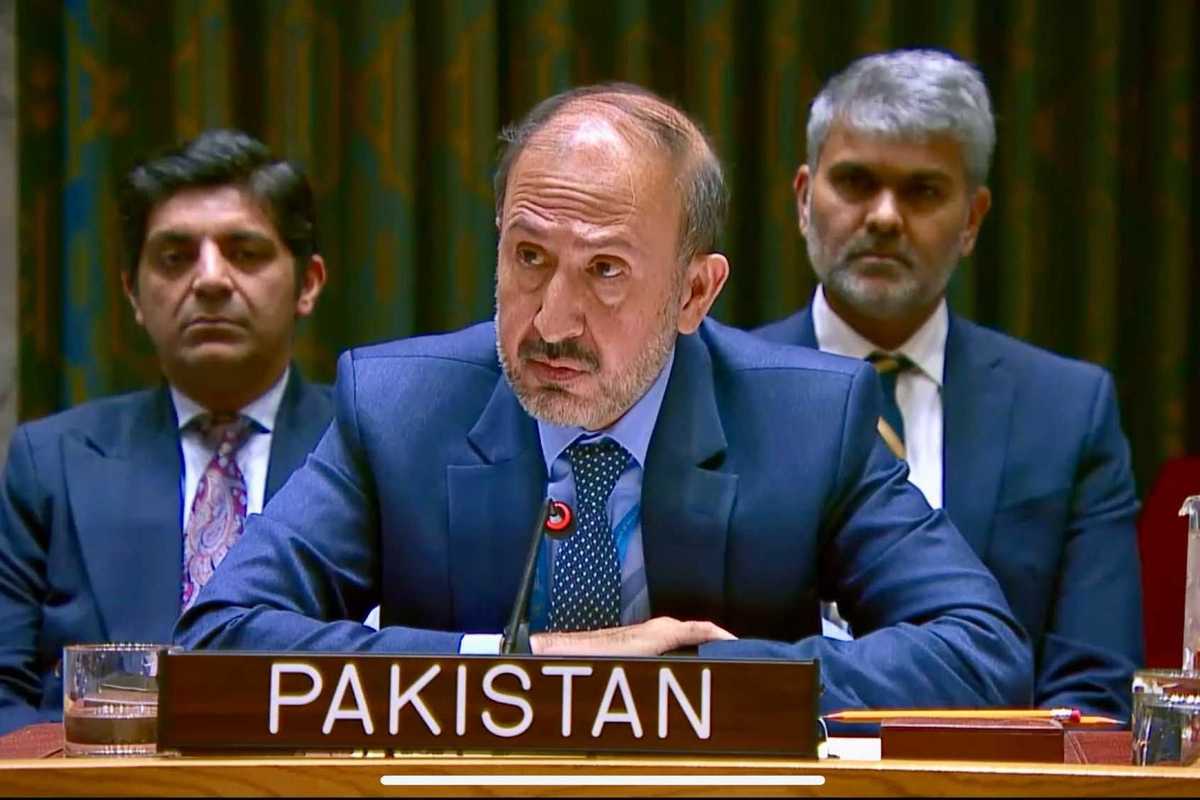
Syed Haider Shah,Permanent Representative of Pakistan to the UN,During Briefing by Chairs of the Subsidiary Bodies of the 1267, 1373 and 1540 Committees of the UN Security Council.
Picture Courtesy: Permanent Mission of Pakistan to UN/X
Pakistan warned the United Nations Security Council (UNSC) on Thursday that terrorist groups operating out of Afghanistan under the patronage of their hosts and backed by Islamabad's "principal adversary" pose a severe threat to regional security, having killed more than 4,700 Pakistanis over the past three years alone.
According to the Permanent Mission of Pakistan to the United Nations, Pakistan’s Permanent Representative, Ambassador Syed Haider Shah, delivered the statement on November 19, 2026, during the Security Council's 10276th meeting—a joint briefing by the chairs of the subsidiary bodies of the 1267, 1373, and 1540 Committees presided over by Latvia.
What threats from Afghanistan did Pakistan highlight before the Security Council?
Addressing the cross-border militancy challenge, Ambassador Shah outlined four key dimensions of terrorism emanating from Afghan territory:
Heavy Civilian and Security Toll: More than 4,700 innocent Pakistanis have lost their lives over the past three years to terrorist attacks originating from Afghan soil, adding to Pakistan’s broader frontline sacrifice of over 90,000 casualties and billions of dollars in economic losses.
Proliferation of Terrorist Outfits: Pakistani security forces and law enforcement agencies are actively combating cross-border terrorism carried out by ISIL-K, Tehreek-e-Taliban Pakistan (TTP) and its affiliates, the Balochistan Liberation Army (BLA) and its Majeed Brigade, as well as the East Turkestan Islamic Movement (ETIM).
Host Patronage and Adversary Backing: Ambassador Shah stated that these militant outfits are thriving inside Afghanistan "under the patronage of their hosts" and are backed by Pakistan's "principal adversary and net destabiliser in the region."
Frontline Counterterrorism Role: While noting that Al-Qaida was largely decimated due to Pakistan’s efforts, the envoy stressed that prolonged unresolved conflicts, external interventions, and unaddressed root causes continue to sustain global terrorism.
How does Islamabad propose reforming the 1267 sanctions regime?
Beyond immediate regional security threats, Ambassador Shah called for urgent reforms to the UN’s counterterrorism architecture, stating that the 1267 sanctions regime is inadequately equipped to address modern security challenges.
According to the Permanent Mission of Pakistan to the UN, he urged the Council to broaden the sanctions framework to list individuals and entities regardless of religion, nationality, or ethnicity—specifically calling for mechanisms to designate violent far-right, extreme right-wing, ultra-nationalist, xenophobic, and Islamophobic movements targeting minorities.
He also emphasized that listing and delisting decisions must remain impartial and free from narrow political interests, while calling for greater financial resources and operational autonomy for the Office of the Ombudsperson.
What warnings did Pakistan issue regarding digital platforms, AI, and WMD proliferation?
Marking 25 years since the adoption of Resolution 1373 and referencing the 25th anniversary of 9/11, the Pakistani envoy warned that terrorist networks are exploiting the internet, the dark web, social media platforms, artificial intelligence, cryptocurrencies, and digital wallets to recruit youth, spread propaganda, and evade conventional financial oversight.
He called for regulatory oversight of commercially driven digital platforms alongside consensus-driven norm-making within the UN General Assembly.
Reaffirming Pakistan’s commitment to Resolution 1540—which Islamabad helped draft and pass as an elected Council member in 2004—Ambassador Shah stressed the need to prevent non-state actors from acquiring weapons of mass destruction (WMDs) and emerging dual-use technologies, while upholding the inalienable right of all states to use nuclear and dual-use technologies for peaceful purposes.
He concluded by urging the timely appointment of chairs for the Council’s subsidiary bodies and closer coordination among their expert panels.




Comments
See what people are discussing