

Pakistani court orders re-recording of evidence in case against rights lawyers
Islamabad High Court says evidence recorded without the accused or their lawyers present could not be relied upon during trial

Aamir Abbasi
Editor, Islamabad
Aamir; a journalist with 15 years of experience, working in Newspaper, TV and Digital Media. Worked in Field, covered Big Legal Constitutional and Political Events in Pakistan since 2009 with Pakistan’s Top Media Organizations. Graduate of Quaid I Azam University Islamabad.
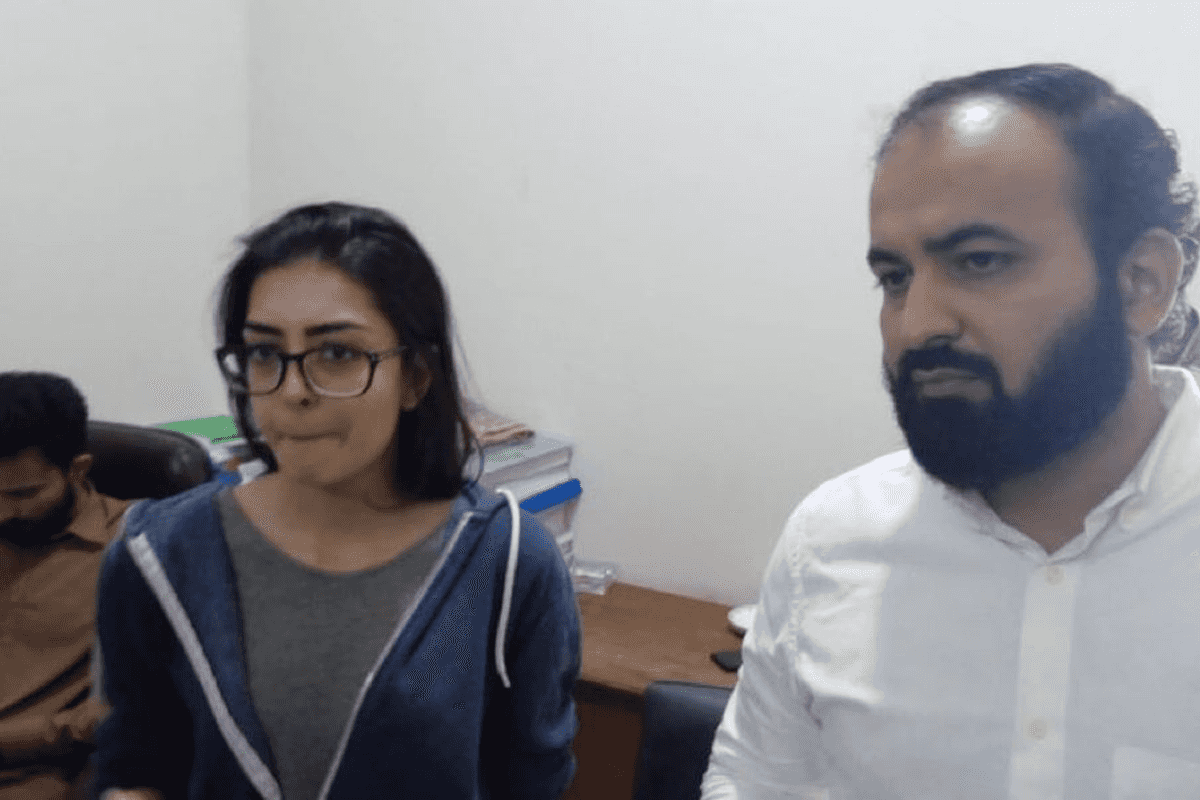
Pakistan’s Islamabad High Court ordered on Monday a trial court to re-record evidence in a criminal case against prominent lawyers and activists Imaan Mazari and Hadi Ali Chattha, directing that the process be completed within three days.
Justice Azam Khan issued the order while hearing a petition challenging how evidence was recorded during the trial.
The judge stressed that the high court was not examining the substance of the case. “We are not touching the merits; we are only directing the trial court to re-record the evidence,” Justice Khan said.
Mazari and Chattha are lawyers known for their activism and public criticism of state institutions in Pakistan. Their case has drawn attention from legal circles and rights groups.
During the hearing, counsel state Ali Azad told the court that senior lawyer Faisal Siddiqi had submitted his power of attorney and would present arguments at the next hearing.
He sought time to place the complete case record on file, including an order issued by Pakistan’s Supreme Court.
Justice Khan noted that the apex court had directed the Islamabad High Court to decide the petition expeditiously after hearing both sides.
The assistant attorney general argued that all relevant material was already before the court and that a decision could be made without further delay.
Azad said similar urgency was not being shown in other trials and argued that the accused were being denied their constitutional right to a fair trial. He described the proceedings as an attempt to rush the case.
He questioned how evidence could be relied upon when it had been recorded in the absence of the accused or their legal counsel. The assistant attorney general opposed the request, calling it another attempt to delay the proceedings. He maintained that the evidence already recorded by the trial court was lawful.
The defense said that on the day the evidence was recorded, Mazari had sought an adjournment on medical grounds.
Despite this, statements from four prosecution witnesses were recorded in her absence, the defense argued.
Lawyers for the accused said any evidence recorded without the presence of the accused or their pleader was unlawful and could not be trusted.
Justice Khan observed that trial exemptions were granted to ensure proceedings were not adversely affected. He asked whether any lawyer had been present when the evidence was recorded.
Chattha told the court that no pleader had been appointed and no lawyer was present at the time.
After hearing the arguments, Justice Khan reiterated that the high court was not examining the merits of the case.
With the consent of both sides, he ordered the trial court to re-record the evidence within three days.
The court adjourned further proceedings, saying arguments on the merits would not be taken up at this stage.
What's the case?
The case was brought by the National Cyber Crime Investigation Agency (NCCIA), which says the couple posted tweets deemed supportive of banned organizations.
Authorities say some of those posts, made between 2021 and 2025, accused the armed forces of failing to curb militancy, fostering terrorism and committing enforced disappearances in Pakistan’s Balochistan and Khyber Pakhtunkhwa provinces.
Pakistan has long faced security challenges in those regions, and authorities maintain strict controls on speech they consider harmful to national security.
Mazari, the daughter of former human rights minister Shireen Mazari, is known for her outspoken criticism of Pakistan’s military and advocacy for victims of enforced disappearances.
The accusations against her and Chatha specifically reference militant groups such as the Tehreek-e-Taliban Pakistan (TTP) and the Balochistan Liberation Army (BLA).
Rights groups have long warned that Pakistan’s cybercrime laws are being used to stifle dissent, with critics accusing authorities of conflating free expression with anti-state activity.



Comments
See what people are discussing