

Pakistani high court judge objects to chief justice-led panel hearing fake degree case
Justice Tariq Mahmood Jahangiri appears before Islamabad High Court bench facing claims his law degree was obtained using forged documents

Ali Hamza
Correspondent
Ali; a journalist with 3 years of experience, working in Newspaper. Worked in Field, covered Big Legal Constitutional and Political Events in Pakistan since 2022. Graduate of DePaul University, Chicago.
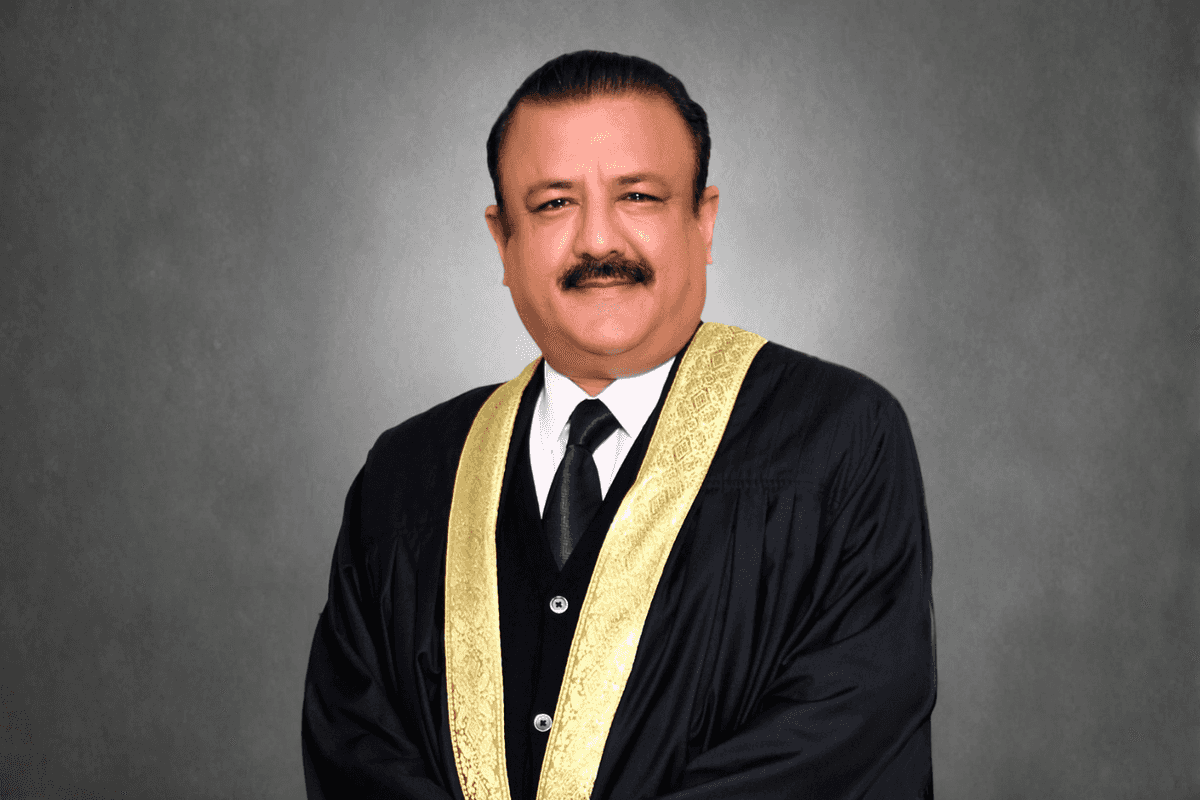
Justice Tariq Mahmood Jahangiri's official portrait from the Supreme Court website.
Supreme Court of Pakistan
The university registrar must produce his complete academic records on Thursday
Jahangiri objected to the chief justice hearing the case, citing a conflict of interest
Among judges who last year accused intelligence services of interference in the judiciary
A Pakistani high court judge facing accusations that he holds a fraudulent academic degree appeared in person before a bench Monday and swore on the Holy Qur'an that his credentials were genuine, in a rare proceeding that has thrust the judiciary's internal disputes into public view.
Justice Tariq Mahmood Jahangiri of the Islamabad High Court rejected allegations that his degree from the University of Karachi was fake, telling the court that the institution had never declared the credential invalid.
The bench summoned the university's registrar to appear Thursday with Jahangiri's complete academic record.
Jahangiri objected to the composition of the bench, arguing that Chief Justice Sarfaraz Dogar's presence created a conflict of interest because of a separate petition Jahangiri had filed against him over transfer and seniority matters. The chief justice dismissed the objection, saying Jahangiri would receive the same justice as any other litigant.
The judge also challenged the procedural handling of his case, arguing that a writ of quo warranto, a legal action questioning someone's right to hold office, is typically heard by a single judge. Bringing it before a division bench, he said, would deny him the right to file an intra-court appeal.
Jahangiri told the court that an earlier decision canceling his degree had been suspended by the Sindh High Court, restoring its legal standing. He described the matter as a decades-old issue and said he had received notice only days earlier.
Members of the Islamabad Bar Council attended the hearing. The petitioner's counsel requested the case be heard on a day-to-day basis.
What's the issue?
The controversy originated from a letter that began circulating last year on social media, purportedly from the University of Karachi's controller of examinations. A complaint was subsequently filed with the Supreme Judicial Council, Pakistan's top forum for judicial accountability.
A university report submitted to the court stated that Jahangiri was found guilty in 1989 by an unfair means committee of cheating in his LLB examination and threatening an examiner, resulting in a three-year ban. The university alleges he later used a fake enrollment form bearing a forged seal to obtain his degree, using multiple enrollment numbers.
In September, the same bench issued an interim order restraining Jahangiri from judicial work. The Supreme Court intervened on Sept. 29, setting aside the restraining order while directing the high court to proceed with the underlying petition.
Jahangiri was among six Islamabad High Court judges who wrote a letter to the Supreme Judicial Council in March 2024 alleging interference by Pakistan's intelligence services in judicial matters.




Comments
See what people are discussing