

Pakistan’s love for all-rounders shows no signs of fading
The latest squads suggest that Pakistan increasingly wants players who can do multiple jobs

Zaid Hassan
Producer
Zaid Hassan, a seasoned sports journalist, led Cricket Pakistan as editor for four years, shaping its coverage with insightful analysis. Now a producer at Nukta, he expands into broader storytelling while remaining a key voice in Pakistan’s sports media.
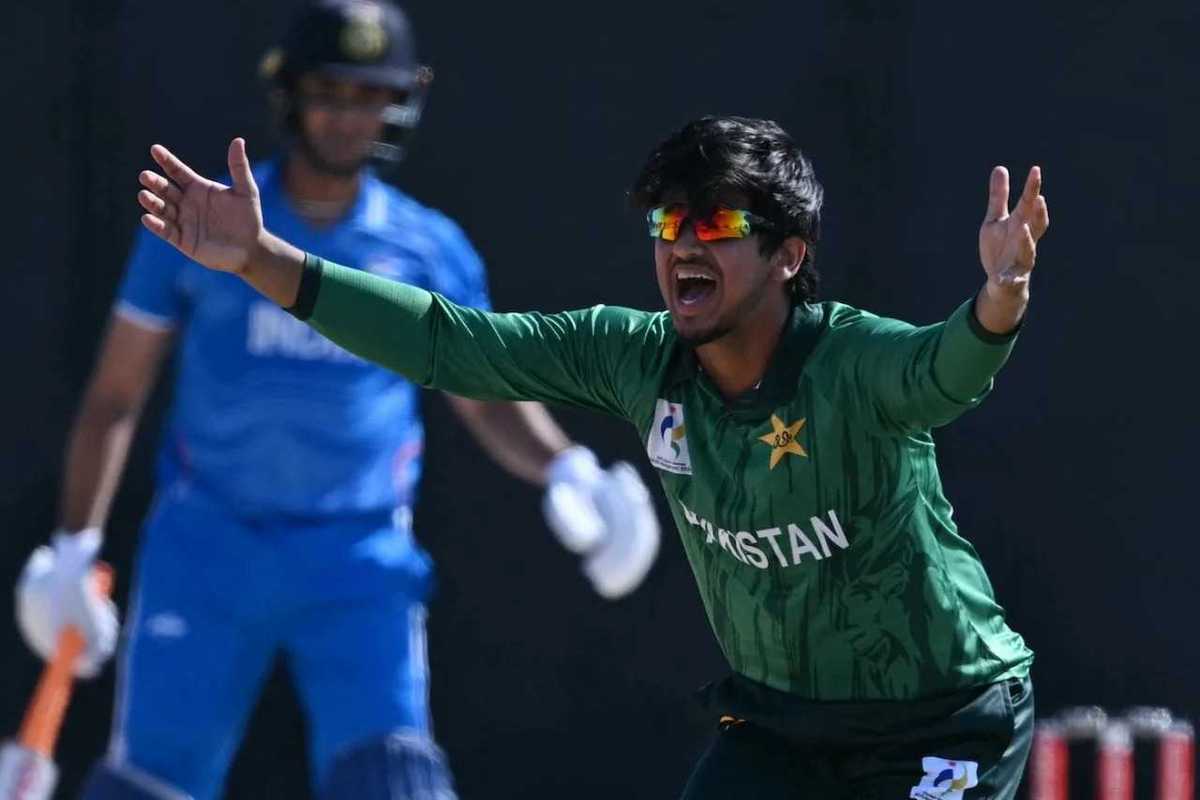
Pakistan's Saim Ayub in action during the gold medal match against India at the 2026 Asian Games in Japan.
AFP
The Pakistan Cricket Board’s latest squad announcement has once again raised eyebrows over the direction of the national team.
With Pakistan preparing for a three-match T20I series against Sri Lanka and an ODI tri-series involving England and Sri Lanka, the selections suggest one thing more clearly than anything else: versatility appears to be valued above specialisation.
Under head coach Mike Hesson, Pakistan’s love affair with all-rounders shows no signs of slowing down.
Has One Good Test Performance Become Enough?
Razaullah’s selection across both white-ball squads is perhaps the clearest example.
After scoring 88 in the second innings of the third Test against England in Birmingham and claiming four wickets in the match, Razaullah has earned places in both the T20I and ODI squads.
His impressive individual performance came during a series Pakistan lost 3-0, but that did little to dampen the excitement around his return. Fans even gave him a warm reception at the airport.
And while his selection can certainly be justified on the basis of his recent performance, his elevation into both white-ball formats after one standout Test innings raises an obvious question: Is Pakistan rewarding sustained form, or simply chasing the latest all-rounder who has made an impact?
At least he has not been made captain — yet.
Why Is Sahibzada Farhan Suddenly Leading Pakistan?
Sahibzada Farhan has been handed the T20I captaincy following Salman Ali Agha’s removal from the leadership role and exclusion from the squad.
Farhan is not entirely new to leadership, having captained Pakistan Shaheens on multiple occasions since 2024, including tours of Australia and the Hong Kong Sixes.
His appointment therefore has some background behind it, although his promotion still comes with considerable pressure.
He led Pakistan to a silver medal at the 2026 Asian Games, where they ultimately lost to India in the final. Now, he has been entrusted with leading the senior side in T20Is.
Why Was Babar Azam Left Out Despite Being HBL PSL’s Top Scorer?
Babar Azam’s omission is arguably the biggest talking point from the T20I squad.
The former captain finished the latest HBL PSL season as the tournament’s leading run-scorer, accumulating 588 runs at an extraordinary average of 73.50.
However, his strike rate of around 145 apparently wasn't enough to convince the selectors.
Pakistan already has several top-order batsmen capable of playing at an even higher tempo. Fakhar Zaman struck at 151, Sahibzada Farhan at 166 and Maaz Sadaqat at 177 during the season.
The argument, therefore, appears to be that Pakistan's new T20 approach demands aggressive batting from the outset, leaving little room for a specialist batter whose value is primarily with the bat.
But that logic immediately creates another problem.
Then Why Has Saim Ayub Survived?
Saim Ayub's retention appears difficult to explain purely through batting numbers.
His strike rate was around 120 during the PSL, significantly below several of the players competing for the same batting positions.
Yet Saim remains in the squad.
The difference? He can bowl.
His ability to provide off-spin gives Pakistan an additional bowling option and effectively makes him a sixth bowling choice.
And that may explain more about the selection philosophy than any discussion about strike rates.
Why is Shadab Khan back in both white-ball squads?
Shadab Khan is another beneficiary of Pakistan's preference for multi-skilled players.
He returns to both the ODI and T20I squads after an impressive CPL campaign, where he took 11 wickets and contributed 132 runs.
His selection is therefore understandable on current form.
But another question naturally follows: if CPL performances are being used as a pathway back into the national side, why did Hunain Shah's 16 wickets attract comparatively less attention?
Naseem Shah, who took seven wickets, has retained his place, with experience and greater batting ability potentially working in his favour. Plus, he also took 6 wickets in three matches in the 2026 Champions Cup.
Once again, the pattern appears to favour players who offer something with both bat and ball.
Is Mohammad Haris Being Overlooked?
Former Pakistan fast bowler Mohammad Amir believes another specialist role needs reconsideration: wicketkeeping.
Amir argued on X that Mohammad Haris should be Pakistan's preferred white-ball wicketkeeper, describing him as the best option among the country's current keepers.
The selection committee has instead moved on from regular white-ball wicketkeepers Mohammad Rizwan and Usman Khan, while Khawaja Nafay has been picked for the T20Is.
Ghazi Ghori and Saad Baig have been selected for the ODI squad.
With questions still surrounding Nafay's wicketkeeping, Amir's argument adds another layer to the debate over whether Pakistan are choosing the best specialist or simply the player who fits their broader selection philosophy.
Are All-Rounders Becoming Pakistan's Selection Formula?
The latest squads suggest that Pakistan increasingly wants players who can do multiple jobs.
Razaullah is in both squads. Shadab is back. Saim remains because of his bowling option. Mohammad Imran Randhawa has also earned a T20I place after featuring in the England Test alongside Razaullah, while Faheem Ashraf returns to the ODI setup.
If the strategy works, Pakistan could possess a flexible, unpredictable white-ball unit capable of adapting to different situations.
But if it fails, the criticism will be obvious: Pakistan may have sacrificed specialists simply to fit more all-rounders into the XI.



Comments
See what people are discussing