

Pakistan’s India boycott: A glimpse into the background, reasons, and financial stakes
On February 1, the government confirmed Pakistan would participate in the T20 World Cup 2026 but would not play their match against India on February 15 in Colombo

Syed Irtiza Ali
Associate Producer, Karachi
Syed Irtiza Ali is a sports journalist with writing experience since 2016. For five years, contributed freelance articles to The News on Sunday (TNS), on all major sports. In late 2021, joined Geo News as a Sports Sub-Editor. Have written bylines for TNS, Geo, and Geo Super. He aims to bring attention to overlooked sports such as squash and hockey.
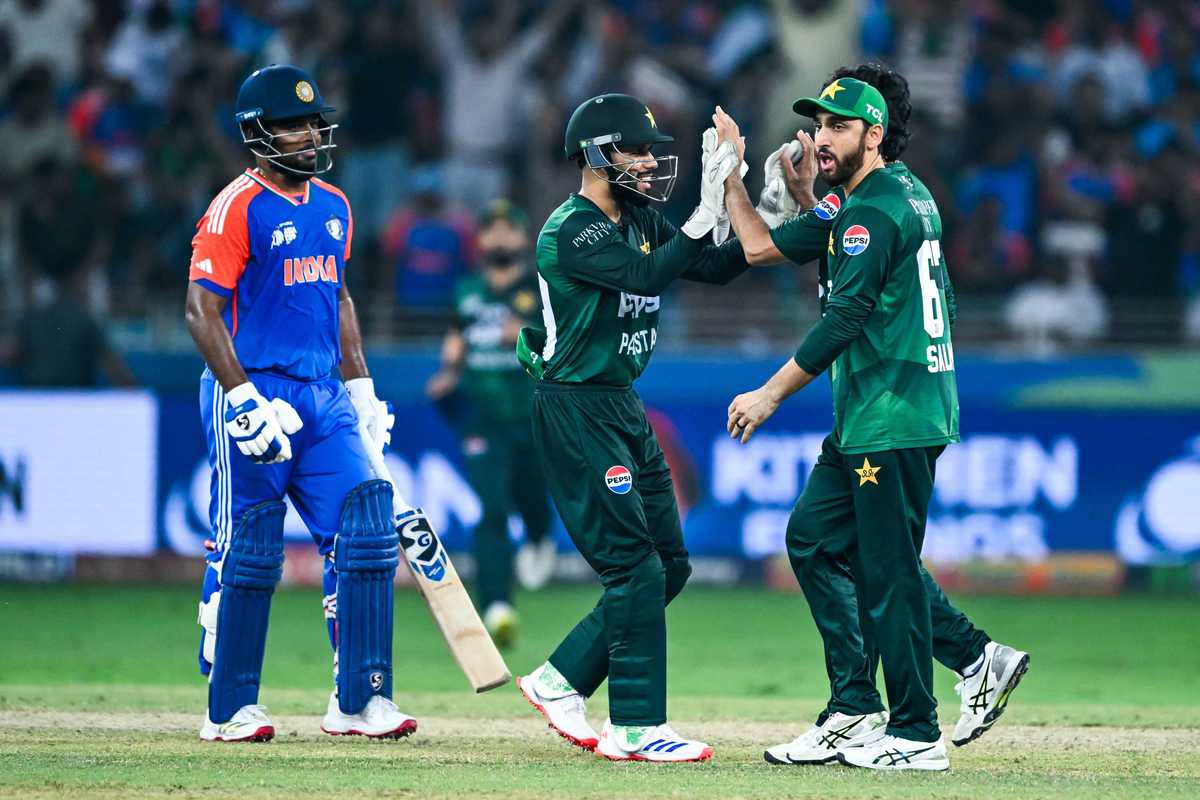
India's Sanju Samson leaves the field as Pakistani players celebrate his dismissal during the Asia Cup 2025 final at the Dubai International Stadium in Dubai on September 28, 2025.
AFP
The recent controversy surrounding the Pakistan government's decision not to play their T20 World Cup 2026 match against India on February 15 in Colombo has caused a massive uproar across the country.
Many believe that the PCB has taken a significant stand against India, the world’s most powerful cricketing nation.
The dispute dates back to India's refusal to play its Champions Trophy 2025 matches in Pakistan, as the ICC adopted a hybrid-model agreement, under which all India-Pakistan matches during the 2024-2027 cycle would be held at neutral venues.
But, despite the agreement, Pakistan’s decision to boycott their T20 World Cup 2026 match against India highlights how regional politics continue to impact sports.
The political backdrop
The India-Pakistan relationship further escalated after the deadly war in May 2025, with Indian players even refusing to shake hands with the Pakistani players during the Asia Cup 2025 in September.
The upcoming T20 World Cup 2026 had initially looked set to proceed under the hybrid-model deal, before the Bangladesh fiasco changed the entire scenario.
It began on June 3, when the BCCI asked IPL franchise KKR to remove Bangladeshi pacer Mustafizur Rahman. The next day, Bangladesh’s Sports Advisor Asif Nazrul requested the ICC to relocate their matches to Sri Lanka.
Pakistan backed Bangladesh’s stance on January 20, and in the ICC board meeting on January 21, PCB chairman Mohsin Naqvi spoke in their favor.
After the ICC replaced Bangladesh with Scotland on January 24, Naqvi criticized the handling as “double standards.”
“You can't have double standards,” he said. “You can't say for one country [India] they can do whatever they want, and for the others it’s completely different. That’s why we’ve taken this stand. Bangladesh has been treated unfairly and should play in the World Cup as a major stakeholder in cricket.”
Pakistan’s refusal
After Bangladesh were replaced, Naqvi spoke to Pakistan’s T20 World Cup squad at the HBL PSL 2026 auction ceremony, about the team’s participation in the mega-event.
“Whether we play in the T20 World Cup 2026 or not, the decision will be taken by the government. Our PM (Shahbaz Sharif) is out of the country. When he comes back, we will take advice from him.,” he said.
On January 26, he met Prime Minister Shahbaz Sharif, and later tweeted that the final decision would come by Friday or Monday, keeping all options open.
“Had a productive meeting with the Prime Minister Mian Muhammad Shahbaz Sharif. Briefed him on the ICC matter, and he directed that we resolve it while keeping all options on the table. It was agreed that the final decision will be taken either on Friday or next Monday,” he tweeted.
On February 1, the government confirmed Pakistan would participate in the T20 World Cup 2026 but would not play their match against India on February 15 in Colombo.
“The Government of the Islamic Republic of Pakistan grants approval to the Pakistan Cricket Team to participate in the ICC World T20 2026, however, the Pakistan Cricket Team shall not take the field in the match scheduled on 15th February 2026 against India.”
The final verdict
Pakistan’s refusal to play against India is not just a cancellation of a match as it will gonna dent the financial ecosystem of not only the upcoming World Cup, but the entire cricketing world because of the commercial gains attached with the Indo-Pak contest.
We can argue that Pakistan have picked up someone else’s quarrel given the stance they took after ICC refused Bangladesh’s request of shifting their matches in Sri Lanka, while their demands were met long before the mega-event.
The ICC also warned the PCB of consequences in the case of refusing to step back from their stance. “The ICC hopes that the PCB will consider the significant and long-term implications for cricket in its own country, as this is likely to impact the global cricket ecosystem, which it is itself a member and beneficiary of.”
However, Pakistan has shown their spine to the cricketing world, because after all, it's their participation that ensures the money-spinning match takes place.
The ICC’s revenue considerations are of greater importance than the choice of venue for the World Cup. Commercial sustainability, rather than geography, ultimately underpins the viability of ICC tournaments.
The most-watched match in international cricket remains India versus… pic.twitter.com/GXgdfKgT17
— Rashid Latif | 🇵🇰 (@iRashidLatif68) February 2, 2026
The current standoff puts Pakistan in a bargaining position. The contest is valued at $500 million, with $38 million directly linked through the brands, sponsorships and ads. According to Cricinfo, Pakistan’s proposed revenue share stands at 5.75% for the 2024–27 period, whereas India’s share is 38.50%.
It’s fair to say that the move puts Pakistan in a stronger bargaining position, which can them to push for an increased share of earnings.
However, it will be interesting to see how events unfold in the days leading up to the T20 World Cup, and how things will develop for future ICC events as the ICC, sponsors, broadcasters, and other relevant stakeholders will carefully weigh their options.



Comments
See what people are discussing