

Pakistan’s political parties push back against proposed constitutional changes
PTI and JUI-F rejected the 27th Amendment proposal outright, while PPP offered partial support with key reservations

Ali Hamza
Correspondent
Ali; a journalist with 3 years of experience, working in Newspaper. Worked in Field, covered Big Legal Constitutional and Political Events in Pakistan since 2022. Graduate of DePaul University, Chicago.
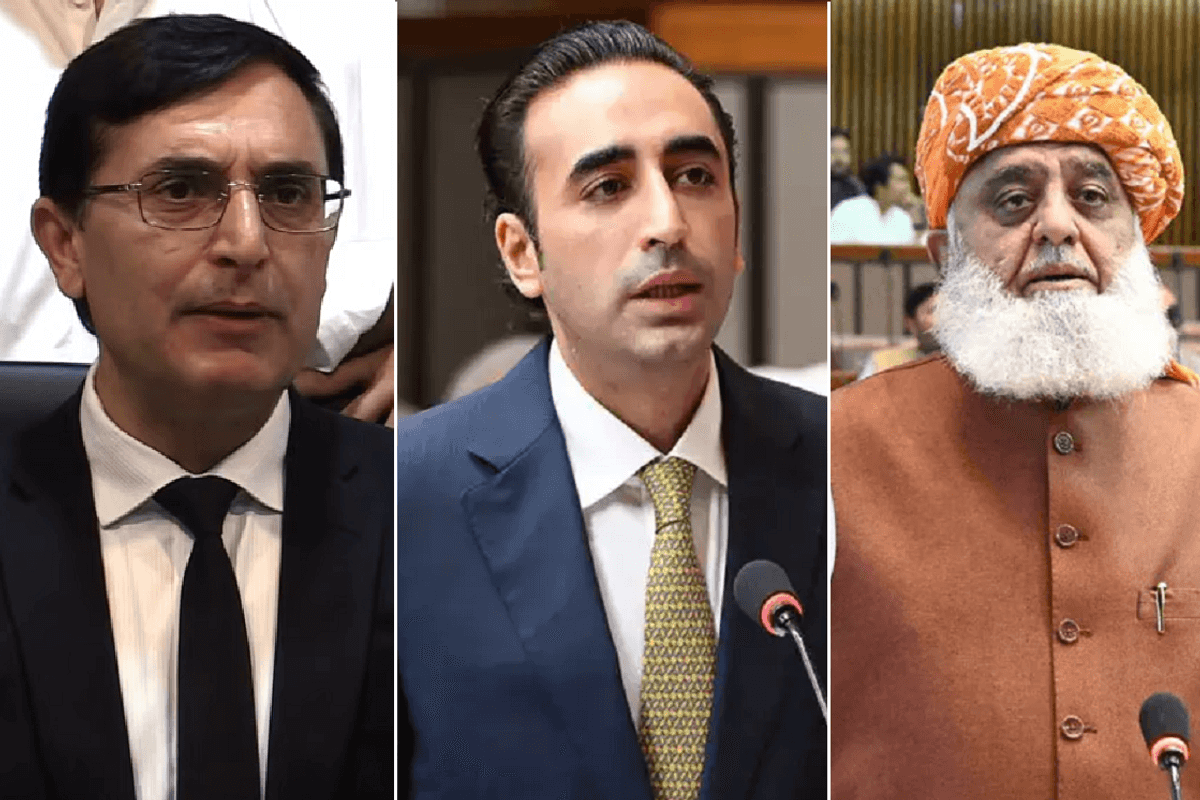
This photo collage features PTI’s Barrister Gohar (left), PPP Chairman Bilawal Bhutto-Zardari (center), and JUI-F chief Maulana Fazlur Rehman (right).
X
Pakistan’s major political parties have voiced strong resistance to a proposed constitutional overhaul, warning that the 27th Amendment could undermine provincial autonomy and reverse key democratic reforms introduced over the past decade.
The draft amendment - still under discussion - seeks sweeping revisions to the balance of power between the federation and the provinces, including changes to the National Finance Commission (NFC) Award, judicial appointments, and the division of administrative authority.
The Pakistan Tehreek-e-Insaf (PTI) and Jamiat Ulema-e-Islam-Fazl (JUI-F) have rejected the proposal outright, calling it an attack on the spirit of the 1973 Constitution, while the Pakistan Peoples Party (PPP) has expressed partial support but raised serious reservations on several clauses.
PPP expresses conditional support
After a two-day meeting of its Central Executive Committee (CEC) in Karachi, PPP Chairman Bilawal Bhutto Zardari said on Friday that the party had agreed to only three of the seven proposed clauses in the 27th Amendment. These included provisions related to Article 243 concerning the armed forces, the creation of a Federal Constitutional Court and changes to Article 200 governing the transfer of judges.
Bilawal said the PPP supports the idea of a constitutional court in principle - noting it was also part of the party’s earlier manifesto and the Charter of Democracy - but stressed that other commitments in the Charter should also be implemented.
He clarified that the proposed amendments to Article 243 would not diminish the president’s powers or undermine civilian authority, emphasizing that the PPP “would be the first to oppose” any move that threatens democracy or civil supremacy.
On the issue of judicial transfers, Bilawal said the government had suggested giving Parliament a role through a committee, while the PPP proposed that the Judicial Commission, in consultation with the chief justices of the relevant high courts, retain this authority. Party insiders confirmed that CEC members were divided over this point, with some warning against weakening the judiciary’s independence.
Bilawal reaffirmed his party’s firm opposition to proposals that would reduce provincial shares under the NFC Award, shift education and population planning back to federal control, alter the appointment process of the Chief Election Commissioner, or restore the executive magistracy system. “Funds under the NFC can increase for the provinces, not decrease,” he said, accusing some federal institutions of using fiscal arguments to conceal their own inefficiencies.
He also extended an invitation to JUI-F chief Maulana Fazlur Rehman, calling him “always welcome” and describing the PPP as his “second home.”
JUI-F warns against rolling back devolution
JUI-F chief Maulana Fazlur Rehman said his party had not yet received the final draft of the amendment but warned that reintroducing clauses previously scrapped under the 26th Amendment would amount to “insulting the Constitution.”
He cautioned against reversing the devolution achieved through the landmark 18th Amendment of 2010, arguing that Pakistan “needs more devolution, not centralization.”
PTI rejects amendment, plans protests
The PTI Parliamentary Party, led by Barrister Gohar Ali Khan, rejected the 27th Amendment in its entirety, calling it a “direct assault on provincial rights and democratic principles.”
At a meeting attended by senior leaders, including Khyber Pakhtunkhwa Chief Minister Suhail Afridi, the party resolved to stage protests inside and outside Parliament. PTI also questioned the legitimacy of the current legislature — which it referred to as a “Form-47 Parliament” — to enact constitutional changes, pledging to defend the 1973 Constitution as a “consensus document.”
Next steps and government response
The federal cabinet’s review of the draft was postponed on Friday after the PPP declined to endorse several key clauses. Prime Minister Shehbaz Sharif’s trip to Azerbaijan, along with senior cabinet members, further delayed consultations, according to government officials.
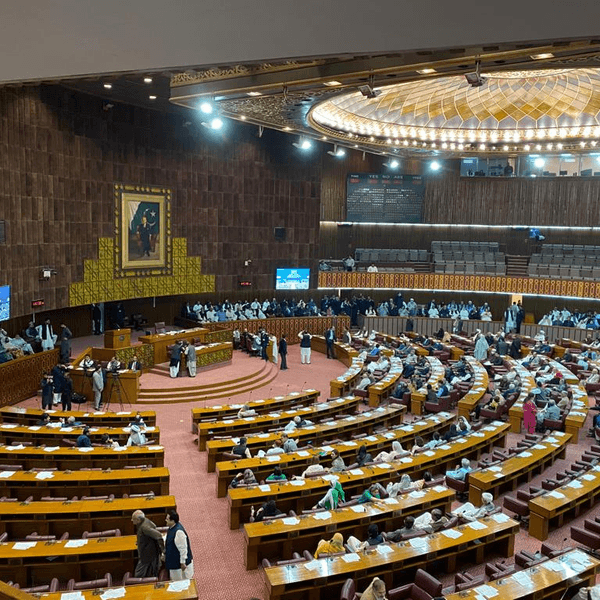
Parliament is expected to debate the amendment early next week, with the Senate convening on Saturday and the National Assembly meeting on Monday. Heated discussions are anticipated as opposition parties prepare to challenge the proposal on the floor.
What the 27th Amendment proposes
According to officials familiar with the draft, the proposed 27th Amendment includes the establishment of a Federal Constitutional Court, revisions to Article 243 and the return of education and population planning to federal oversight. It also suggests changes to the NFC Award, the financial mechanism that governs resource sharing between the federation and provinces.
Critics argue that such measures could undo many of the gains of the 18th Amendment, widely seen as a cornerstone of Pakistan’s federal democracy that strengthened provincial autonomy.
Government insiders say that if consensus is reached with the PPP during the next round of talks on November 6, a joint session of Parliament could be called by mid-November — following the same accelerated timeline used for the 26th Amendment’s passage in October 2024.



Comments
See what people are discussing