

Record fuel price cut gives relief, but leaves Pakistan’s oil sector reeling
Kamran Khan said the real challenge is building a pricing system that balances consumer relief with industry stability

News Desk
The News Desk provides timely and factual coverage of national and international events, with an emphasis on accuracy and clarity.
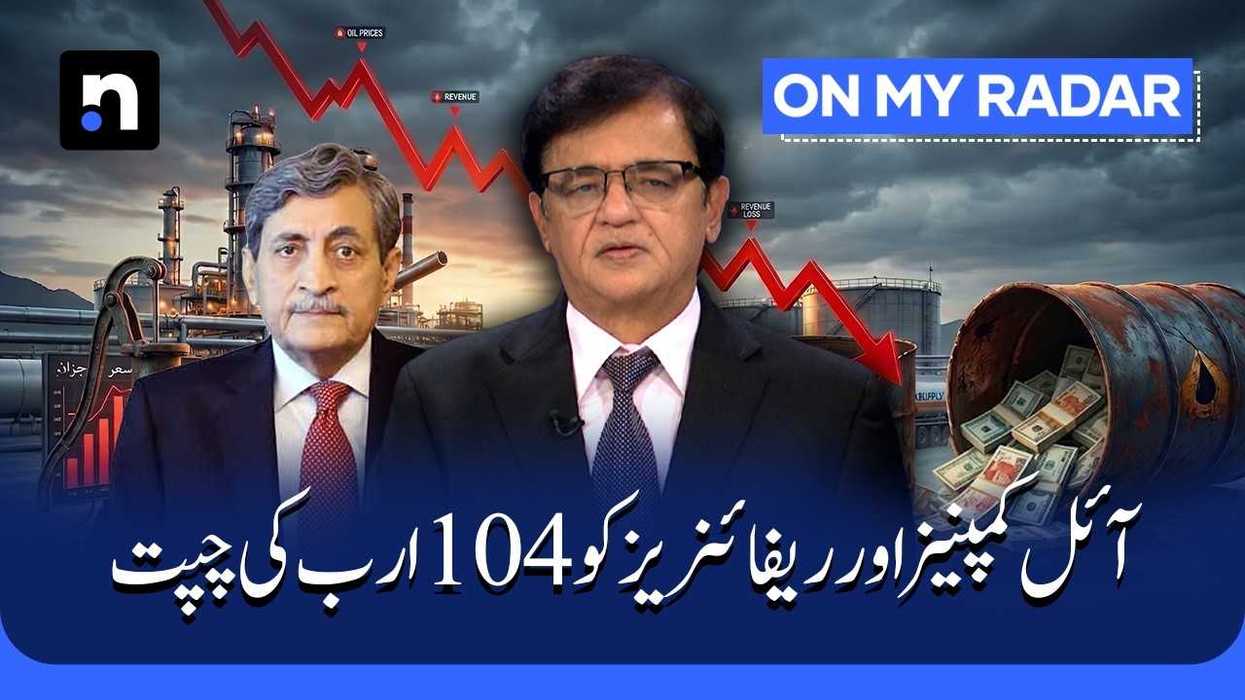
Pakistan’s record fuel price cut, triggered by the fallout of the U.S.-Iran peace agreement and falling global oil prices, has delivered rare relief to inflation-hit consumers. But behind the immediate benefit lies a growing financial crisis for the country’s oil sector, exposing deeper questions about fairness, pricing mechanisms, and who ultimately bears the cost of market volatility.
Last week, the government announced a historic reduction of Rs74 per litre in petrol prices and Rs67 per litre in diesel, the sharpest cut in Pakistan’s history. For millions of Pakistanis already struggling under soaring living costs, the move offered immediate relief after months of enduring the highest fuel prices the country has ever seen.
But in the latest episode of On My Radar, Kamran Khan said that while the benefits of the U.S.-Iran peace accord reached ordinary Pakistanis first through lower fuel prices, the decision has simultaneously pushed Pakistan’s oil sector into what energy experts are describing as a “single-day disaster.”
Oil marketing companies (OMCs) and refineries claim the abrupt reduction wiped out nearly Rs104 billion in value from their inventories within hours. According to industry representatives, the losses were not caused by poor commercial decisions, but by a sudden price revision under a new pricing formula, introduced without formal consultation with key stakeholders.
Yet the oil industry’s argument tells only part of the story.
At the onset of the Iran-U.S. conflict on March 6, the government had raised petrol and diesel prices by as much as Rs55 per liter. That increase led to allegations that OMCs earned nearly Rs113 billion in windfall gains on existing fuel stocks as market prices surged.
Former Prime Minister Shahid Khaqan Abbasi had also flagged the issue during the program, pointing to concerns over whether extraordinary profits made during price hikes were ever accounted for.
Against that backdrop, Prime Minister Shehbaz Sharif formed a high-level committee to review the cross-subsidy mechanism. The panel was tasked with examining whether the government could recover the alleged Rs72 billion in windfall profits earned by OMCs during fluctuations in global oil prices.
That has created a sharp contrast in the debate. On one hand, the oil sector is now warning of Rs104 billion in inventory losses. On the other, the government and critics are questioning what became of the extraordinary profits generated when fuel prices were climbing.
The issue, therefore, is no longer simply about whether petrol is cheap or expensive. The bigger challenge is designing a balanced pricing system, one that provides relief to consumers, keeps the energy supply chain stable, protects long-term investment, and ensures the burden of global price swings is not unfairly shifted onto any one side.




Comments
See what people are discussing