

Pakistan Supreme Court acquits MQM men sentenced to death in Baldia factory fire case
Pakistan's Supreme Court has acquitted two men sentenced to death over the 2012 Baldia factory fire, ruling the prosecution failed to prove its case beyond reasonable doubt

Aamir Abbasi
Editor, Islamabad
Aamir; a journalist with 15 years of experience, working in Newspaper, TV and Digital Media. Worked in Field, covered Big Legal Constitutional and Political Events in Pakistan since 2009 with Pakistan’s Top Media Organizations. Graduate of Quaid I Azam University Islamabad.
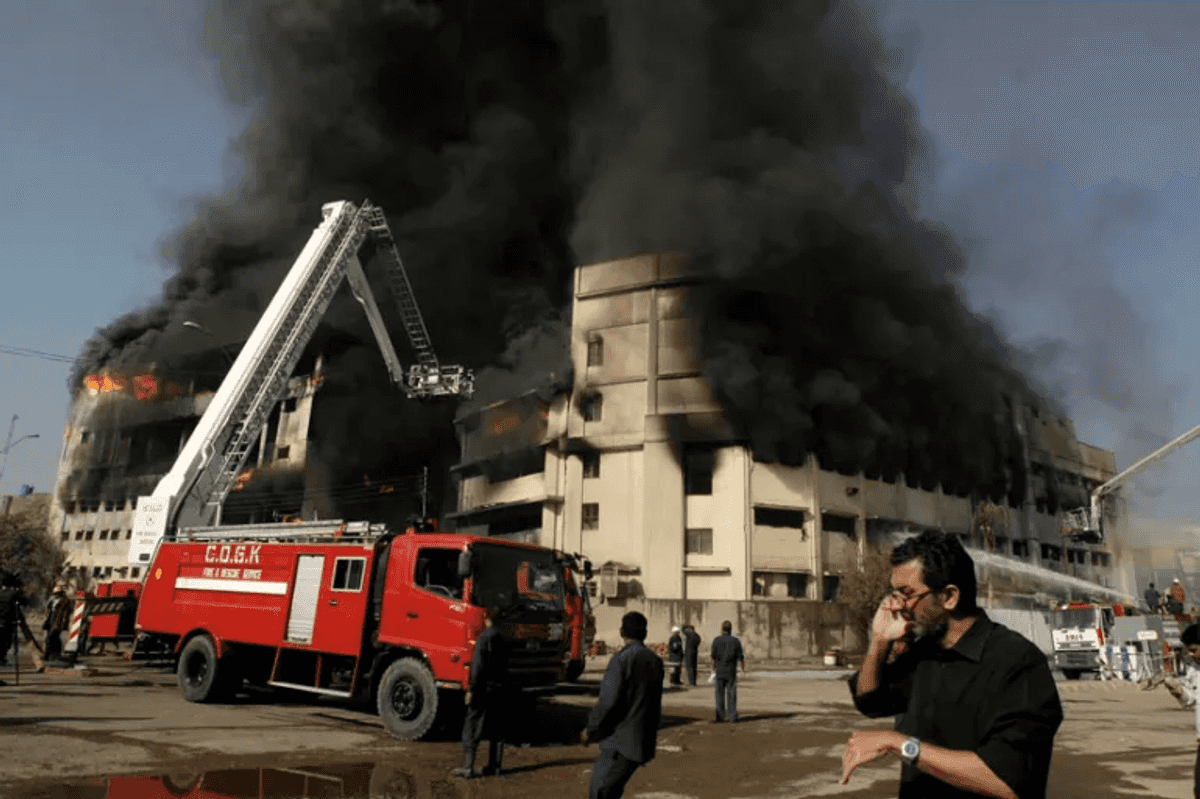
The 2012 Ali Enterprises factory fire in Karachi killed more than 260 workers, making it Pakistan's deadliest industrial disaster.
Reuters/File
Pakistan's Supreme Court acquitted two men sentenced to death in connection with the 2012 Baldia Town factory fire on Wednesday, overturning convictions linked to one of the country's deadliest industrial disasters.
A three-member bench headed by Justice Shahzad Malik allowed the appeals of Abdul Rehman alias Bhola and Zubair alias Charya, ruling the prosecution had failed to prove its case beyond reasonable doubt.
What did the Supreme Court rule in the Baldia factory fire case?
The Supreme Court set aside convictions handed down by a trial court and later upheld by the Sindh High Court, finding that both accused were entitled to the benefit of the doubt.
The bench said it would issue a detailed judgment at a later date. Investigators had not produced evidence showing chemicals were used to ignite the fire, the court observed.
What happened in the 2012 Baldia Town factory fire?
The fire broke out on September 11, 2012, at the multi-storey Ali Enterprises garment factory in Karachi's Baldia Town area, killing more than 260 workers and injuring dozens of others.
It remains Pakistan's deadliest industrial fire. The case has been the subject of legal proceedings and public scrutiny for more than a decade.
What evidence did the court examine in the hearing?
Justice Malik noted that while a confessional statement attributed to Zubair Charya was on record, no such statement existed for Abdul Rehman Bhola.
The bench also questioned why acquittals of other individuals allegedly linked to a purported extortion scheme had not been challenged, despite claims that money had been demanded on behalf of the Muttahida Qaumi Movement. The court also noted that the prosecution had not alleged the accused intended to kill the factory workers.
The Supreme Court separately declared ineffective a plea seeking the removal of references to the MQM from earlier judgments, noting the underlying convictions had already been overturned.
The court also rejected applications filed by relatives of some victims seeking to become parties to the proceedings.





Comments
See what people are discussing