

Shallow 7.0-magnitude earthquake strikes Tibet, killing at least 16 and flattening hundreds of homes
Powerful magnitude-7.0 earthquake struck remote Baqen County in northern Tibet late Thursday night, leaving at least 16 dead, dozens injured, and over 300 homes destroyed

News Desk
The News Desk provides timely and factual coverage of national and international events, with an emphasis on accuracy and clarity.
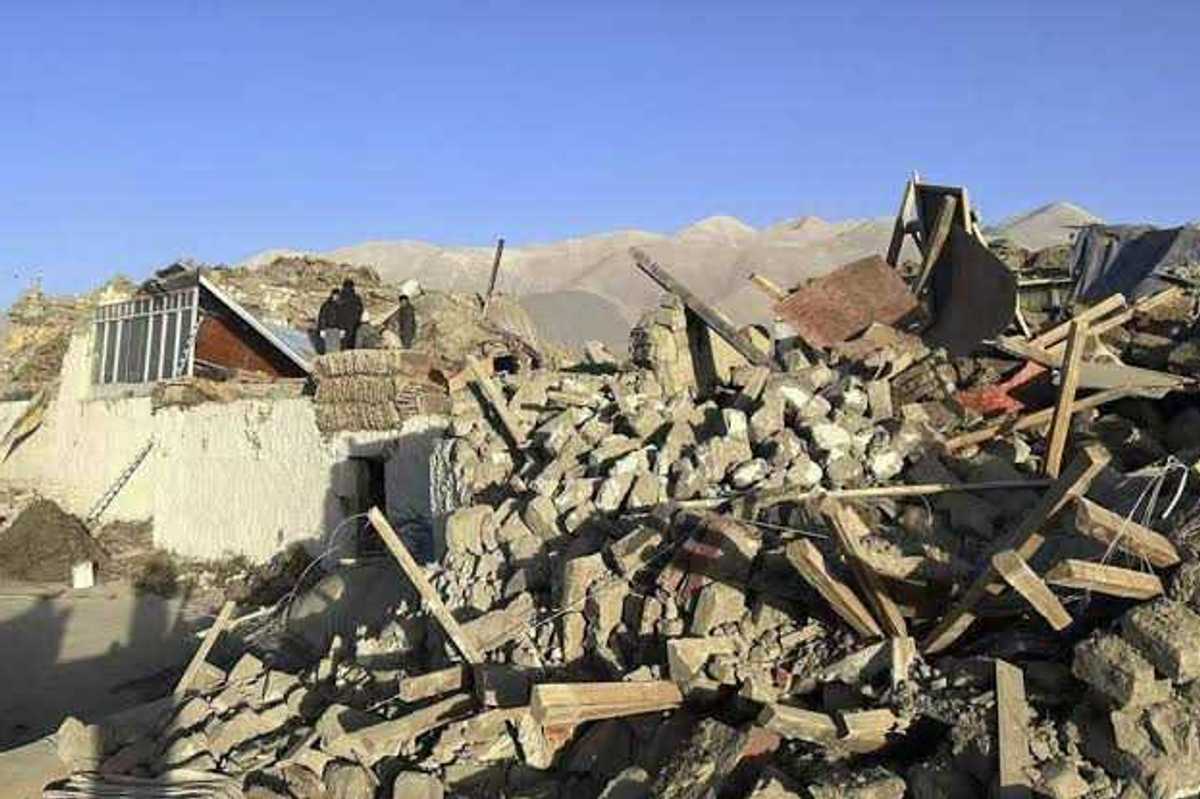
FILE: Aftermath of an earthquake in Tonglai Village, southwestern China's Tibet Autonomous Region on January 7, 2025.
AFP
A shallow magnitude-7.0 earthquake struck China’s remote southwestern region of Tibet late Thursday night, October 22, killing at least 16 people and injuring dozens more as search and rescue teams combed through collapsed structures in rugged, high-altitude terrain.
How extensive was destruction across Baqen County and Maru township?
According to China Central Television (CCTV) and regional emergency authorities, the tremor injured at least 46 people—11 of them seriously—and damaged or completely flattened 339 residential homes. While initial assessments cited by Xinhua via the Nagqu City emergency management bureau counted 32 injured, casualty numbers continued to rise as emergency teams reached isolated mountain settlements.
According to the BBC, the epicenter was pinpointed in Maru township within Baqen county, situated roughly 190 kilometers (120 miles) east-northeast of Nagqu and 390 kilometers northeast of the regional capital, Lhasa. According to the U.S. Geological Survey (USGS), the earthquake struck at 10:33 p.m. local time (1433 GMT) at a depth of 18 kilometers (11 miles). China’s official Xinhua News Agency reported that the China Earthquake Networks Center (CENC) registered a shallower hypocenter at a depth of 10 kilometers (6.2 miles).
Maru township deputy head Lhawang Dagpo stated that the violent shaking cracked the walls of local government offices, while communication networks and power grids across the county seat suffered extensive outages. Broadcast footage from state media showed emergency teams picking through piles of debris under floodlights, carrying injured survivors out of damaged structures, and residents fleeing into open spaces during the initial tremor.
How are emergency responders mobilizing amid high-altitude conditions and tectonic risks?
In response to the scale of destruction, disaster authorities escalated their response from a Level-III to a Level-II emergency. Relief operations mobilized rapidly overnight, with the regional fire and rescue corps deploying 347 rescue personnel alongside more than 300 police officers to clear debris-choked roads and extricate trapped residents. Authorities dispatched emergency supplies to the plateau, including more than 3,200 winterized tents, 2,800 folding beds, 1,000 sets of prefabricated housing units, and cold-weather clothing to shield displaced families from sub-zero mountain temperatures.
The Tibetan Plateau is prone to frequent seismic activity driven by the continuous tectonic collision of the Indian and Eurasian continental plates. The Baqen tremor follows several lethal earthquakes across southwestern China in recent years, including a January 2025 quake in rural Tingri county that claimed 126 lives, and a December 2023 disaster in Gansu province that killed at least 127 people. China’s deadliest modern seismic event remains the May 2008 Sichuan earthquake, which left nearly 90,000 people dead or missing.
According to reporting by Xinhua and CCTV, specialized medical teams and geological survey crews are establishing temporary field stations across Baqen County to monitor aftershocks and treat injured survivors.





Comments
See what people are discussing