

Signs emerge of tensions easing between state and Imran Khan
Kamran Khan says recent court, medical, and official steps show 'some ice beginning to melt'

News Desk
The News Desk provides timely and factual coverage of national and international events, with an emphasis on accuracy and clarity.
A series of recent legal, political and administrative developments suggest a possible easing of tensions between the state and former prime minister Imran Khan after nearly three years of strained relations. While officials have made no formal announcement of dialogue, several steps in recent weeks indicate movement on issues that had long remained stalled.
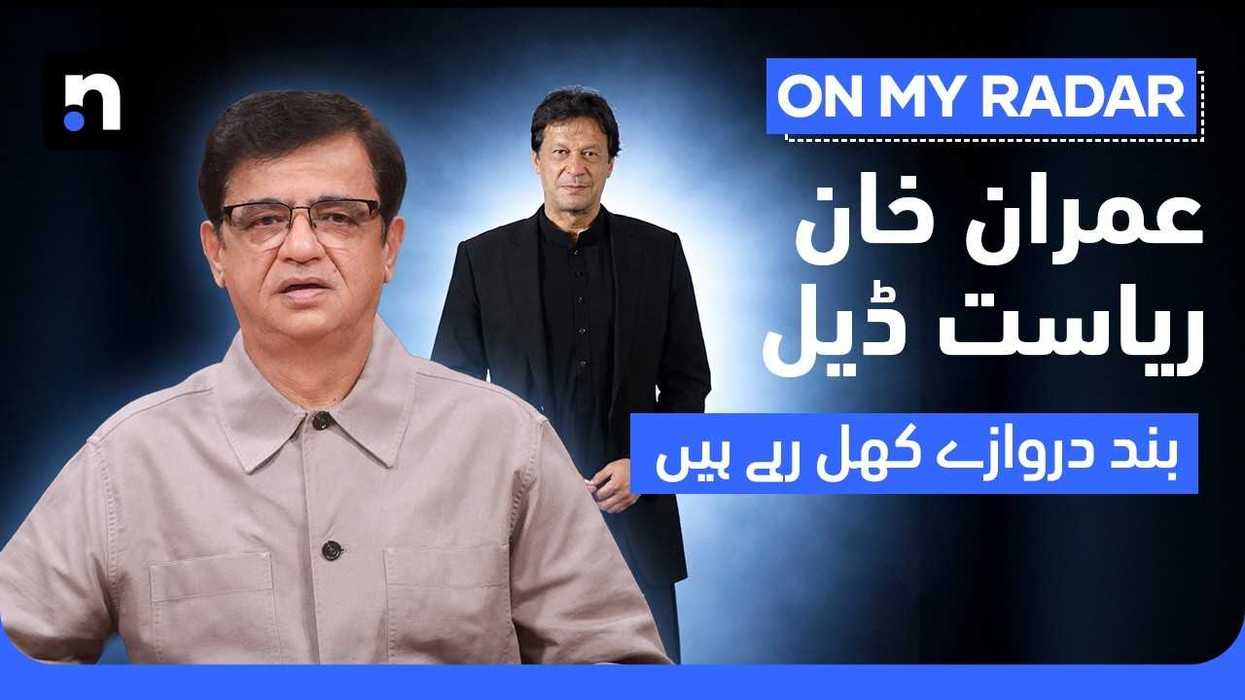
In the latest episode of On My Radar, Kamran Khan said there are visible signs that tensions between the state and Imran Khan may be softening. He noted that although Pakistan’s political situation can shift rapidly, recent developments - including court proceedings, medical access and high-level meetings- point to what he described as “some ice beginning to melt”.
On February 10, Chief Justice of Pakistan Justice Yahya Afridi ordered the consolidation of 13 cases related to Imran Khan and scheduled them for hearing. Legal representatives for Khan have termed the move a positive development. The chief justice also directed that a detailed medical examination of Khan be conducted and a report submitted to the court.
Earlier, on February 3, Bushra Bibi was allowed to meet her daughter and daughter-in-law after a gap of five months. Observers view this as a notable step, given the strict restrictions previously surrounding such meetings.
The most significant development came during recent Supreme Court proceedings, where a two-member bench headed by Chief Justice Afridi directed the federal government to arrange an eye examination for Imran Khan by specialist doctors before February 16.
The court also ordered that he be allowed to speak with his children before that date. The directives were issued after court-appointed counsel Salman Safdar submitted a report following a three-hour meeting with Khan in Adiala Jail.
According to Safdar’s report, Khan said his vision in the right eye had reduced to 15 percent despite receiving treatment and injections. Safdar informed the court that he personally observed Khan’s concern over his eyesight and medical care. Details of the report were subsequently shared with the media.
Separately, on January 30, PTI leader Salman Akram Raja met the chief justice and the attorney general for approximately 30 minutes to convey the party’s concerns. The following day, Khan’s medical report was reportedly provided to his family. Safdar’s recent meeting marked only the second such extended interaction with Khan in two and a half years.
Political engagement has also increased. Two weeks ago, Prime Minister Shehbaz Sharif held his first meeting with the Chief Minister of Khyber Pakhtunkhwa, emphasizing cooperation between the federal and provincial governments for development and security.
Shortly afterward, an Apex Committee meeting was convened in the province under the chief minister’s chairmanship, attended by senior civil, military and law enforcement officials.
This was followed by a high-level meeting at Corps Headquarters Peshawar on February 10, attended by the federal interior minister, the Khyber Pakhtunkhwa chief minister and the national security adviser, who also serves as DG ISI.
According to the official statement, participants reviewed the province’s security situation and decided to establish a special subcommittee, chaired by the chief minister, to monitor development work in specific districts and review related security matters through regular monthly meetings.
Meanwhile, in January - after a delay of several months - opposition leaders proposed by PTI were appointed in the Senate and National Assembly. Earlier, PM Sharif had offered dialogue with the opposition, stating that cooperation among political forces is essential for national stability and progress. In December, the opposition alliance Tehreek Tahaffuz Ayeen-e-Pakistan also called for a renewed charter of democracy, emphasizing that dialogue remains fundamental in a democratic system.
Taken together, these developments reflect increased institutional engagement at multiple levels, though no formal reconciliation process has been announced.

Comments
See what people are discussing