

Stranger Things is ending but Hawkins will never really let us go
After nearly a decade, Netflix’s defining series signs off, leaving behind more than monsters, memories, and bikes in the dark

Sibte Hassan
Correspondent, Karachi Pakistan
Syed Sibte Hassan Rizvi is a seasoned multimedia journalist with over 12 years of experience. He has worked as a news correspondent, covering various beats for Pakistan's leading news channels.
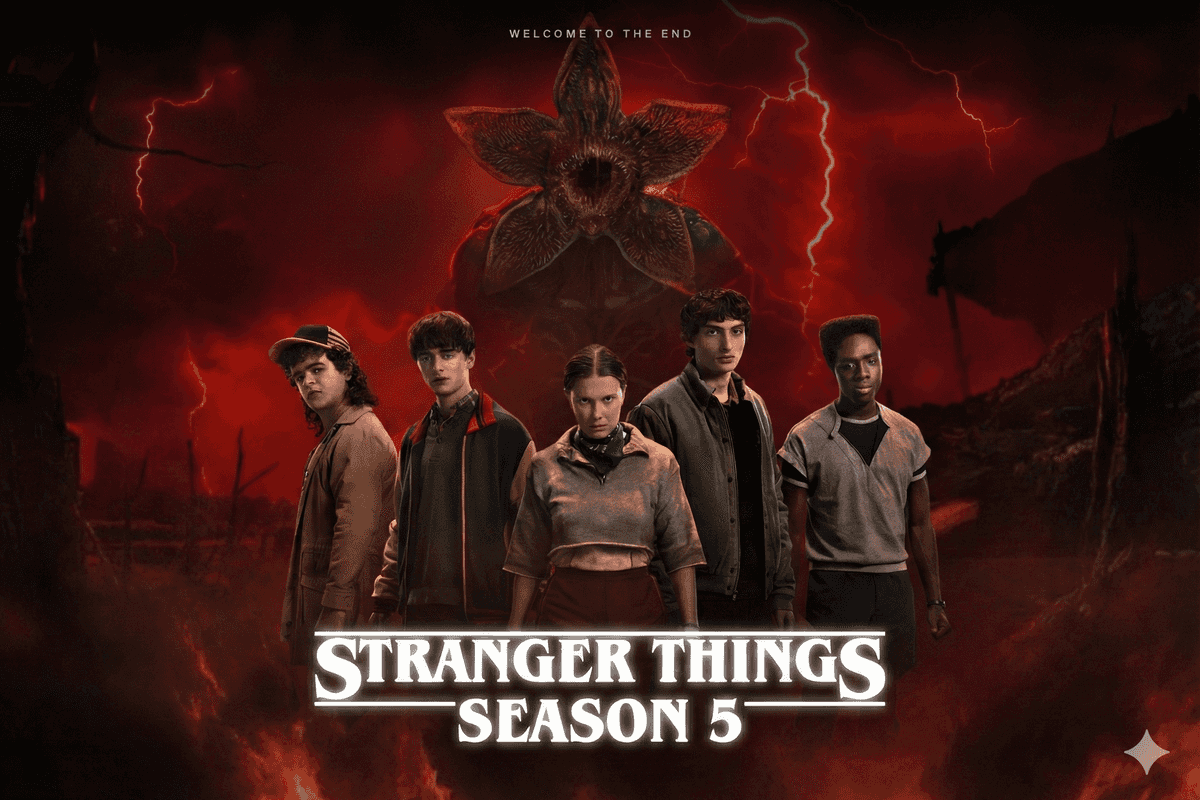
Stranger Things Finale
Gemini
The series finale chooses emotional consequence over spectacle, ending with sacrifice, loss, and unresolved silence
Hawkins and the Upside Down ultimately reflect grief, trauma, and the cost of growing up rather than just supernatural horror
Stranger Things closes not as a nostalgic show, but as a generational story about letting go
The final episode of Stranger Things doesn’t end with a victory lap, it ends with silence. As Hawkins stands fractured between worlds, Eleven makes a choice no one else can. After a final confrontation in the ruins of the Upside Down, Vecna is defeated, not in rage, but in refusal. Will Byers, standing face to face with the monster who once owned his fear, asks him to surrender, to stop, to let the cycle end. Vecna doesn’t. Kali falls trying to protect Eleven, her death closing the last chapter of the experiment that created them both. And then, as the rift begins to collapse, Eleven vanishes, no body, no goodbye—leaving behind only a stillness that feels heavier than any explosion. Hawkins survives. But something essential is gone.
The Upside Down
When Stranger Things debuted in 2016, it didn’t announce itself as a phenomenon. It arrived quietly, wrapped in synths and suburban stillness, and slowly pulled viewers in. The bikes cutting through empty streets, the basement games, the fierce loyalty between friends, it all felt uncannily familiar. The show wasn’t just watched; it was recognized. That sense of emotional déjà vu turned a genre series into something far more personal.
Cracks in Hawkins
As the seasons unfolded, nostalgia gave way to something heavier. The town of Hawkins began to show its fractures, mirroring the characters themselves. What started as a playful mystery became a story shaped by loss, fear, and consequence. Childhood stopped being a shield. The world grew darker, and the show allowed that darkness to stay, rather than rushing to resolve it.
Voices in the static
The Upside Down evolved beyond a supernatural setting. It became a language for what remained unspoken—grief, trauma, isolation, and the fear of being unseen. The horror worked because it felt intimate. The danger wasn’t just external; it was emotional. Pain, when ignored, found a way back through the static.
Becoming Eleven
At the heart of Stranger Things stood Eleven, a character whose power was never portrayed as a gift without cost. Her journey was shaped by memory, loss, and the struggle to define herself beyond what others demanded of her. Each season deepened that search, reminding viewers that strength is not about invincibility, but about survival with scars intact.
The right side up
What ultimately grounded the series was its understanding of human connection. Friendships changed, drifted, and deepened in unexpected ways. Characters like Steve Harrington and Max Mayfield resonated not because they were perfect, but because they were honest reflections of growth, grief, and resilience. These relationships were the real defense against the darkness.
Turning the lights on
With the arrival of Vecna, the show confronted its themes head-on. He was not a villain of chaos, but of intention—targeting vulnerability, isolation, and unresolved pain. In doing so, Stranger Things connected deeply with a generation increasingly open about mental health and emotional struggle. The monster was frightening because he understood his victims.
Leaving Hawkins
As the series reaches its end, it resists the temptation of neat closure. Eleven’s disappearance leaves the story deliberately unresolved, echoing the show’s deepest truth: growing up means learning to live with unanswered questions. The kids of Hawkins are no longer kids, and the audience that grew alongside them is no longer the same.
The final moments of Stranger Things don’t just close a story. They close a shared emotional space where fear, friendship, and memory coexisted.
Some endings explain everything. The best ones leave a mark.





Comments
See what people are discussing