

Tribal elders reject new tax regime in Pakistan's merged districts
Grand jirga rejects Pakistan's new tax regime in merged tribal districts, demanding Islamabad restore exemptions immediately.

Kamran Ali
Correspondent Nukta
Kamran Ali, a seasoned journalist from Khyber Pakhtunkhwa, Pakistan, has a decade of experience covering terrorism, human rights, politics, economy, climate change, culture, and sports. With an MS in Media Studies, he has worked across print, radio, TV, and digital media, producing investigative reports and co-hosting shows that highlight critical issues.
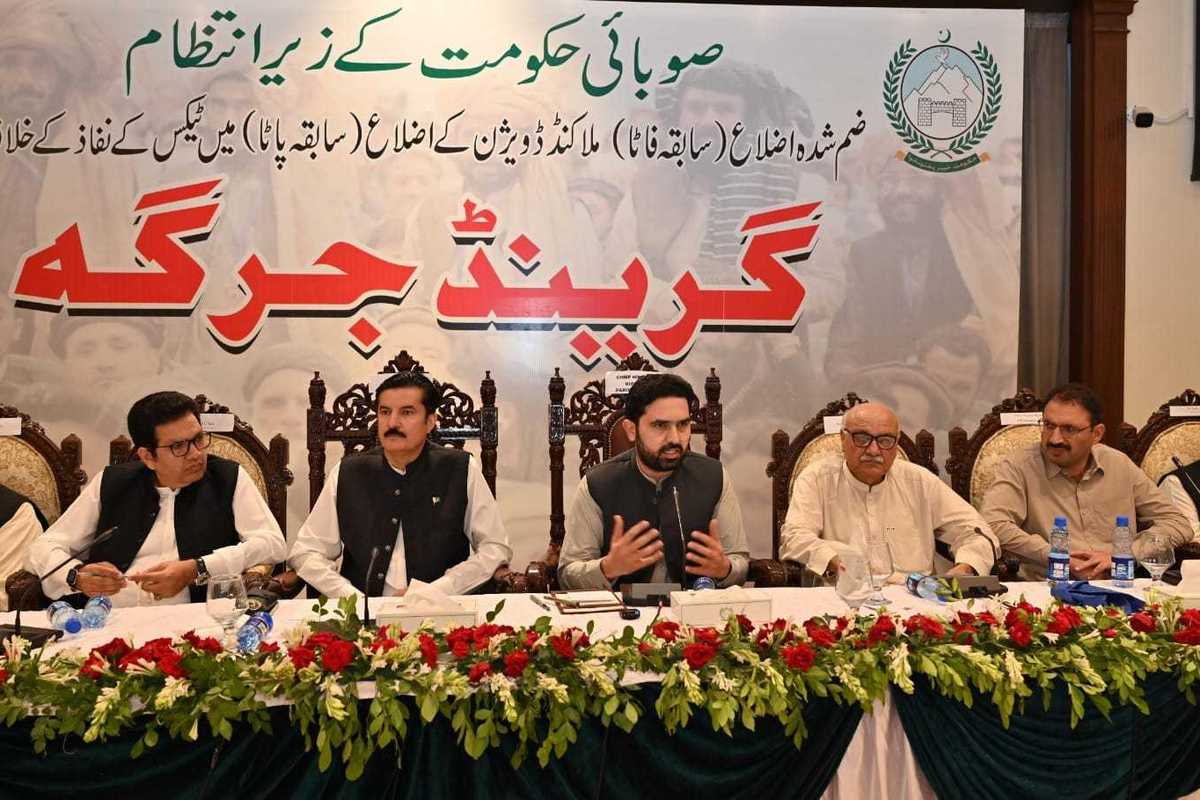
The jirga was convened by the Khyber Pakhtunkhwa government and brought together Chief Minister Sohail Afridi, Governor Faisal Karim Kundi, provincial cabinet members, lawmakers, political party representatives, traders' associations and tribal elders.
CM House Peshawar
A grand jirga of tribal elders on Friday rejected Pakistan's new tax regime for the former Federally Administered Tribal Areas and Provincially Administered Tribal Areas. It called on the federal government to immediately reverse the decision and restore tax exemptions that expired at the start of the current fiscal year.
Why did tribal elders reject the new tax regime?
Tribal elders and traders in the merged districts argue that imposing new taxes before the region's economy recovers from decades of militancy is unjust. They say the federal government has failed to honor commitments made during the 2018 merger, leaving the area without promised development support while now facing a full tax burden.
The jirga was convened by the Khyber Pakhtunkhwa government and brought together Chief Minister Sohail Afridi, Governor Faisal Karim Kundi, provincial cabinet members, lawmakers, political party representatives, traders' associations and tribal elders. They gathered to discuss the taxes imposed in the province's merged tribal districts and the Malakand Division.
What commitments does the federal government still owe?
Participants unanimously adopted a resolution stating that the federal government had failed to fulfil commitments made when the former tribal areas were merged into Khyber Pakhtunkhwa. These include development funding, improved public services, the Accelerated Implementation Program, a 10 year tax exemption and a fair share under the National Finance Commission Award.
The resolution described imposing taxes under these circumstances as a grave injustice. It called on the federal government to immediately withdraw the taxes, restore the exemption and fulfil its financial and development commitments, warning that a joint course of action would follow if the demands were ignored.
How has the KP government responded to the new taxes?
Chief Minister Afridi announced that the provincial government would withdraw all provincial taxes, including the Sales Tax on Services, a move welcomed by participants. He also announced the formation of a high-level delegation to hold talks with the federal government.
Afridi warned that there would be a strong response if the federal government does not withdraw its decision to impose taxes. Governor Kundi said the federal government had yet to provide the promised 100 billion rupees ($355 million) for the former FATA, and argued that imposing taxes before meeting that obligation was inappropriate.
When did the new tax regime take effect?
The new tax regime took effect on July 1 after tax exemptions for the former FATA and PATA expired. These regions had been exempted from taxes for decades to support development in historically underdeveloped areas.
Following the merger of the former FATA into Khyber Pakhtunkhwa under the 25th Constitutional Amendment in 2018, the tax exemption remained in place for five years before being extended by another two. It expired on June 30.
How will the new taxes affect businesses in the merged districts?
Inam Ullah, president of the Malakand Chamber of Commerce, told Nukta that around 34 to 35 different taxes, including property tax, professional tax and sales tax, had been introduced, bringing the region's tax structure in line with the rest of the province. He said a customs law had also been enforced, while millions of non-duty paid vehicles already in use were creating significant difficulties for residents.
Inam Ullah said many businesses had moved to the region because of its tax exempt status but warned the new regime could make many industries unviable. He said operating costs are already high because the areas are far from major commercial centers such as Lahore and Karachi, and that without tax incentives, many businesses could face losses and be forced to shut down.



Comments
See what people are discussing