

What’s behind TTP’s new nationalist shift?
TTP emphasizes tribal identity and Pashtun grievances, signaling a shift toward local-rights nationalism

Kamran Ali
Correspondent Nukta
Kamran Ali, a seasoned journalist from Khyber Pakhtunkhwa, Pakistan, has a decade of experience covering terrorism, human rights, politics, economy, climate change, culture, and sports. With an MS in Media Studies, he has worked across print, radio, TV, and digital media, producing investigative reports and co-hosting shows that highlight critical issues.
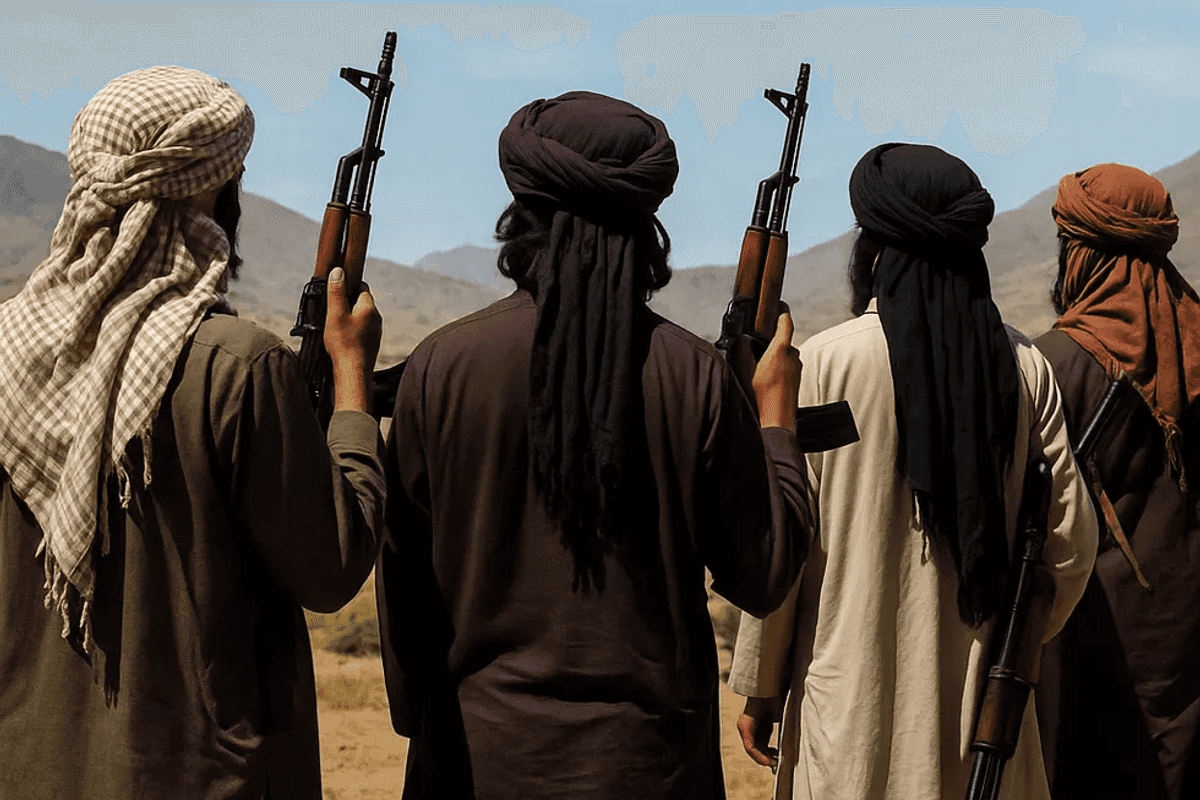
TTP’s ties with the BLA highlight its shift toward ethnonationalist militancy.
AI generated
Tehreek-e-Taliban Pakistan (TTP) is refashioning itself as an ethnic nationalist movement in what security analysts describe as its most significant ideological shift in years, a move aimed at strengthening local support and distancing the group from global militant networks.
The TTP, which has carried out some of Pakistan’s deadliest attacks, has recently highlighted tribal identity, resource control and longstanding grievances among Pashtun communities along the Pakistan-Afghanistan border.
Analysts say the messaging marks an attempt to cast the organization as a defender of local rights rather than a purely jihadist insurgency — a strategic rebranding that comes as regional powers increase pressure on militant groups operating from Afghan territory.
Ethnonationalist signaling
Abdul Basit, a Senior Associate Fellow at Singapore’s S. Rajaratnam School of International Studies, told Nukta the group’s rhetoric now mirrors long-standing themes in Pashtun nationalist politics.
“The TTP has shifted towards an ethnonationalist narrative, emphasizing tribal traditions, cultural identity and claims of marginalization,” he said. “Its rejection of the Durand Line fits squarely within that framework.”
Other analysts say the group’s reported cooperation with the Balochistan Liberation Army (BLA) - an ethnonationalist insurgent outfit - underscores this direction.
Jawad Yousafzai, a researcher on terrorism, said the TTP has offered “logistical, operational and shelter support” to BLA militants. “Even though the TTP still describes itself as a militant group, its partnerships show a clear tilt towards nationalist militancy,” he said.
Yousafzai pointed to recent comments by TTP chief Mufti Noor Wali Mehsud, who framed the group’s fight as an effort to reclaim territory and secure local resource rights. “This is grounded in a nationalist vocabulary, not a transnational jihadist one,” he added.
Outreach to ethnic and rights groups
Journalist Ihsanullah Tipu Mehsud, who covers militancy in the region, said the TTP has increasingly invoked both Pashtun and Baloch identities while portraying these populations as victims of state repression.
“The group has even reached out to civilian nationalist movements like the Pashtun Tahafuz Movement, urging them to join what it calls a resistance struggle,” he told Nukta.
Strategic recalibration
Tipu Mehsud said the TTP’s evolution can be divided into two phases: its violent and undisciplined early years from 2007 to 2018, followed by a recalibration under Noor Wali Mehsud.
“The leadership admitted that indiscriminate attacks on civilians were a major error that cost them public support,” he said, noting that Noor Wali has described the earlier phase as “cruel” in internal writings.
Under the new strategy, he said, the TTP aims to rebuild local sympathy by presenting itself as a guardian of community rights. That framing, he added, comes at a sensitive moment: “Community cooperation is crucial for counterterrorism operations, but this time many local groups are opposing military action, which complicates the state’s efforts and favors the militants,” he said.
Regional and international considerations
Basit said the shift is partly driven by regional dynamics. When Pakistan or other states such as Saudi Arabia and Turkey pressure the Afghan Taliban over their relations with the TTP, the group reframes the issue as a domestic political matter.
“At the same time, the TTP is distancing itself from global jihadist agendas to avoid alienating major powers like China and the United States,” he said. “This distancing is deliberate and strategic.”
However, Basit argued that the benefits of the rebranding may be limited.
“The TTP has a pattern of adjusting its ideological posture to suit circumstances,” he said. “They aligned with al Qaeda and later denied it. Now they claim to be nationalists after years of defining themselves through jihad. Such fluidity risks being seen as opportunism rather than conviction.”




Comments
See what people are discussing