


News Desk
The News Desk provides timely and factual coverage of national and international events, with an emphasis on accuracy and clarity.
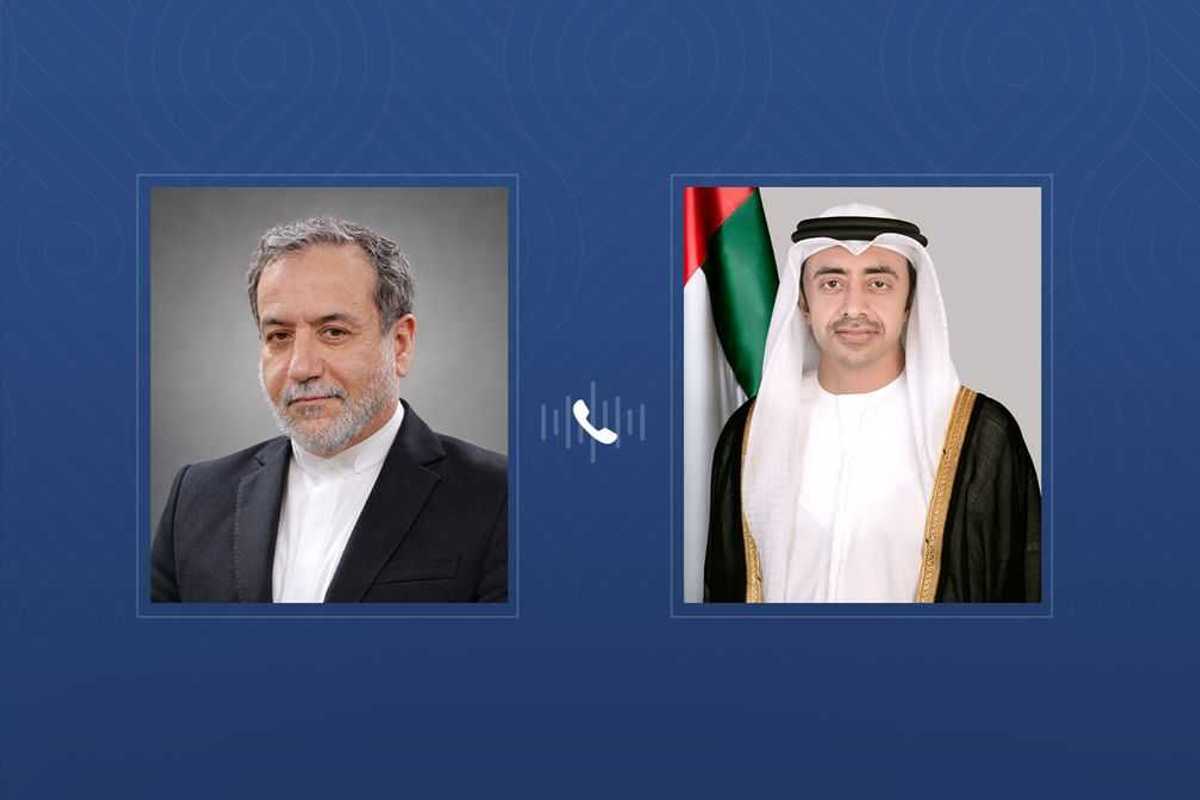
Sheikh Abdullah bin Zayed Al Nahyan, the UAE’s deputy prime minister and foreign minister, spoke by phone with Iranian Foreign Minister Abbas Araghchi on Thursday.
WAM
UAE Deputy Prime Minister and Foreign Minister Sheikh Abdullah bin Zayed Al Nahyan has urged de-escalation and greater diplomatic engagement in a phone call with his Iranian counterpart Abbas Araghchi amid rising tensions in the Strait of Hormuz.
The two ministers discussed regional developments and the latest security situation during their conversation on Thursday, the Emirates News Agency (WAM) reported.
What did Abdullah bin Zayed discuss with Iran's foreign minister?
Sheikh Abdullah stressed the need to prevent further escalation and called for intensified diplomatic efforts to strengthen regional security and stability.
Araghchi also held separate telephone conversations with Turkish Foreign Minister Hakan Fidan and Kuwaiti Foreign Minister Sheikh Jarrah Jaber Al Sabah to discuss regional developments.
What happened to the tankers in the Strait of Hormuz?
Iran said at least three tankers caught fire in the Strait of Hormuz on Thursday, raising fresh concerns over maritime security as efforts continued to prevent a resumption of hostilities.
The Iranian navy said the vessels had struck mines while sailing through areas it had designated as prohibited. The naval forces of Iran's Islamic Revolutionary Guard Corps also reported that two other tankers caught fire the previous night.
These claims have not been independently confirmed.
The UK Maritime Trade Operations agency separately reported that a tanker was struck by two objects north of Qatar late Wednesday. Reports identified the vessel as the Velos Sapphire.
Does the UAE want another military confrontation with Iran?
The UAE has said it does not want a renewed military confrontation but remains prepared for further escalation while pursuing a diplomatic solution.
Anwar Gargash, diplomatic adviser to UAE President Sheikh Mohamed bin Zayed Al Nahyan, made the remarks at the IISS Manama Dialogue in Bahrain last Sunday, The National reported.
Gargash said the UAE and other Gulf states hoped mediation efforts would produce a breakthrough, warning that further escalation between Washington and Tehran would serve neither regional interests nor Iran's.
The UAE has faced the highest number of attacks since the war began in February, with more than 550 ballistic missiles and 2,265 drones directed at the country. Most were intercepted or destroyed before reaching their targets.
Why did the US-Iran ceasefire collapse?
A ceasefire took effect in June after the United States and Iran reached an agreement intended to pave the way for a lasting peace settlement.
However, US President Donald Trump declared the truce and agreement over in early July following renewed Iranian attacks on ships in the Strait of Hormuz and retaliatory American strikes.
Both Washington and Tehran have since signaled preparations for a possible resumption of hostilities.




Comments
See what people are discussing