


News Desk
The News Desk provides timely and factual coverage of national and international events, with an emphasis on accuracy and clarity.
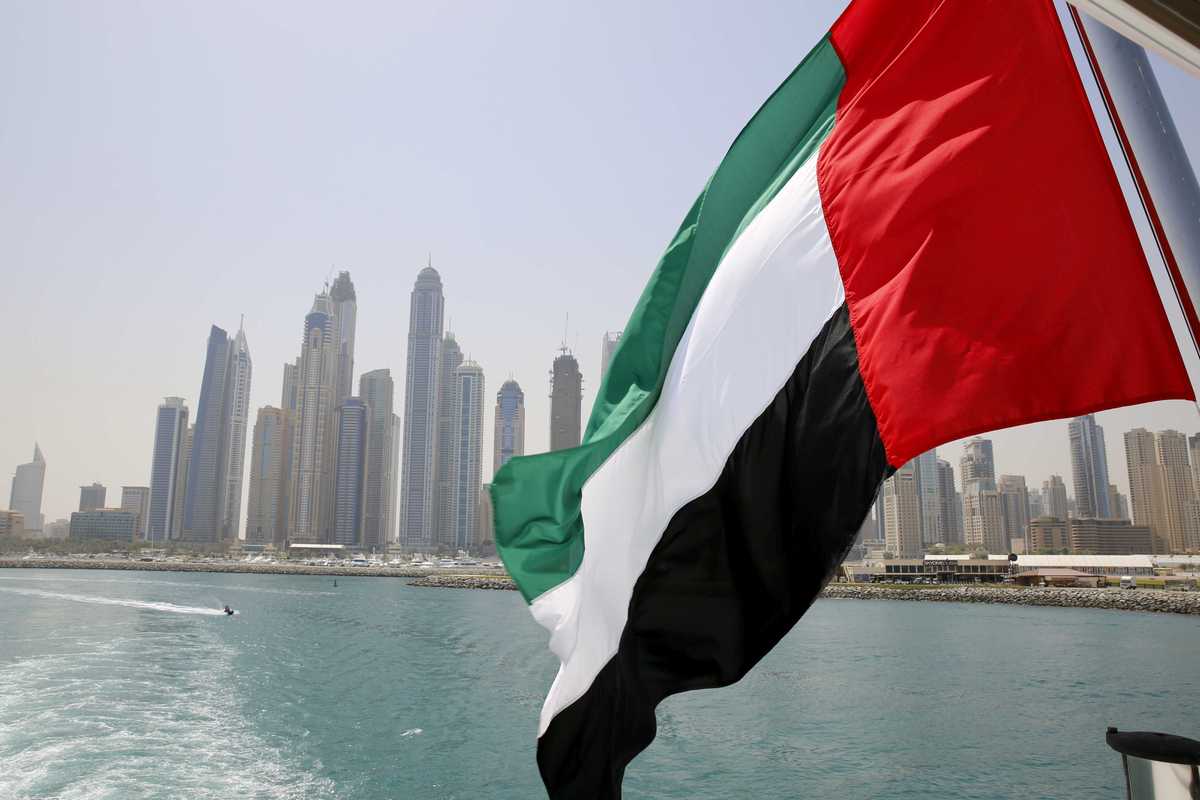
The UAE-EAEU trade agreement took effect on Tuesday, covering Armenia, Belarus, Kazakhstan, Kyrgyzstan and Russia.
Reuters
The Economic Partnership Agreement (EPA) between the UAE and the Eurasian Economic Union (EAEU) entered into force on Tuesday, Gulf News reported. The UAE-EAEU deal creates a preferential trade framework with Armenia, Belarus, Kazakhstan, Kyrgyzstan and Russia.
What does the UAE-EAEU trade deal do?
The UAE-EAEU agreement cuts or removes customs duties on a broad range of goods. It also streamlines trade procedures and tackles unnecessary barriers. Both sides will give preferential access across more than 86 percent of tariff lines, covering about 96 percent of the value of goods currently traded.
The agreement also sets rules on customs cooperation, e-commerce and economic cooperation. It covers the participation of small and medium-sized enterprises in international trade as well.
Trade between the two markets is expected to rise to nearly $50 billion a year by 2032. The agreement was signed in Minsk on June 27, 2025.
How much trade does the UAE have with the EAEU?
UAE-EAEU non-oil trade reached $33.6 billion in 2025. That is up 16 percent from $29 billion in 2024 and more than four times its 2021 value.
Imports from the EAEU stood at $17.8 billion in 2025, while re-exports reached $13.7 billion. Bilateral non-oil trade rose a further 6.2 percent year on year to $14.3 billion in the first half of 2026.
What did the UAE trade minister say about the agreement?
UAE Minister of Foreign Trade Dr. Thani bin Ahmed Al Zeyoudi said the agreement will turn growing commercial ties into a platform for exporters, manufacturers and supply-chain partners.
"By improving market access, simplifying customs procedures and establishing clear, transparent rules, we are enabling businesses to move goods more efficiently and compete across a market spanning five important Eurasian economies," he said.
He said the deal reflects the UAE's commitment to open, rules-based trade and to building ties with high-potential markets. Al Zeyoudi added that it will strengthen supply-chain resilience and support food security.
He said it will also create new opportunities in manufacturing, agriculture, logistics, automotive products, technology and precious metals.
How does the UAE-EAEU agreement fit into the UAE's trade strategy?
The agreement gives UAE merchandise exporters preferential access to the EAEU customs market. EAEU producers gain access to the Middle East, Africa and Asia through the UAE's trade and logistics network.
The deal is part of the UAE's Comprehensive Economic Partnership Agreement (CEPA) programme, a key pillar of its foreign trade strategy. The programme was launched in September 2021.
Since then, the UAE has expanded its network of trade partnerships across Asia, Africa, Europe and the Americas. The government says the programme supports open, rules-based trade, economic diversification and access to high-growth markets.
The UAE has set a target of raising non-oil foreign trade to Dh4 trillion ($1.1 trillion) by 2031.




Comments
See what people are discussing