


News Desk
The News Desk provides timely and factual coverage of national and international events, with an emphasis on accuracy and clarity.
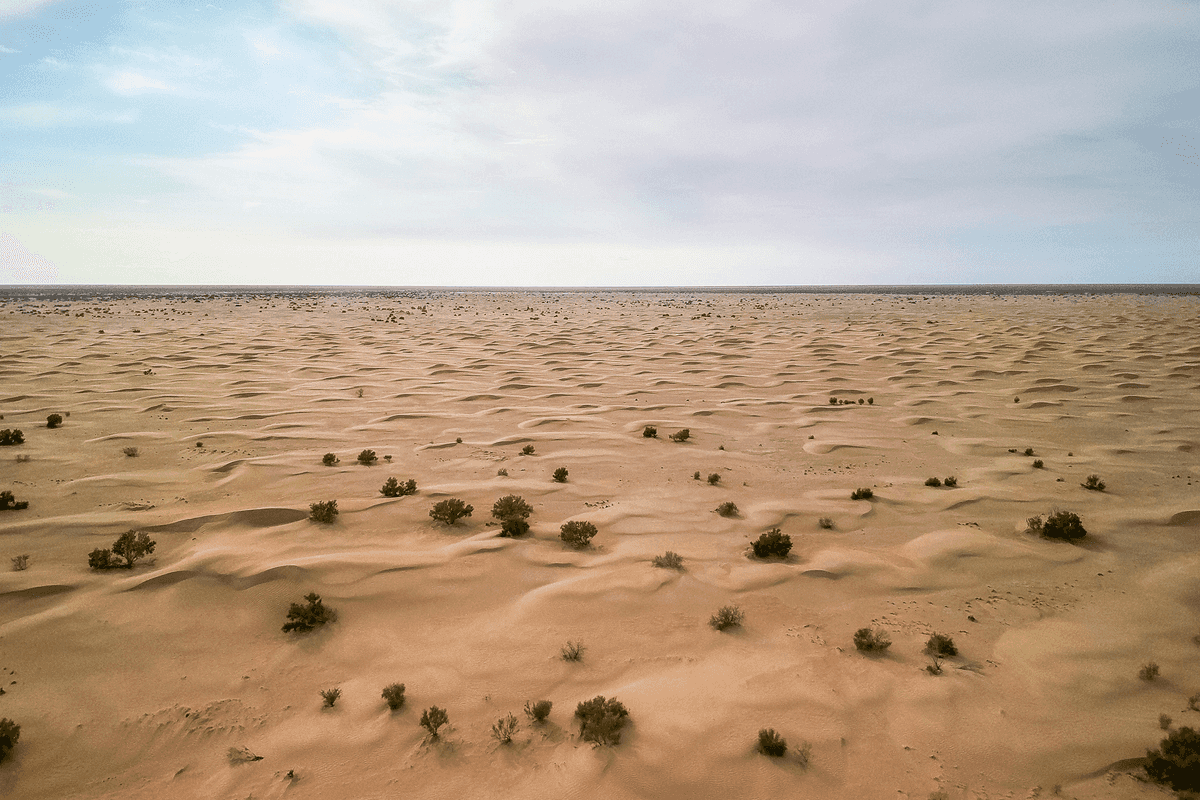
Khalifa University develops low-cost nanocellulose method to improve sandy soils.
Via X
Researchers at the UAE’s Khalifa University have developed a low-cost, sustainable technology that significantly improves sandy soil quality by using nanocellulose fibers derived from pineapple peel waste, offering a potential breakthrough for agriculture in arid regions, WAM reported.
The innovation addresses key challenges facing dry climates, including water scarcity, soil degradation and food security, by enhancing water retention, soil strength and nutrient availability in sandy terrains common across the Middle East and North Africa.
The findings were published in the Journal of Bioresources and Bioproducts, ranked among the world’s top one percent of journals, under the title “Evaluating nanocellulose from food waste as a functional amendment for sandy soils: Linking fiber structure to water dynamics, soil mechanics, and plant-microbe interactions.”
According to the study, nanocellulose fibers improve the structural stability of sandy soils while supporting nutrient retention and beneficial plant-microbe interactions. Researchers also assessed the durability of the fibers-soil mixtures over time, confirming their resistance to breakdown and long-term effectiveness.
Khalifa University President Professor Ebrahim Al Hajri said the research reflects the UAE’s focus on region-specific innovation. “This novel approach has the potential to turn arid land into productive terrain and directly supports the UAE’s goals of strengthening food security and addressing water scarcity,” he said.
He added that the scalable solution, which repurposes local food waste, could deliver environmental and economic benefits while supporting sustainable development across water-stressed regions.
The study was authored by M. Haidar Ali Dali, Dr Mohamed Hamid Salim, Malak AbuZaid, Maryam Omar Subhi Qassem, Dr Faisal Al Marzooqi, Dr Andrea Ceriani, Alessandro Decarlis, Ludovic Francis Dumée and Blaise Leopold Tardy.
The research team represents multiple Khalifa University entities, including the Department of Chemical and Petroleum Engineering, the Food Security and Technology Centre, the Research and Innovation Centre on CO₂ and Hydrogen, and the Centre for Membrane and Advanced Water Technology.



Comments
See what people are discussing