


News Desk
The News Desk provides timely and factual coverage of national and international events, with an emphasis on accuracy and clarity.
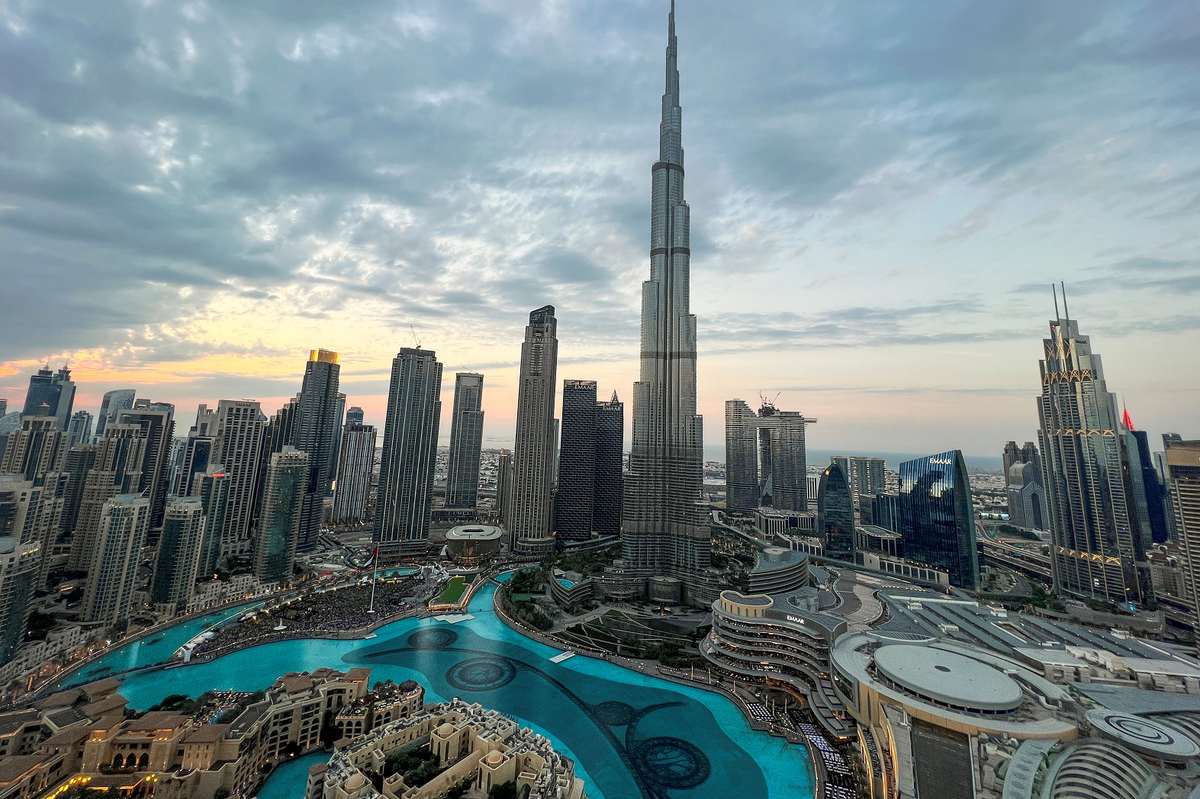
Reuters/File
The United Arab Emirates has sharply expanded its tourism footprint, pairing rising global visitor demand with an investment climate designed to deliver strong returns and long-term growth, WAM reported.
The gains are part of a coordinated national push to cement the country’s status as one of the world’s premier travel destinations.
Authorities have rolled out a wide range of incentives to attract capital and encourage entrepreneurship in a sector benefiting from sustained momentum. The UAE’s appeal is anchored in a combination of natural, social and regulatory strengths that support year-round tourism, with its temperate winter season remaining a major draw.
Those strengths include the country’s geographic position bridging East and West, diverse landscapes spanning deserts, mountains and coastlines, political and economic stability, and a social fabric built on tolerance and coexistence. A packed calendar of international events, modern transport links and accommodation options across all price segments further reinforce its competitiveness.
These factors have propelled the UAE into the top tier of global tourism rankings. It is among the world’s leading destinations for international tourist spending and ranks at the top globally in several aviation and travel competitiveness indicators, particularly the quality of air transport infrastructure.
Tourism activity continued to expand in the first half of the year, with hotels hosting more than 16 million guests. By mid-year, the UAE counted 1,243 hotel establishments with over 216,000 rooms, while 16 new hotels entered the market during 2024.
The momentum has been supported by promotional efforts such as the “World’s Coolest Winter” campaign, launched this year under the theme “Our Winter is Entrepreneurial,” which spotlights investment incentives and facilitation measures for tourism-focused businesses.
At the policy level, the government has advanced a series of national initiatives, including the National Tourism Charter, hospitality training programs, support for domestic tourism, promotion of emerging destinations, deeper engagement with international tourism bodies, and the integration of tourism concepts into education.
The Ministry of Economy and Tourism is also implementing digital projects under the UAE Tourism Strategy 2031, including systems to electronically link hotel data with local tourism authorities. From 2026, the focus will shift toward diversifying tourism products, accelerating digital transformation through advanced technologies, and embedding sustainability across all tourism services.
Over decades, heavy investment by the government, local investors and international partners has underpinned the sector’s expansion. This includes large-scale infrastructure such as airlines, airports and hotels, alongside premium leisure attractions and cultural and heritage offerings developed especially over the past ten years.
Growth remains broad-based, supported by continued expansion in tourism and hospitality infrastructure. Public authorities are working closely with private firms to raise service standards, align hotel classifications with global benchmarks, forge international partnerships and enhance the overall visitor experience.
For investors and entrepreneurs, the UAE offers an array of facilitation measures, including tax exemptions, full foreign ownership, access to more than 40 free zones, no requirement for a local sponsor, no minimum capital thresholds, zero income tax and unrestricted profit repatriation.
These benefits are reinforced by long-term residency options of five to ten years, streamlined access to skilled labor and a flexible employment framework that positions the UAE as a global hub for talent and innovation. Updated legislation and pro-innovation policies further align the sector with global economic shifts.
Since 2021, the country has enacted sweeping legislative reforms to future-proof its economy, alongside launching the National Tourism Strategy 2031. The strategy aims to strengthen the UAE’s global tourism brand by leveraging the distinct offerings of all seven emirates.
Working with private-sector partners, the strategy targets raising tourism’s contribution to GDP to AED450 billion, achieving annual growth of AED27 billion, attracting AED100 billion in new investment and welcoming 40 million hotel guests in the coming years.
The impact is reflected in rising capital inflows. Tourism investment reached AED28.8 billion in 2023, climbed to AED32.2 billion in 2024 and is forecast to hit AED35.2 billion in 2025.
Passenger traffic through the UAE’s airports totaled about 102.9 million in the first eight months of 2025, up 5.3 percent from a year earlier. International visitor spending rose to AED217.3 billion in 2024, while domestic tourism spending reached AED57.6 billion, both well above pre-pandemic levels.
The UAE’s performance was recognized in the World Economic Forum’s 2024 Travel & Tourism Development Index, where it ranked first in the region and 18th globally, leading worldwide in travel data provision and air transport infrastructure and placing near the top across multiple infrastructure and policy indicators.



Comments
See what people are discussing