

US defends Russian participation as G20 finance summit concludes amid Chinese dissent on key resolutions
G20 finance ministers' summit in North Carolina concluded with sharp diplomatic divides over the US Treasury's invitation to Russian Finance Minister Anton Siluanov

News Desk
The News Desk provides timely and factual coverage of national and international events, with an emphasis on accuracy and clarity.
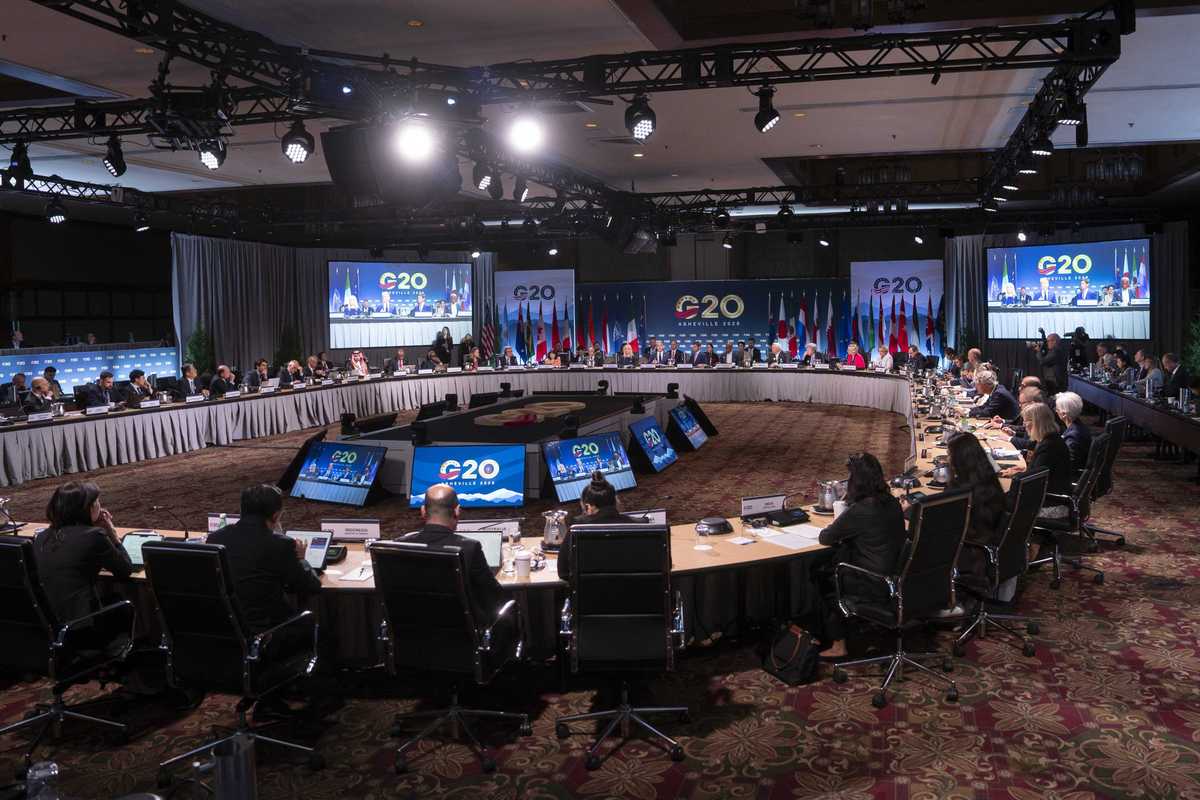
Officials attend a plenary session of the G20 Finance Ministers and Central Bank Governors’ meeting in Asheville, North Carolina, on September 1, 2026.
AFP
The two-day G20 finance ministers and central bank governors summit concluded on Tuesday, marked by palpable diplomatic friction over Washington’s decision to welcome Russian officials and Beijing's refusal to back key elements of the chair's closing statement.
How did US and European allies clash over Russia's attendance?
The presence of Russian Finance Minister Anton Siluanov continued to cast a shadow over the proceedings, drawing ire from European delegates who have spent years attempting to isolate Moscow economically following its 2022 invasion of Ukraine.
EU Economy Commissioner Valdis Dombrovskis told reporters that normalizing Russia’s presence at multilateral economic summits is unacceptable while Moscow wages an aggressive war and targets civilians in Ukraine.
Despite the European pushback, U.S. Treasury Secretary Scott Bessent defended the engagement, stating that Siluanov is an "unsanctioned" official and emphasizing the necessity of direct diplomatic communication. "I know that some Europeans had a sour taste, but I think it's very important to engage," Bessent noted, asserting that Russia's presence did not derail the core economic discussions.
According to reporting by the BBC, the diplomatic rift forced awkward logistical workarounds. After European officials refused to participate in the traditional "family photo" with Siluanov in Asheville on Monday, organizers at a parallel G20 innovation gathering in Chapel Hill orchestrated two separate group photos to keep European leaders physically distanced from the Russian delegation. The tension was further amplified when German Finance Minister Lars Klingbeil revealed that Berlin is implementing diplomatic countermeasures against Russia following an attempted "hybrid drone attack" at a strategic German airport last month.
Why did China dissent from the G20 chair’s closing statement?
While nearly all G20 participants backed the final chair's statement, China formally dissented on two critical geopolitical and economic clauses. According to Al Jazeera and Bloomberg, Beijing rejected a clause calling for "free, safe, and predictable navigation through the Strait of Hormuz," a vital energy corridor currently disrupted by the ongoing U.S.-Iran conflict.
Furthermore, China took issue with a declaration warning that "excessive and persistent imbalances pose risks and can generate economic distortions," which called for nations to eliminate non-market policies. The language broadly echoed Western criticisms of China’s state-subsidized industrial overcapacity, which U.S. and European officials argue drives global prices artificially lower. Canadian Finance Minister François-Philippe Champagne defended the clause, stating that current global imbalances are unsustainable and require collective action.
On the margins of the Asheville talks, G7 finance ministers met separately—joined remotely by Ukraine's finance minister—to coordinate ongoing financial support for Kyiv amid intensified Russian missile strikes. The Asheville summit sets the foundational economic agenda for the upcoming G20 leaders' summit, which President Donald Trump is scheduled to host in Miami this December.





Comments
See what people are discussing