

US-hosted G20 finance summit sparks European backlash over Russian attendance and media restrictions
The opening of the G20 finance ministers summit in Asheville, North Carolina, triggered sharp pushback from European officials over the surprise in-person attendance of Russian Finance Minister Anton Siluanov, alongside growing media access restrictions

News Desk
The News Desk provides timely and factual coverage of national and international events, with an emphasis on accuracy and clarity.
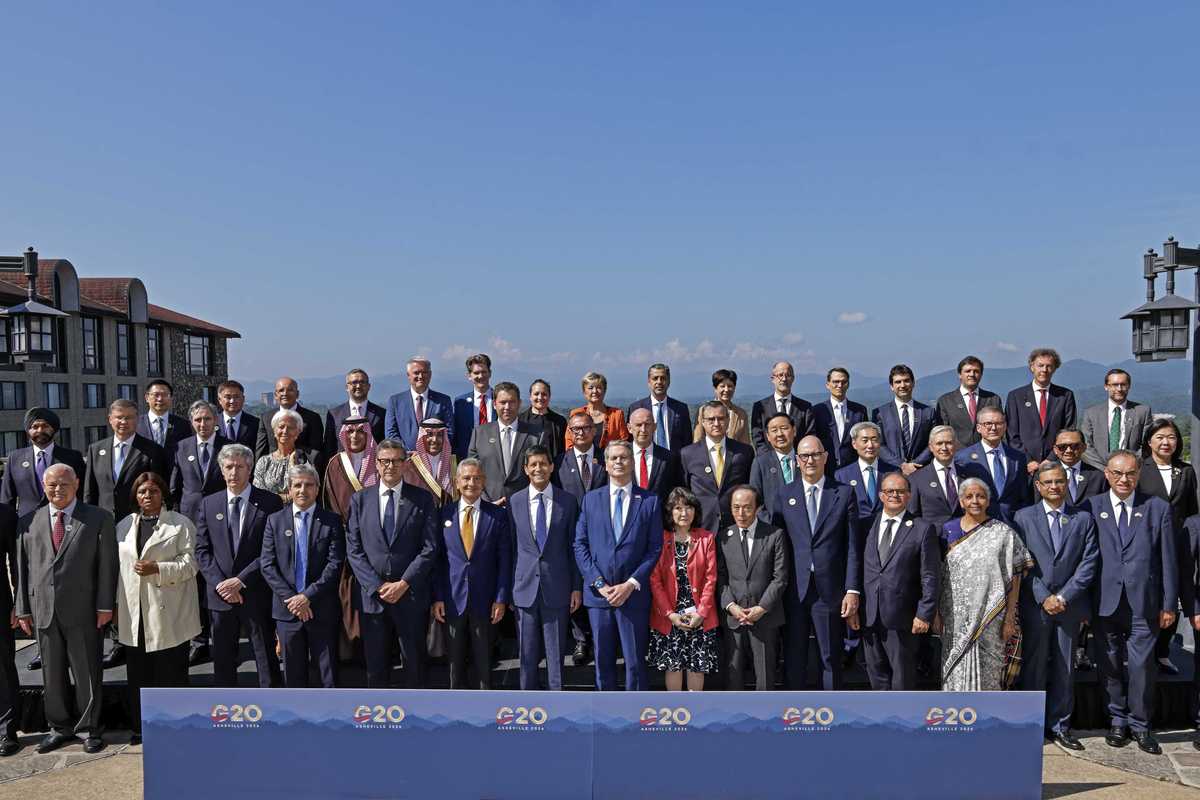
This handout photo released by the US Treasury Department shows US Secretary of the Treasury Scott Bessent posing with members of the G20 during the G20 Finance Ministers and Central Bank Governors’ meeting in Asheville, North Carolina, on August 31, 2026.
AFP
The opening sessions of the US-hosted G20 finance ministers and central bank governors summit in Asheville, North Carolina, drew immediate criticism on Monday as European leaders voiced outrage over the surprise in-person attendance of Russian Finance Minister Anton Siluanov.
The diplomatic friction added further strain to a gathering already complicated by trade disputes, media credential exclusions, and Washington's efforts to rally economic pressure against Iran.
Why did Russian Finance Minister Anton Siluanov's attendance trigger European pushback?
Siluanov’s arrival marked his first in-person participation at a G20 finance gathering since Russia's 2022 invasion of Ukraine. European representatives who have maintained efforts to isolate Moscow economically expressed dismay over Washington extending the invitation under its rotating G20 presidency.
German Finance Minister Lars Klingbeil called the decision "troubling," emphasizing that receiving Siluanov as a standard participant undermines collective sanction efforts. In protest, European delegates refused to pose alongside Siluanov, forcing organizers to exclude the Russian delegation from the traditional official G20 "family photo".
Responding to questions regarding the invite, US President Donald Trump defended the engagement, stating, "We like getting along with everybody". White House spokesman Kush Desai added that the administration remains willing to engage directly with all relevant state parties to pursue conflict resolution in Eastern Europe.
What transpired during the US-Russia bilateral talks?
On the sidelines of the summit, US Treasury Secretary Scott Bessent held a bilateral meeting with Siluanov. According to Al Jazeera, the dialogue centered on President Trump's proposed 28-point peace framework for Ukraine.
Sources familiar with the discussion confirmed that Bessent delivered a firm message to his Russian counterpart, emphasizing that the United States will not grant economic or sanctions relief to Moscow until military operations in Ukraine cease. When Siluanov attempted to outline broader areas of financial cooperation, Bessent firmly maintained that substantive economic agreements remain off the table until a permanent peace settlement is executed.
How did trade policy and media access dominate the wider agenda?
Beyond the diplomatic rift over Russia, US officials sought to use the summit to build consensus on global growth, AI infrastructure investment, and secondary sanctions against Iran under "Operation Economic Outcast".
However, trade tensions loomed over the talks, particularly ongoing tariff disputes between the United States and Canada. Canadian Finance Minister François-Philippe Champagne noted that Ottawa remains at the table to restore baseline trade stability among G7 and G20 partners.
Simultaneously, the Treasury Department faced severe criticism from press freedom groups after denying credentials to major financial journalists from The New York Times, Bloomberg News, and The Wall Street Journal. The National Press Club issued a formal rebuke, stating that no administration should handpick the journalists tasked with scrutinizing international economic policymaking.





Comments
See what people are discussing