

World Bank says reforms could triple Pakistan's per capita income by 2050
Ambitious changes to taxation, trade and investment policies could lift annual economic growth to as much as 6.9%, report says

Business Desk
The Business Desk tracks economic trends, market movements, and business developments, offering analysis of both local and global financial news.
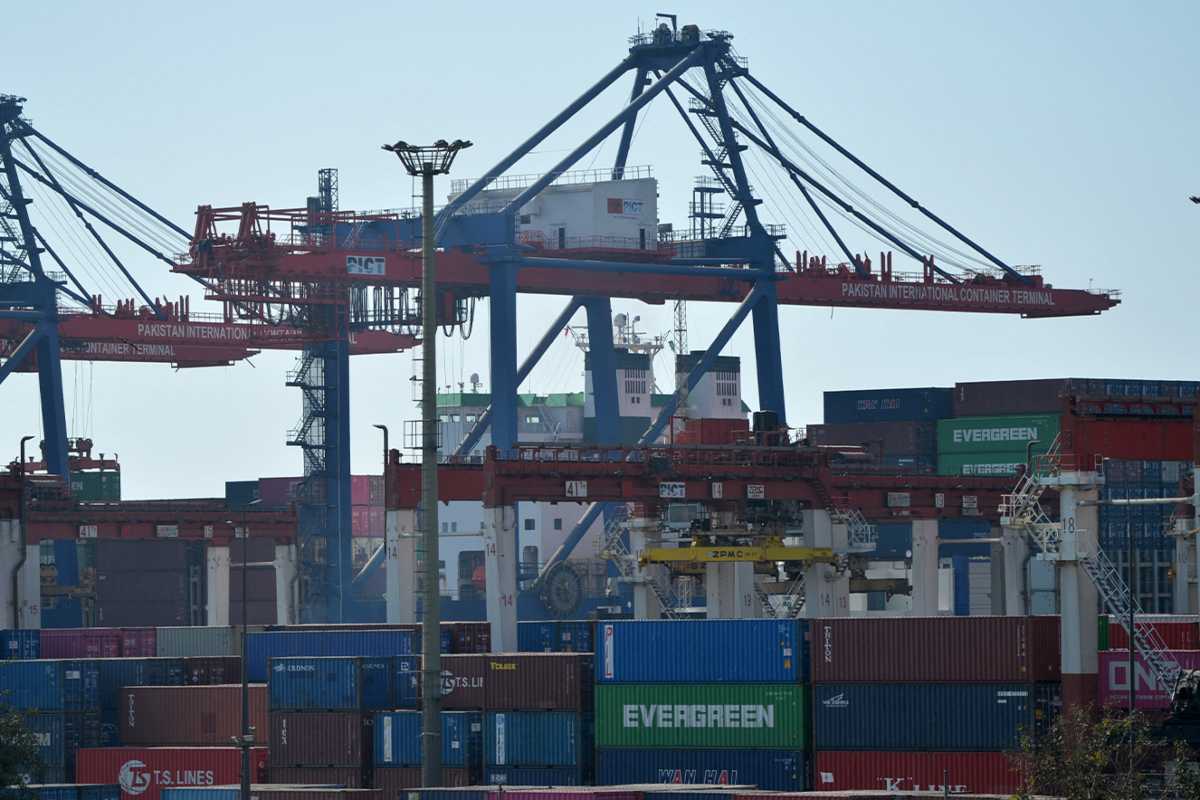
In this picture taken on January 11, 2023, shipping containers are seen placed under cranes at the Karachi sea port.
AFP
Pakistan's per capita income could triple by 2050 if the country accelerates structural reforms, according to the World Bank Group's latest Pakistan Development Update, Attaining Escape Velocity.
The October 2026 report says improvements in economic policies and institutions could support sustained annual growth of 6.2% to 6.9%, allowing Pakistan to reach income levels currently seen in more prosperous economies.
The findings follow a period of economic stabilization, with Pakistan's real gross domestic product (GDP) growth rising to 3.7% in fiscal year 2026 (FY26) from 3.2% in FY25.
A combination of revenue measures, spending restraint and lower interest payments helped the country record a primary fiscal surplus of 2.9% of GDP in FY26, while strong remittances supported the rebuilding of foreign exchange reserves.
Pakistan also secured credit rating upgrades from S&P Global Ratings and Moody's and returned to international debt markets with a USD 3 billion Eurobond issuance in September.
How could Pakistan triple its per capita income by 2050?
The World Bank's modeling suggests that ambitious improvements in Pakistan's economic policies and institutions could raise sustained annual GDP growth to between 6.2% and 6.9%. Achieving these gains would require reforms that encourage private investment, improve productivity and strengthen economic competitiveness over the coming decades.
The report examines scenarios in which Pakistan closes half the gap between the quality of its policies and institutions and those of the average upper-middle-income country.
Under the more ambitious scenario, completing those improvements over five years could lift annual GDP growth to 6.9% and per capita growth to 5.2%.
A seven-year reform program could support annual GDP growth of 6.2% and per capita growth of 4.5%.
These estimates describe growth benefits associated with structural reforms, not the World Bank's baseline forecasts.
The report suggests that sustained improvements could enable Pakistan to reach income levels currently recorded in countries such as Viet Nam by around 2045 to 2048, depending on the pace of reform.
Economic stability alone is not enough
"Pakistan has made real progress in restoring stability, and markets have taken notice," said Bolormaa Amgaabazar, World Bank Country Director for Pakistan.
"But real per capita growth - the rate at which the income of the average Pakistani increases - remains stuck at around 1.6 percent. Reforms to drive faster growth are now urgently needed."
The World Bank warned that Pakistan's recent economic gains would not automatically translate into faster improvements in living standards.
Around 3.6 million people reach working age each year, underscoring the need for stronger investment, productivity and job creation.
"With macro stabilization achieved but fiscal resources and foreign exchange still tightly constrained, structural reform to encourage private investment is the necessary next step towards higher living standards," said Sebastian Essl, lead author of the report.
He emphasized the importance of coordinated planning and sustained implementation to achieve private sector-led growth.
What reforms does the World Bank recommend?
The report calls for reforms to improve the business environment, broaden the tax base, reduce the state's commercial role and expand access to financing.
Its recommendations include simplifying business regulations, strengthening export financing, continuing trade liberalization under the National Tariff Policy and encouraging private investment in state-owned enterprises.
The World Bank also recommends improving the energy sector, strengthening education and workforce skills, and expanding access to finance for businesses.
The report recognizes recent progress, including power-sector tariff adjustments that helped reduce energy subsidies from 1.1% of GDP in FY25 to 0.8% in FY26.
It also identifies the recent privatization of Pakistan International Airlines as a positive development and calls for continued efforts to reduce the state's presence in commercial activities.
The World Bank said maintaining macroeconomic stability would remain essential, but achieving substantially higher growth and living standards would depend on sustained implementation of structural reforms.





Comments
See what people are discussing