


News Desk
The News Desk provides timely and factual coverage of national and international events, with an emphasis on accuracy and clarity.
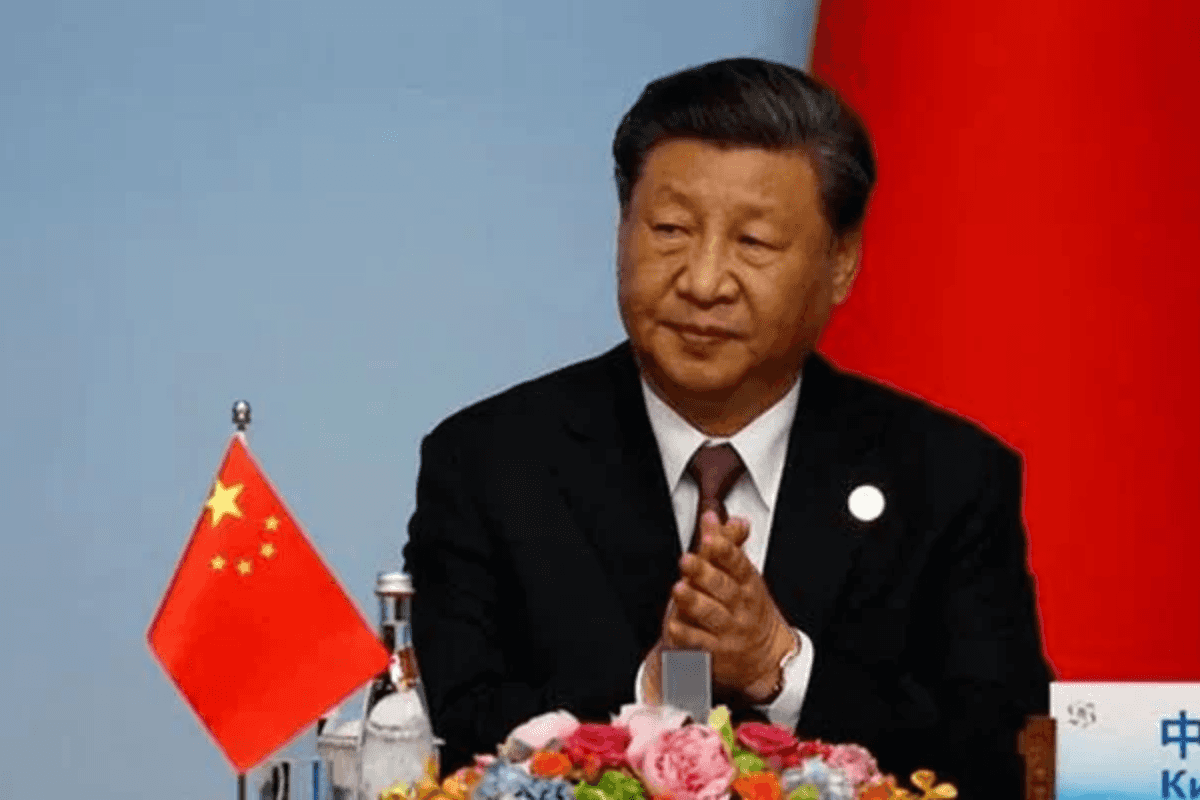
Chinese President Xi Jinping said Friday that AI should not be dominated by one country, urging international cooperation on its development at the World Artificial Intelligence Conference in Shanghai.
His comments come as global powers compete for control of the technology and debate its effect on security, jobs and the economy.
What did Xi Jinping say about AI at WAIC?
Xi told the conference that AI development should not be a solo performance by a single country, but a symphony of international cooperation. He said countries should jointly oppose overstretching national security concerns in AI or placing one nation's security above another's. Xi called for a people-centred approach that keeps AI under human control.
Why has AI governance become an urgent issue?
How to regulate the fast-growing AI sector has become a central question, as concerns mount over its use in military combat and by hackers and terrorists. The US and EU have restricted Chinese tech imports over national security worries, while disputes between Washington and American AI labs have raised questions about who controls access to leading technology. Xi called for laws, technological monitoring, early warning systems and emergency response mechanisms to keep AI development safe.
What happened at the World Artificial Intelligence Conference?
The four day WAIC event brought together more than 1,000 Chinese tech firms alongside officials, researchers and industry figures. Around 3,000 products were on display, ranging from advanced semiconductor systems for AI computing to a smartphone capable of running apps autonomously. Analyst Poe Zhao of Hello China Tech called WAIC the most important annual event for tracking the direction of China's AI industry, noting that while the US retains a lead in advanced chips and frontier computing, China is its closest and most comprehensive competitor. Early Friday, Beijing based startup Moonshot AI released its new flagship model, Kimi K3, reportedly rivalling some of the top US systems. Other highlights included MiniMax's M3 model, the first mass produced phone with an autonomous AI agent, and Huawei's Atlas 950 "supernode" architecture. Zhao said the conference's main theme was the shift from AI models to systems that can be deployed at scale in everyday life, with AI agents capable of managing software and complex tasks taking centre stage.
What is the World AI Cooperation Organization?
On Thursday, foreign minister Wang Yi and representatives from 29 countries, including Russia, Pakistan and Indonesia, signed an agreement establishing an intergovernmental AI cooperation group. The World Artificial Intelligence Cooperation Organization, headquartered in Shanghai, aims to promote consultation and collaboration among members to ensure the healthy and orderly development of AI, according to state media. Leaders attending WAIC included UN chief Antonio Guterres, Cambodia's Hun Manet and Thailand's Anutin Charnvirakul.
How big is China's AI industry?
AI has become a strategic pillar of China's industrial policy, backed by state investment aimed at building a domestic ecosystem from chip production to consumer use. Daily consumption of AI "tokens," the industry's usage unit, has risen a thousand fold in China over the past two years, state media reported, citing officials. The market was valued at 1.2 trillion yuan ($177 billion) in 2025 and is projected to grow more than 30 percent this year. China also leads the world in generative AI patent filings, with more than 43,000 recorded between 2024 and 2025, according to the World Intellectual Property Organization. A growing number of foreign companies, including Siemens this year, have adopted Chinese open source AI models, drawn by their performance, lower cost and flexibility compared with the closed systems used by US giants such as OpenAI and Anthropic.



Comments
See what people are discussing