


News Desk
The News Desk provides timely and factual coverage of national and international events, with an emphasis on accuracy and clarity.
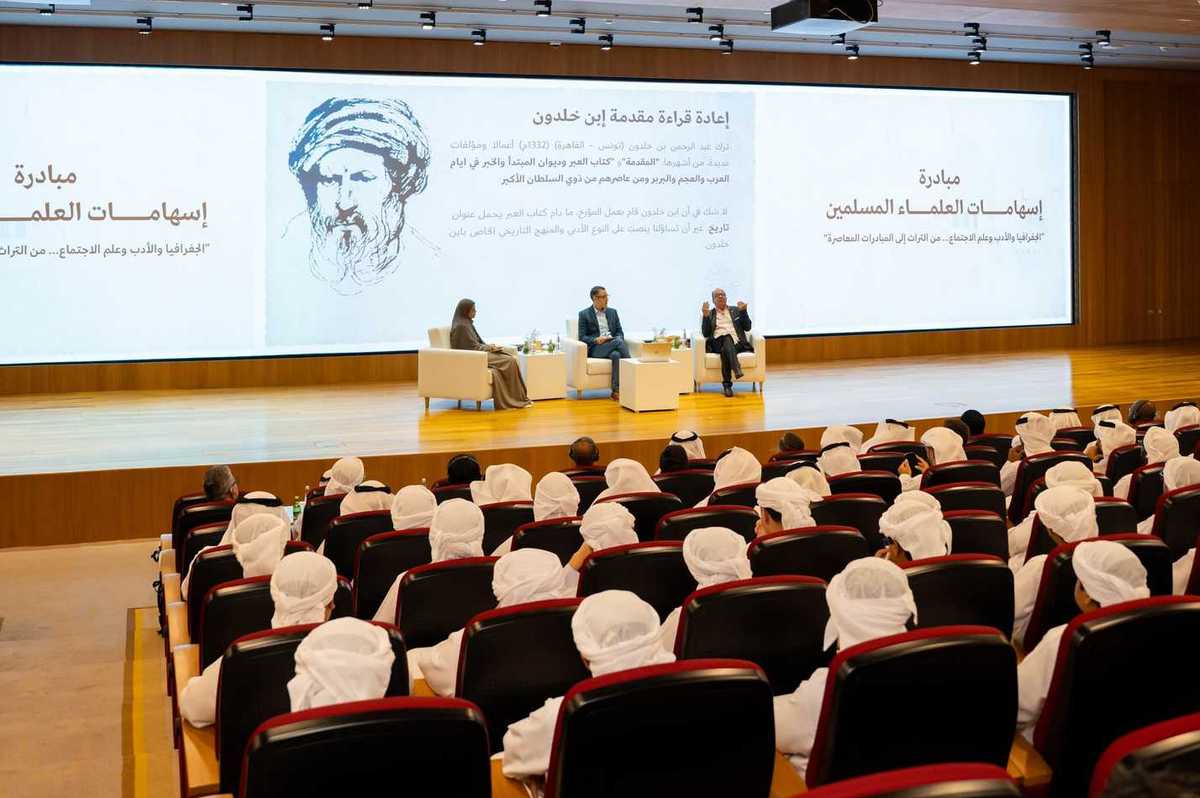
Sheikh Zayed Grand Mosque Centre launches the second phase of its Contributions of Muslim Scholars initiative in Abu Dhabi.
WAM
The Sheikh Zayed Grand Mosque Centre in Abu Dhabi has launched a new exhibition highlighting the contributions of Muslim scholars to geography, literature and sociology, as part of a wider initiative exploring the influence of Islamic civilization on human knowledge, WAM reported.
The second phase of its “Contributions of Muslim Scholars” initiative was launched under the directives of Sheikh Mansour bin Zayed Al Nahyan, the UAE's Vice President, Deputy Prime Minister and Chairman of the Presidential Court. It coincides with the Centre's efforts to showcase Islamic intellectual heritage through its cultural programs.
What does the initiative feature?
Titled “Geography, Literature and Sociology,” the second phase includes an exhibition, cultural discussions, a workshop and a video series examining the work of prominent Muslim scholars and their influence on the development of human knowledge.
The exhibition is organized around three themes, featuring historical figures whose work helped shape intellectual traditions across different disciplines.
Which Muslim scholars are featured in the exhibition?
The geography section highlights the contributions of Muhammad al-Idrisi, Ibn Battuta and Zakariya al-Qazwini, whose writings documented different regions, cultures and societies and advanced geographical knowledge.
The literature section features the works of al-Hariri and al-Mutanabbi. It explores al-Hariri's storytelling and literary style, alongside al-Mutanabbi's poetry, which remains influential in Arab literary heritage.
The sociology section examines the ideas of Ibn Rushd, also known as Averroes, and Ibn Khaldun. It highlights Ibn Rushd's philosophical writings and their influence on the transmission of knowledge to Europe, as well as Ibn Khaldun's analysis of societies, civilization and the rise and decline of states.
What other activities accompanied the launch?
The program included two discussion sessions examining Ibn Khaldun's theories on social cohesion, political power and historical change, as well as the relevance of Arab and Islamic intellectual heritage to contemporary societies.
The sessions brought together academics and historians, including Tunisian scholars Abdelhamid Larguèche and Houssem Eddine Chachia, alongside Professor Ridwan al-Sayyid and Professor Fatima Al Sayegh.
A workshop titled “Make Your Own Book: In the Footsteps of Muslim Scholars” also invited participants to explore the scholars' achievements through drawing and writing.
The Centre also released the second episode of its “Contributions of Muslim Scholars” video series, covering the three themes. The series uses artificial intelligence in its content design and production, with visual presentations depicting aspects of Islamic civilization.
Where can visitors see the exhibition?
The exhibition is located in the Dome of Peace at the Sheikh Zayed Grand Mosque's Visitor Centre and is open during the mosque's official visiting hours.
It can be visited from 9 a.m. to 9 p.m. Saturday to Thursday, and from 9 a.m. to noon and 3 p.m. to 9 p.m. on Fridays.
Visitors can also explore the Centre's Light & Peace Museum, which showcases Islamic art and intellectual heritage through historical artefacts and interactive displays.




Comments
See what people are discussing