


News Desk
The News Desk provides timely and factual coverage of national and international events, with an emphasis on accuracy and clarity.
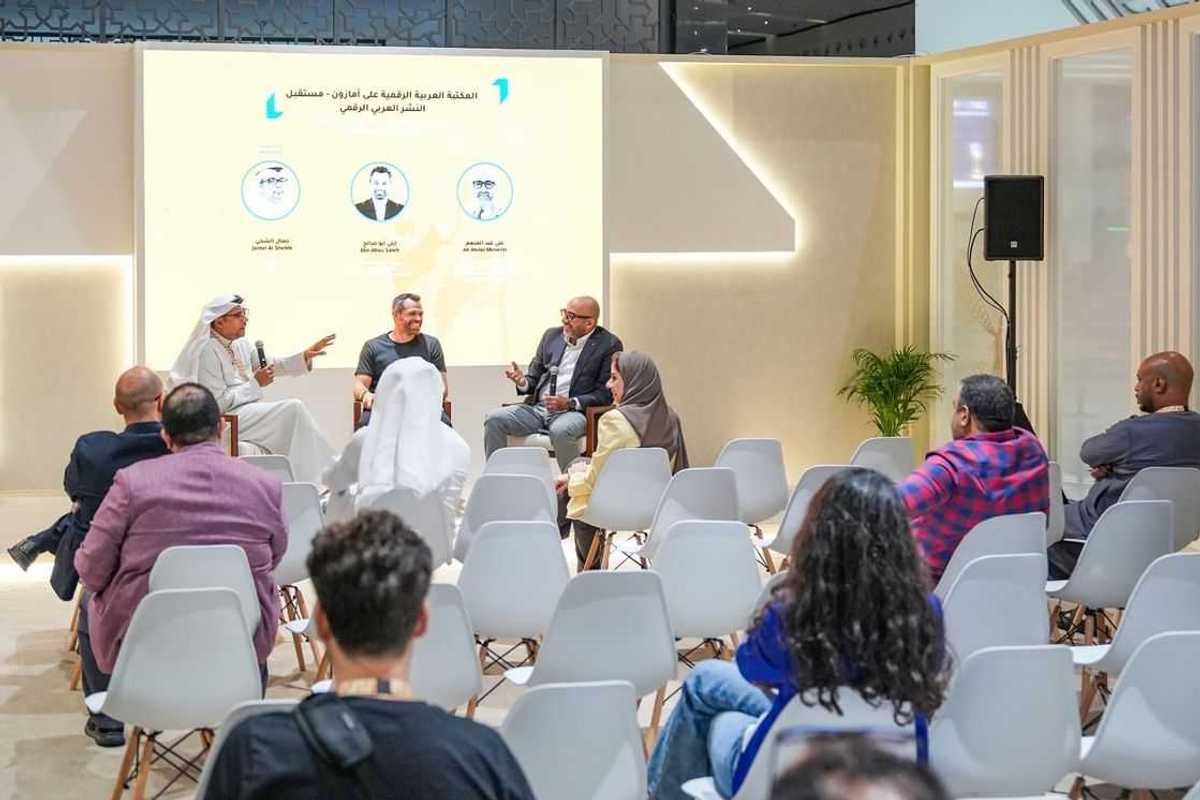
The Abu Dhabi Arabic Language Centre is leading a push to bring Arabic literature into the digital age.
WAM
The Abu Dhabi Arabic Language Centre is partnering with Amazon to digitize 100,000 Arabic books over the coming years, Khaleej Times reported. Chairman Dr. Ali bin Tmeem shared the plan in Abu Dhabi on September 20. The goal is to strengthen Arabic online, where the language has limited digital and AI presence.
How many Arabic books has Abu Dhabi digitized?
The Arabic Library initiative has digitized 42,000 books so far. That number is expected to reach 62,000 by next year. The overall target is 100,000 Arabic books over the coming years. Bin Tmeem said the emirate aims to "change the book and reading industry" and help drive technological development for Arabic.
Why is Arabic missing from the digital and AI landscape?
Bin Tmeem said Arabic accounts for only about 1 percent of the data used to train major large language models. Arabic text is often processed through intermediary languages before being analyzed. This can alter meanings and influence how the Arab world is understood globally.
He linked the gap to a 10-country regional survey called "Congress Pulse." It found that 91 percent of young people use Arabic at home, but only 64 percent use it at work or school. Seventy-seven percent see English as essential to achieving their goals.
Half of respondents called for greater investment in Arabic within technology and artificial intelligence. Bin Tmeem said the Arabic Library and the "Sama" exam are designed to help close the gap. Sama is a proficiency test developed with the Institut du Monde Arabe.
He added that other countries have faced the same challenge with their own languages.
What can Arabic content learn from France?
France offers one example of how governments can support local-language content. Anne-Claire Legendre, president of the Institut du Monde Arabe in Paris, said French regulations require streaming platforms such as Netflix to make 20 to 25 percent of their film and series catalogs French-produced. Earlier quotas also required cinemas to dedicate at least 40 percent of their screenings to French films.
Legendre also pointed to the scale of opportunity in Arabic content. She noted a 300 percent growth in Arabic-language TV series, driven by demand across the Mena region's roughly 450 million speakers.
She said this growth is not being fully captured. The market remains fragmented, and regulations vary by country. Books are difficult to distribute across borders, funding for animation and film is limited, and piracy remains widespread.
Can demand for a language be built deliberately?
Professor Roberto Tottoli, president of the University of Naples L'Orientale, said it can. Interest in Korean at his university grew from five students a year fifteen years ago to hundreds today. He credited sustained political investment and cultural diffusion.
Tottoli suggested a similar cultural wave could be built around Arabic. He said Hollywood already draws heavily on Islamic and Arabic imagery to depict mystery and the esoteric, often without crediting the source. Presenting that imagination through Arabic content itself, he said, could help drive the kind of global diffusion Korean culture achieved through K-pop.
The remarks came during a dialogue session at the Congress of Arabic and Creative Industries. It was held at Manarat Al Saadiyat in Abu Dhabi on September 20, 2026.




Comments
See what people are discussing