


Kamran Ali
Correspondent Nukta
Kamran Ali, a seasoned journalist from Khyber Pakhtunkhwa, Pakistan, has a decade of experience covering terrorism, human rights, politics, economy, climate change, culture, and sports. With an MS in Media Studies, he has worked across print, radio, TV, and digital media, producing investigative reports and co-hosting shows that highlight critical issues.
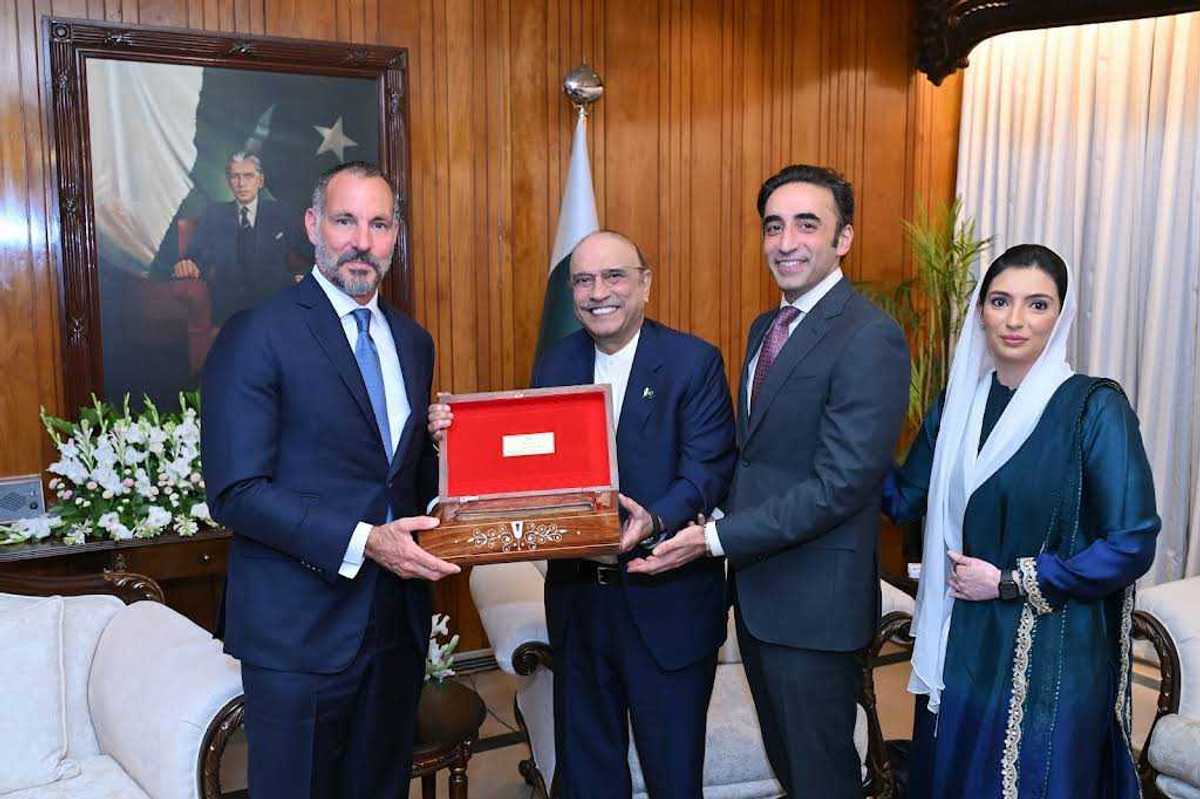
PPP leaders who publicly welcomed the prince may have strengthened their standing with some Ismaili voters, according to analysts.
APP/File
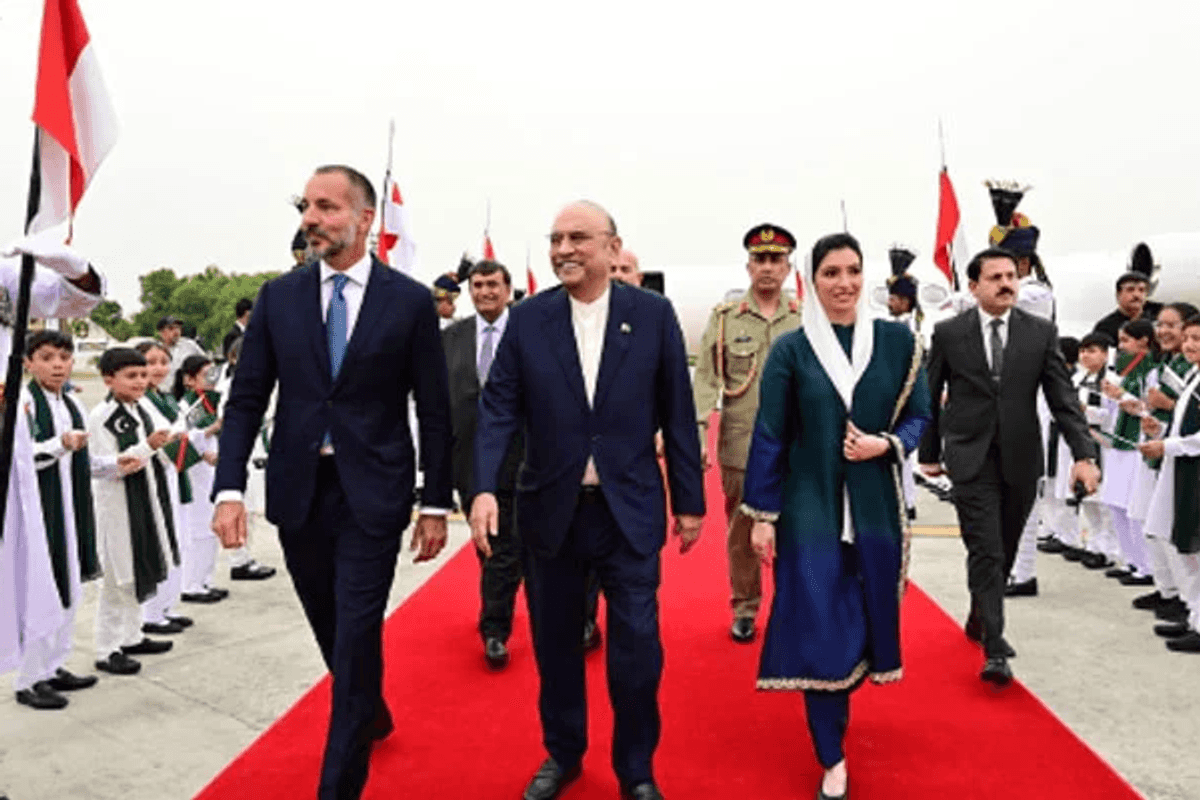
As Gilgit-Baltistan heads to Legislative Assembly elections on June 7, the recent visit of Prince Shah Rahim al-Hussaini, Aga Khan V, has become a point of discussion on the campaign trail. Analysts say the reception extended to the prince by PPP leaders could influence voter perceptions in constituencies with sizeable Ismaili populations, even as Ismaili institutions insist on strict neutrality.
Could the Aga Khan V visit influence the Gilgit-Baltistan elections?
The visit itself was religious in nature, but its timing has drawn political commentary. PPP leaders who publicly welcomed the prince may have strengthened their standing with some Ismaili voters, according to analysts. The Ismaili community makes up around 18% of the region's population, a share large enough to affect outcomes in competitive constituencies.
What did Ismaili institutions say about the visit and the vote?
Senior journalist Azhar Ali, who belongs to the Ismaili community, told Nukta that Aga Khan V made no reference to politics during his address to followers. Ali confirmed the visit was purely religious, but acknowledged that political leaders who honored the prince may have gained some goodwill among followers. The Ismaili Council Gilgit-Baltistan issued a statement reinforcing that position. "Every Ismaili voter is free to exercise their constitutional right to vote according to their conscience, political understanding, and personal opinion," the council said, adding that it neither supports nor opposes any party, candidate or electoral group.
 APP
APP
Local journalist Shereen Karim said PPP could receive a modest boost from the warm reception extended to the prince, with Ismaili voters potentially responding positively. She added that PML-N and PPP remain the strongest contenders overall, but independent candidates, including some believed to be backed by PTI, could prove decisive in certain seats.
Who are the main parties contesting the Gilgit-Baltistan elections?
The June 7 vote will fill 24 general seats, with nine reserved seats bringing the Legislative Assembly to 33 members in total. The Election Commission of Gilgit-Baltistan has confirmed 664 candidates are in the race. The region has 963,034 registered voters, of whom 506,097 are men and 456,937 are women, according to Election Commission figures.
Karim said personality-driven politics could produce upsets in certain constituencies. "Independent winners may ultimately play a key role in government formation in GB," she said. The region's religious composition, drawn from a 2023 University of the Punjab study, shows 39% of residents identify as Shia, 27% as Sunni, 18% as Ismaili and 16% as Nurbakhshi, with non-Muslim communities accounting for less than 1%.
Why do federal parties tend to dominate Gilgit-Baltistan elections?
Analysts say electoral outcomes in the region have historically tracked political trends in Islamabad. Local journalist Zakir Baltistani said parties governing at the federal level have consistently held an advantage, with voters conscious that backing an opposition party could disrupt development funding. Baltistani added that federal authorities have also deployed government machinery during past electoral processes.
The pattern is evident across the region's three previous elections. PPP formed the first government after the 2009 polls, with Syed Mehdi Shah as chief minister. PML-N won in 2015, installing Hafiz Hafeezur Rehman. PTI took the 2020 election, though the disqualification of chief minister Khalid Khurshid eventually produced a coalition government under Haji Gulbar Khan.
What makes the 2025 Gilgit-Baltistan election different from previous ones?
Faizullah Faraq, a former spokesperson for the Gilgit-Baltistan government, said the current contest is distinct because Pakistan's federal government is itself a coalition. PPP, PML-N and the Istihkam-e-Pakistan Party are allied in Islamabad but competing against each other in GB. In some constituencies, the Majlis Wahdat-e-Muslimeen and independent candidates are also emerging as strong contenders, Faraq said.
He said the fragmented landscape makes a coalition outcome the most probable result. "The real question is who will lead that coalition and who will become the CM," Faraq added.
Gilgit-Baltistan's current legislative structure dates to 2009, when the Gilgit-Baltistan Empowerment and Self-Governance Order replaced the Northern Areas Council and established a formal system of elected representation. The region's population stands at approximately 1.71 million, according to the 2023 national census.



Comments
See what people are discussing