

Pakistan shifts to market-based daily petroleum pricing
New system gives OGRA authority to revise fuel prices daily as government seeks quicker response to global oil market swings

Haris Zamir
Business Editor
Experience of almost 33 years where started the journey of financial journalism from Business Recorder in 1992. From 2006 onwards attached with Television Media worked at Sun Tv, Dawn Tv, Geo Tv and Dunya Tv. During the period also worked as a stringer for Bloomberg for seven years and Dow Jones for five years. Also wrote articles for several highly acclaimed periodicals like the Newsline, Pakistan Gulf Economist and Money Matters (The News publications)
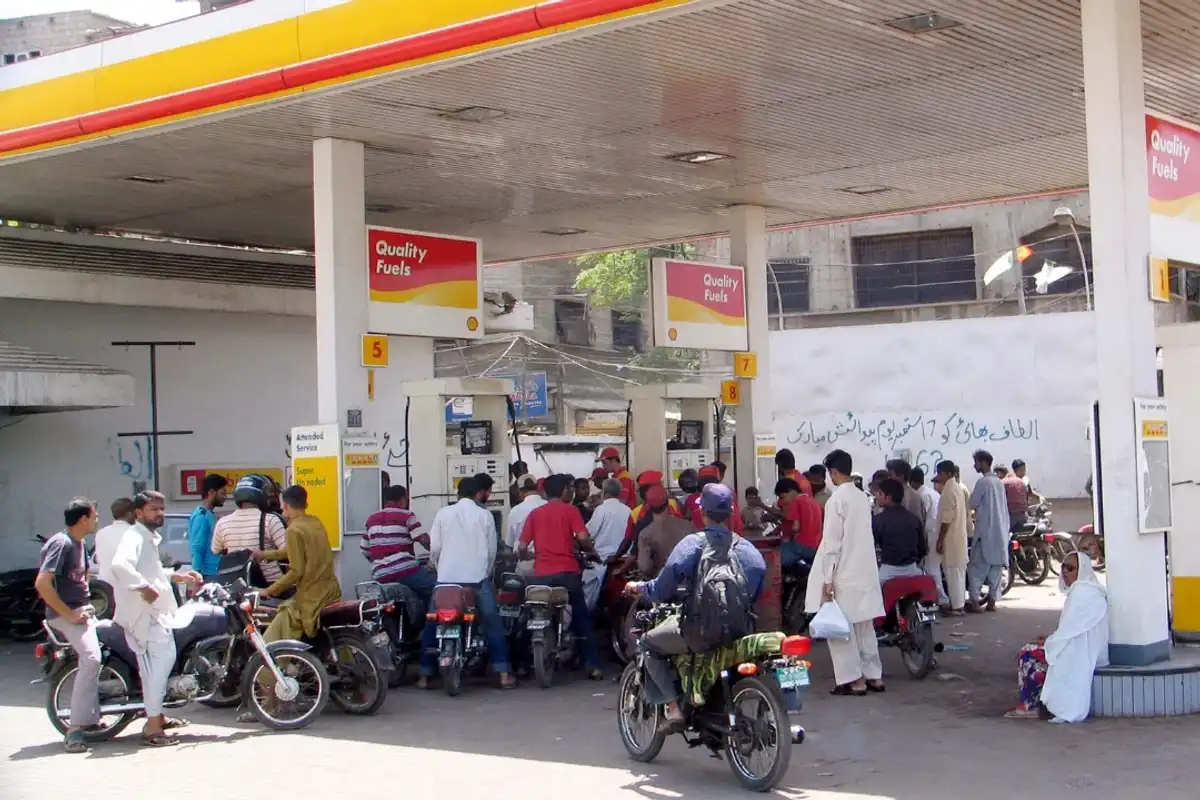
Pakistan adopts daily fuel pricing, ending fortnightly revisions
Pakistan has formally adopted a daily petroleum pricing mechanism, replacing the long-standing fortnightly system with a market-based framework that allows faster pass-through of international oil prices and exchange-rate movements while reducing the government's fiscal exposure to volatile global energy markets.
According to a Ministry of Energy notification issued on July 17 after federal cabinet approval, the Oil and Gas Regulatory Authority (OGRA) will calculate and publish ex-depot prices for Motor Spirit (MS), High-Speed Diesel (HSD), Superior Kerosene Oil (SKO) and Light Diesel Oil (LDO) each day using a seven-working-day rolling average of Platts Arab Gulf assessments. The mechanism took effect on July 1.
Under the revised framework, OGRA will announce fuel prices each day without requiring approval from the federal government or the prime minister. The petroleum levy will remain subject to the cabinet-approved ceiling.
The Ministry of Energy said the reform is intended to improve transparency in fuel pricing while enabling quicker adjustment to changes in international oil prices.
The policy also revises import arrangements. During FY2027, HSD imports will be handled exclusively by Pakistan State Oil (PSO), while MS imports will continue to be allocated among oil marketing companies based on their market share. Companies that fail to meet their import commitments could lose import allocations for up to nine months.
The move comes as the government seeks to respond more quickly to fluctuations in global oil markets following renewed geopolitical tensions in the Middle East.
Analysts said the reform is designed to improve price transmission, discourage hoarding and inventory windfall gains across the petroleum supply chain, reduce the government's fiscal burden and bring Pakistan's fuel pricing mechanism closer to international market practices. They added that the move is broadly consistent with market-based pricing reforms encouraged under the International Monetary Fund's Extended Fund Facility (EFF).
Economists said higher fuel prices would remain inflationary because they feed directly into transportation costs and indirectly into food prices. However, they noted that inflation would still be driven primarily by international crude oil prices rather than the frequency of domestic price revisions.
Immediate pass-through
Fawad Basir, head of research at KTrade Securities, said the shift to daily pricing would allow immediate transmission of changes in international oil prices and the exchange rate.
"The new mechanism eliminates the pricing lag under the fortnightly system, improves price transmission, reduces under- and over-recoveries, and ensures domestic fuel prices more accurately reflect prevailing global market conditions," Basir said.
He added that the overall inflation impact should remain broadly unchanged because inflation ultimately depends on international oil prices and the weight of fuel in the consumer price index rather than the frequency of price revisions.
Smaller adjustments
Mohammed Waqas Ghani, head of research at JS Global, said the new mechanism is expected to reduce the size of individual price adjustments for consumers and the petroleum industry.
"Under the previous fortnightly system, international oil price increases often resulted in one-time adjustments of PKR 80 to PKR 90 per liter," Ghani said. "More frequent revisions should spread those increases over several days, resulting in smaller and more gradual price changes."
He added that daily pricing would also help oil marketing companies better manage inventory losses by reducing the need to hold large inventories in anticipation of major fortnightly price revisions.
Market-based reform
Abdul Azeem, head of research at Al Habib Capital Markets, said Pakistan is introducing a daily pricing system similar to India's nationwide fuel pricing model introduced in 2017.
"The objective is to ensure domestic fuel prices immediately reflect international oil prices and exchange-rate movements, improve transparency, reduce political intervention and align Pakistan with IMF-backed market reforms," Azeem said.
He said the reform would improve market efficiency, reduce fiscal pressure and strengthen investor confidence through transparent pricing, although consumers and businesses could face greater short-term price volatility.
According to Azeem, daily pricing would allow changes in global oil prices to feed into domestic inflation more quickly, although average inflation over time would continue to be determined by international energy prices rather than the frequency of price revisions.
Greater transparency
Muhammad Iqbal Jawaid, head of research at AWT Investments, said the new system improves transparency by allowing OGRA to calculate prices automatically without political intervention.
"The mechanism enables immediate pass-through of international oil prices, reduces the government's fiscal risk by limiting subsidies and petroleum levy adjustments, and helps curb hoarding while improving market efficiency," Jawaid said.
He added that although inflation could accelerate when international oil prices rise, consumers would also benefit more quickly whenever global prices decline.
Industry outlook
Industry experts said the new mechanism would make fuel pricing more transparent for consumers by reducing large, sudden price changes and discouraging panic buying, although it would add operational complexity for oil marketing companies.
They described the shift as a step toward a more market-based fuel pricing system but said the transition should be carefully managed. If geopolitical tensions in the Middle East persist, higher global oil prices could increase inflationary pressures in Pakistan, although the country's fuel supply remains secure.
Timing, not magnitude
Bilal Ejaz, a research analyst at Ismail Iqbal Securities, said Pakistan's shift from fortnightly to weekly and now daily pricing reflects the government's effort to respond more quickly to sharp movements in international energy markets.
"The change may increase short-term price fluctuations, but its overall inflation impact should remain limited because it primarily changes the timing of price adjustments rather than the level of prices," Ejaz said.
He added that if international energy markets stabilize, the government could eventually return to a less frequent pricing mechanism.
Analysts noted that daily fuel pricing is common in deregulated markets, including the United States, the United Kingdom, Australia, India and Singapore, where retail fuel prices are adjusted in line with international market conditions.





Comments
See what people are discussing