

SBP keeps policy rate unchanged at 11.5% as inflation risks rise
The policy rate has remained at 11.5% since April’s 100-basis-point hike, with inflation now closing much of the gap, with August inflation at 11.1%

Taha Jaffry
Producer, Business Desk
Taha Jaffry is a journalist and editor with experience in digital news publishing. Before joining Nukta, he worked as a Sub Editor at Geo.tv/Interlink Multimedia, affiliated with Geo News, for around two years, following an earlier stint at The Express Tribune.
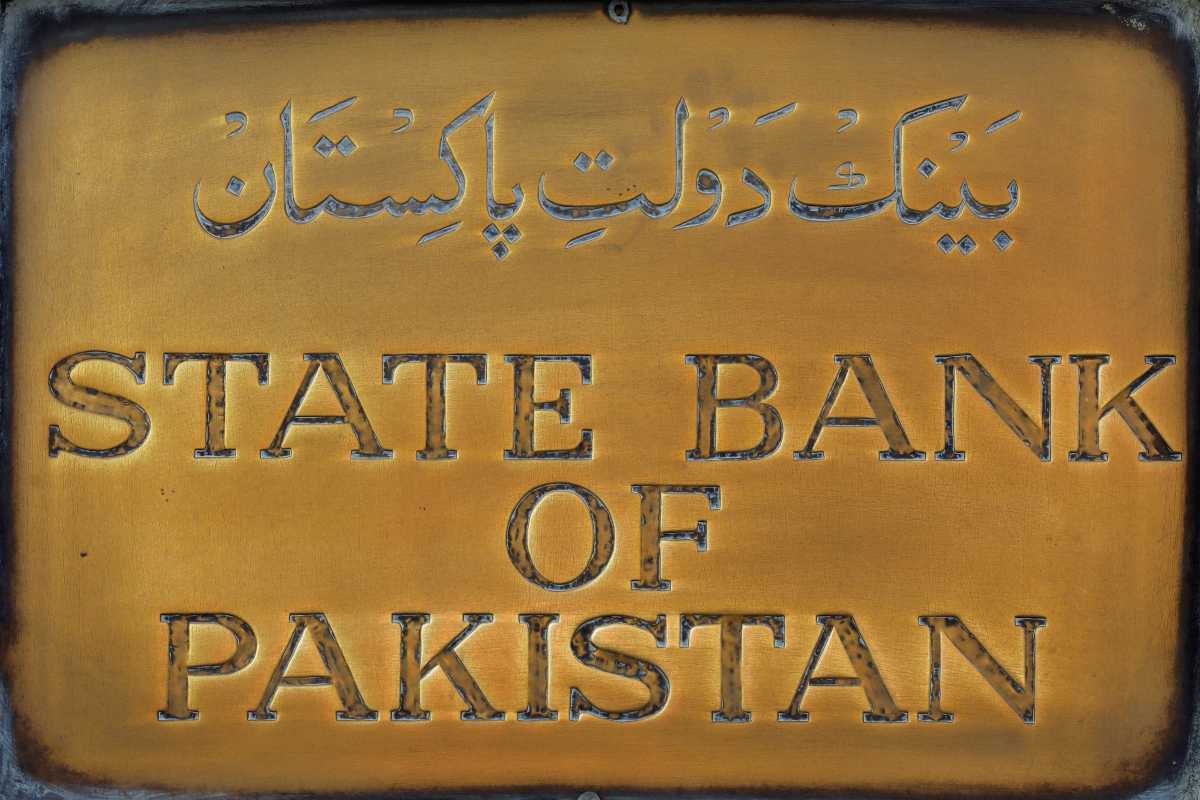
A brass plaque of the State Bank of Pakistan is seen outside of its wall in Karachi.
Reuters
The State Bank of Pakistan kept its benchmark policy rate unchanged at 11.5% on September 14, maintaining the rate despite a sharp increase in inflation and renewed pressure from higher global oil prices.
The SBP kept the policy rate unchanged at 11.5% for a third straight meeting, leaving it at the same level for more than four months.
Pakistan’s inflation outlook has become more challenging since then. National CPI inflation accelerated to 11.1% year-on-year in August from 9.2% in July, while higher fuel prices and crude oil have increased risks to the import bill and external account.
Most market participants had expected a hold
A Topline Securities survey ahead of the meeting showed that 84% of market participants expected the SBP to maintain the policy rate at 11.5%.
Another 14% expected a 50-basis-point increase, while 2% anticipated a 100-basis-point hike.
Topline itself had forecast no change, arguing that FY27 inflation could remain below 9% if oil prices stayed around USD 95 per barrel.
The brokerage estimated that this would preserve a positive real interest-rate spread of more than 250 basis points, broadly in line with historical levels.
Improving foreign exchange reserves and a contained current account balance also supported its view. Topline pointed in particular to Pakistan’s recent USD 3 billion Eurobond issuance as strengthening the external outlook.
Secondary-market yields had remained broadly stable before the decision, with three-month and six-month Treasury bills trading at 11.41% and 11.68%, respectively.
Inflation and oil prices remain key risks
Topline had raised its FY27 inflation forecast to above 8.5% from an earlier range of 8%-8.5%, assuming oil prices of around USD 90-95 per barrel.
The brokerage expects inflation to move into double digits in September, citing higher electricity and transport costs.
It estimates electricity prices could rise about 10% month-on-month in September bills because of a positive fuel cost adjustment of PKR 2.0581 per kilowatt-hour, compared with PKR 0.7503 previously, alongside a quarterly adjustment of PKR 0.5194 per kilowatt-hour.
The sharp rise in petrol prices also prompted Topline to increase its estimate for monthly transport inflation to 3.3% from 0.15%.
Petrol prices have increased by about PKR 24 per liter since the previous MPC meeting, while diesel prices declined by only around PKR 2 per liter despite measures to cap refinery crack margins.
Renewed tensions between the United States and Iran have also pushed crude prices higher, increasing risks to inflation, Pakistan’s import bill and its external account.
AHL had seen a stronger case for tightening
Arif Habib Ltd. (AHL) had taken a more hawkish view before the meeting, assigning a 60%-65% probability to a 50-basis-point increase to 12%.
The brokerage pointed to August inflation of 11.1% and a sharply narrower real policy-rate cushion.
With the policy rate at 11.5% and headline inflation at 11.1%, the ex-post real policy rate is only around 40 basis points.
AHL also estimated urban trimmed-mean inflation at around 8.9%, suggesting underlying price pressures were strengthening.
It said a 50-basis-point increase could restore a more meaningful positive real rate and help anchor inflation expectations.
However, AHL acknowledged that a significant part of the latest inflation acceleration is supply-driven, particularly through energy and food prices.
Higher interest rates cannot directly address an international oil-price shock and could instead weaken domestic demand and investment.
The brokerage had said the SBP could therefore maintain rates if it judged the shock to be temporary and inflation expectations to remain anchored.
What do markets expect for the rupee?
Topline’s survey showed that market participants largely expect the rupee to remain broadly stable through March 2027.
Around 43% expect the exchange rate to remain between PKR 275 and PKR 280 per U.S. dollar, while 33% expect it between PKR 280 and PKR 285.
Another 24% see the rupee trading between PKR 285 and PKR 290, while no respondents expect it to weaken beyond PKR 290 per dollar by March 2027.
Topline itself expects the rupee to trade around PKR 280-285 per U.S. dollar by March 2027.
What does the decision mean for the PSX?
Ahead of the MPC meeting, AHL had advised Pakistan Stock Exchange investors to remain cautious rather than aggressively reshuffle portfolios.
The brokerage said a 50-basis-point hike could put short-term pressure on rate-sensitive sectors, particularly highly leveraged and high-duration companies, while a hold could trigger a relief rally.
It had recommended waiting for the MPC decision before making significant portfolio changes because the subsequent policy path would depend heavily on oil prices and inflation.
Could the SBP still raise rates later?
Topline had warned that persistently high oil prices and food inflation could prompt rate increases at subsequent meetings in October or December.
Its survey showed market expectations for March 2027 remain divided. Around 35% expect the policy rate to remain at 11.5%, 45% expect it below the current level and 20% expect it above 11.5%.
Topline itself expects the policy rate to remain unchanged through March 2027, although it said sustained oil prices above USD 95 per barrel combined with elevated food inflation could trigger rate increases later in the monetary policy cycle.
The outlook will therefore remain heavily dependent on inflation, oil prices and Pakistan’s external position in the coming months.





Comments
See what people are discussing