

As Pakistan plans sugar price deregulation, experts warn of cartel risks
ICMA urges phased liberalization with strict monitoring as controls end

Business Desk
The Business Desk tracks economic trends, market movements, and business developments, offering analysis of both local and global financial news.
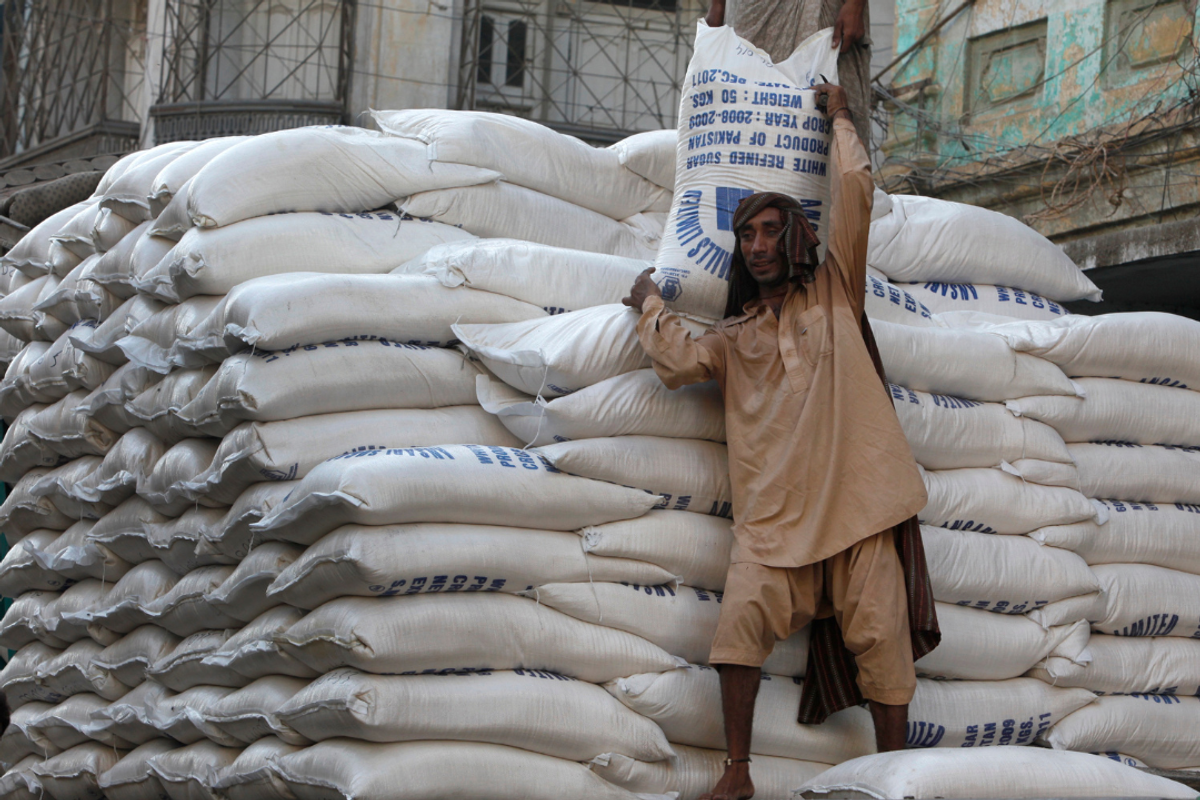
Pakistan after 77 years is preparing to let market forces determine the cost of one of its most politically sensitive and economically vital commodities — sugar — marking a historic shift driven by structural reforms tied to the International Monetary Fund.
As the government moves toward deregulation, the Institute of Cost and Management Accountants of Pakistan (ICMA) has released a comprehensive research report warning that ending price controls without strong oversight could deepen manipulation rather than eliminate it.
The report, titled “Sugar Sector Deregulation Plan for Pakistan: Gradual with Strong Oversight”, was developed by ICMA’s Research and Publications Department and unveiled at a time when policymakers are preparing to withdraw from decades of direct intervention in sugar pricing, trade and marketing.
ICMA Chairman of the Research and Publications Committee Muhammad Yasin said the transition represents both an opportunity and a serious risk for Pakistan’s sugar sector, which has long been plagued by inefficiencies and allegations of cartelization.
“This work arrives at a pivotal moment,” Yasin said while launching the report. “Pakistan is stepping away from over 70 years of sugar price controls, a bold move that could reshape one of our most vital and complex industries. Yet, as recent parliamentary findings reveal, this sector faces serious challenges such as misreported stocks, artificial shortages and weak oversight. These issues affect farmers, millers, businesses and families across the country.”
The report identifies persistent structural problems, including entrenched cartels, delayed payments to farmers, inaccurate or “phantom” stock reporting and politically influenced import and export decisions. ICMA warns that the same actors who learned to exploit regulation could take advantage of deregulation if safeguards are not put in place.
According to the study, full market liberalization is expected to bring at least 10 major changes as pricing, trade and marketing become market-driven. However, the report cautions that deregulation based solely on faith in free markets could fail without institutional checks.
'Gradual and Strong Oversighted Deregulation Plan'
ICMA proposes what it calls a “Gradual and Strong Oversighted Deregulation Plan”, recommending a phased, semi-deregulated approach that combines market freedom with strict enforcement to protect farmers, consumers and food security.
A central pillar of the plan is the proposed National Agricultural Stock Management and Monitoring System (NASMMS), a real-time digital portal designed to track sugar stocks and market signals nationwide. The system would function as an early-warning mechanism, identifying potential shortages, artificial surpluses or abnormal price movements and triggering automatic, rule-based policy responses.
To curb collusion and discretionary decision-making, the plan calls for stronger antitrust enforcement and transparent, rule-based triggers for sugar imports and exports, replacing what ICMA describes as opaque and politically driven trade decisions.
Farmer protection is another core element. The report advocates escrow-based payment systems to ensure timely payments to sugarcane growers and proposes a hybrid cane pricing model combining regional cost data with the CONSECANA model used internationally. It also recommends expanding warehouse receipt systems to improve supply-chain transparency and introducing targeted subsidies to protect small farmers during the transition.
The plan further integrates climate-resilient risk management, warning that weather-related shocks pose growing threats to sugar production and market stability.
ICMA said its recommendations draw on international experience, citing reforms and outcomes in countries including India, Brazil, Colombia, members of the European Union, Australia, Malawi, Tunisia, Mozambique and South Africa. The report concludes that successful deregulation globally has not meant the absence of rules but the replacement of blunt controls with strong institutions, transparent data systems and effective safety nets.
“Policymakers have called for full deregulation to curb manipulation. We agree change is essential,” Yasin said. “But simply removing controls is insufficient. Our plan prioritizes strategic food reserves, fair competition, digital monitoring and timely payments to farmers, because reform must protect people, not just open markets.”
The report’s central conclusion is unequivocal: deregulation backed by strong governance — not deregulation alone — is the only viable path to building a modern, competitive and food-secure sugar sector in Pakistan.



Comments
See what people are discussing