

Fitch sees slower Asia-Pacific data center investment under US chip restrictions
Specialized cloud computing providers reliant on Chinese customers and advanced US chips face the greatest credit pressure

Business Desk
The Business Desk tracks economic trends, market movements, and business developments, offering analysis of both local and global financial news.
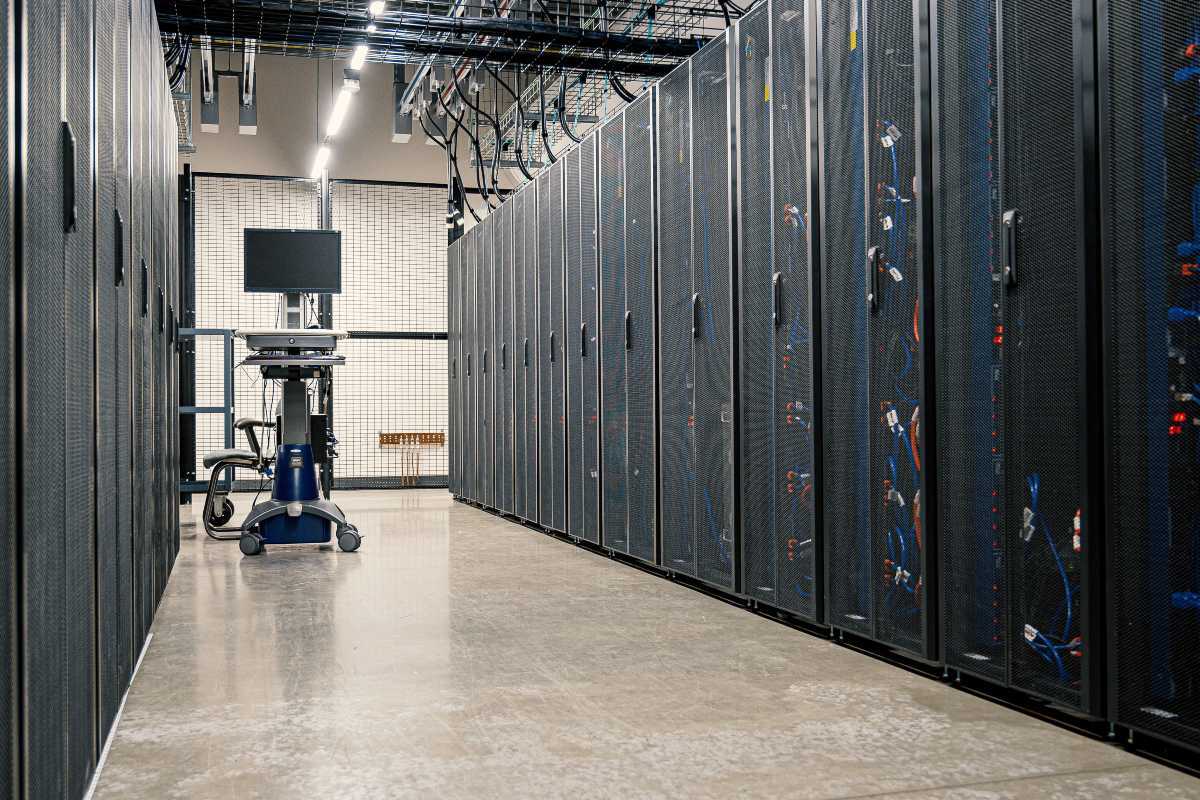
Server racks inside a data center. Fitch Ratings expects Asia-Pacific data center investment to slow under tighter US restrictions on advanced AI chips.
Pexels
Data center investment across Asia-Pacific is expected to slow and become more selective under tighter US restrictions on advanced artificial intelligence (AI) chips and access to computing power, with the greatest credit pressure falling on specialized cloud computing providers dependent on Chinese customers and advanced US chips, Fitch Ratings said on Thursday.
How will US chip restrictions affect data center investment?
Fitch expects uncertainty over chip supplies and customer eligibility to complicate the development of new projects and increase near-term operational risks. Restrictions could delay equipment deliveries, the start of commercial operations and financing, while weakening revenue prospects for computing providers heavily dependent on Chinese customers.
New rules introduced by the US Bureau of Industry and Security (BIS), effective November 19, extend export controls beyond physical chip shipments to cover access to advanced computing power through overseas data centers.
Shipments of certain advanced chips to Malaysia, Singapore, Indonesia and Thailand face additional licensing requirements. The rules also impose restrictions on overseas data centers providing significant computing capacity to certain Chinese entities.
Qualifying US-headquartered companies and companies with US-headquartered ultimate parent companies are exempt from the new destination-based licensing requirements, provided reporting conditions are met.
Operators wishing to continue providing computing services under existing affected arrangements have 90 days from the effective date to obtain authorization. Commercial recommendation systems are exempt from the new remote-access licensing requirement.
The Financial Times reported on Thursday that Nvidia had instructed its manufacturing partners to suspend server shipments to the four Southeast Asian markets amid the tighter controls.
Fitch said regulatory uncertainty could delay the deployment of computing equipment and financing for projects nearing completion, as GPU purchases and final customer commitments often occur late in development.
Why are neocloud operators more exposed to US chip restrictions?
Fitch expects the most direct credit impact to fall on neocloud operators, specialized cloud computing providers that rent out high-performance computing capacity.
Their cash flow depends on keeping expensive graphics processing units (GPUs) in use and securing customers eligible to access the technology.
Operators serving Chinese customers could redirect computing capacity to other users at discounted prices, offer less advanced computing services where permitted or continue using existing Nvidia equipment without equivalent access to upgrades.
Each option could weaken revenue, profit margins or competitiveness, particularly for companies with high debt levels and a heavy reliance on Chinese customers.
Physical data center owners are expected to withstand the initial disruption better because they provide space, electricity, cooling and connectivity under long-term contracts.
Regulatory restrictions would not automatically remove tenants' payment obligations. Any contractual relief, including force majeure provisions covering circumstances beyond a party's control, would depend on individual agreements.
However, prolonged financial difficulties among neocloud tenants could affect lease payments, renewals and occupancy. Tenant concentration and the ability to repurpose facilities for other customers would become increasingly important in assessing credit risk.
How could US chip restrictions reshape Southeast Asia's data center industry?
Fitch expects the impact on Southeast Asian data center projects to vary according to their customers and computing workloads rather than geographical location alone.
Malaysia's Johor illustrates this distinction, with infrastructure serving major US cloud computing companies alongside Chinese-linked projects and wholesale data center capacity where exposure to ultimate customers is less clear.
The restrictions could slow or reshape projects with greater exposure to affected customers and computing workloads. However, Fitch cautioned against treating all regional data center capacity as equally exposed.
Southeast Asian governments will face a more difficult balancing act between retaining access to advanced US technology and attracting investment from Chinese technology companies.
Greater US scrutiny of ultimate users of computing power increases the importance of credible end-user controls, while tighter enforcement could make some Chinese-linked projects less attractive.
The longer-term investment impact remains difficult to predict, as US controls could evolve and prompt policy or commercial responses from China.
How will tighter chip controls affect data center financing?
Financing conditions are expected to tighten first for projects facing uncertainty over chip access or customer eligibility.
Lenders are likely to increase due diligence and delay some loan disbursements or new financing transactions, although the credit impact will vary depending on financing structures.
Lending to a physical data center project with a strong sponsor and long-term contracted revenues carries different risks from financing GPUs or neocloud operators whose debt repayment depends on high equipment utilization and a concentrated customer base.
Fitch said the financial strength of customers contracted to purchase computing services, lenders' ability to seek repayment from project sponsors, contractual protections and dependence on contracted customer revenues for debt repayment would become more important than overall exposure to the data center sector.
Chinese alternatives such as Huawei's Ascend chips could help ease supply constraints over time, although they are unlikely to quickly replace advanced Nvidia hardware in overseas facilities.
US restrictions are nevertheless expected to accelerate Chinese investment in domestic chips and alternative AI infrastructure, changing the mix of technology used rather than eliminating underlying demand for computing power.





Comments
See what people are discussing