

Auto sector: Veteran automakers played it smart, Risk-takers pay the price?
Pakistan's expired Auto Policy and new budget changes have left hybrid-focused carmakers facing uncertainty while legacy manufacturers remain largely unaffected

Osama Naeem
Osama Naeem is an Investment Analyst with 2.4 years of experience in equity research and venture investing. He spent two years at AKD Securities, where he covered Pakistan's Cement, Automobile, and Technology sectors, delivering financial analysis, company valuations, and investment recommendations. He currently serves as an Investment Analyst at FRIM Ventures, where he evaluates high-growth investment opportunities, conducts market research, and supports investment decision-making across emerging businesses.
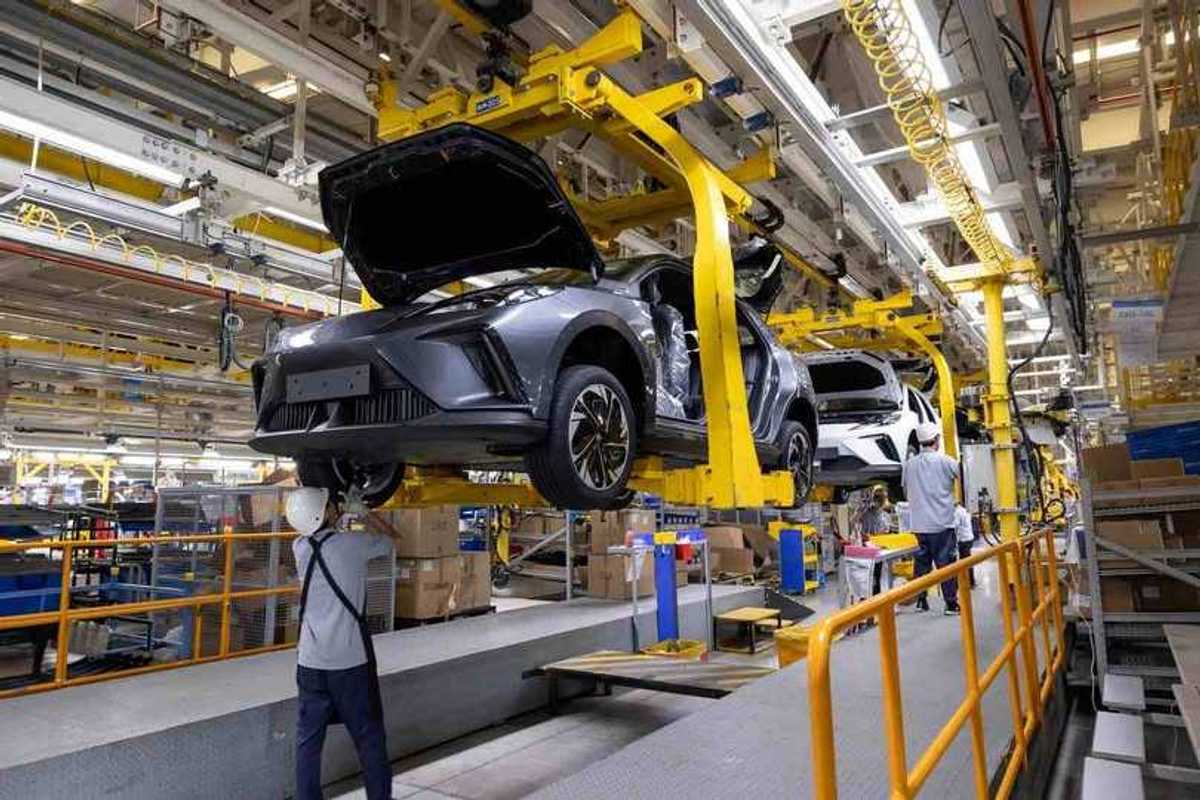
Pakistan's expired Auto Policy and FY27 budget have shifted the spotlight back to established automakers, while hybrid-focused newcomers face growing uncertainty
The government spent years blaming Indus, Honda and Suzuki for dominating Pakistan's auto market. Ironically, those same companies appear to have emerged as the biggest beneficiaries of the latest budget.
The central idea behind the previous Auto Policies was to attract new original equipment manufacturers (OEMs), reduce the dominance of legacy players and accelerate the transition toward hybrid electric vehicles (HEVs), plug-in hybrid electric vehicles (PHEVs) and battery electric vehicles (BEVs). To support that shift, the tax structure offered lower rates of 8.5% to 12.5% for HEVs and PHEVs, compared with 18% to 25% for internal combustion engine (ICE) vehicles. On paper, the strategy was sound.
To their credit, the new entrants expanded consumer choice by introducing vehicles with features that had rarely, if ever, been available in locally assembled models.
However, most of those manufacturers built their product portfolios around HEVs and PHEVs. Toyota limited its hybrid offering to the Corolla Cross, while Honda introduced only the HR-V Hybrid. The legacy automakers were widely criticized for not bringing more of their global hybrid models to Pakistan.
In hindsight, that decision appears less like reluctance and more like risk management. Investing heavily in an electrified lineup requires significant capital expenditure, and recovering those costs depends on a stable policy framework. If tax incentives change before manufacturers recoup their investments, the business case for those vehicles can quickly weaken.
The legacy automakers never based their business models on hybrid volumes. Their lineups remain heavily focused on ICE vehicles, and the tax structure for those models remained largely unchanged in the FY27 budget. As a result, they have avoided the uncertainty now facing manufacturers that invested more aggressively in electrification.
At the same time, Pakistan's Auto Policy has expired, with no replacement, implementation timeline or policy direction announced. The FY27 budget also lowers duties on imports of new and used completely built-up (CBU) vehicles, while the duty structure for completely knocked down (CKD) kits remains uncertain.
The result is a striking reversal. The automakers that policymakers once criticized for dominating the market have emerged largely unaffected by the latest policy changes, while newer entrants that aligned their investments with the government's electrification agenda now face uncertainty over the very incentives that encouraged those investments.



Comments
See what people are discussing