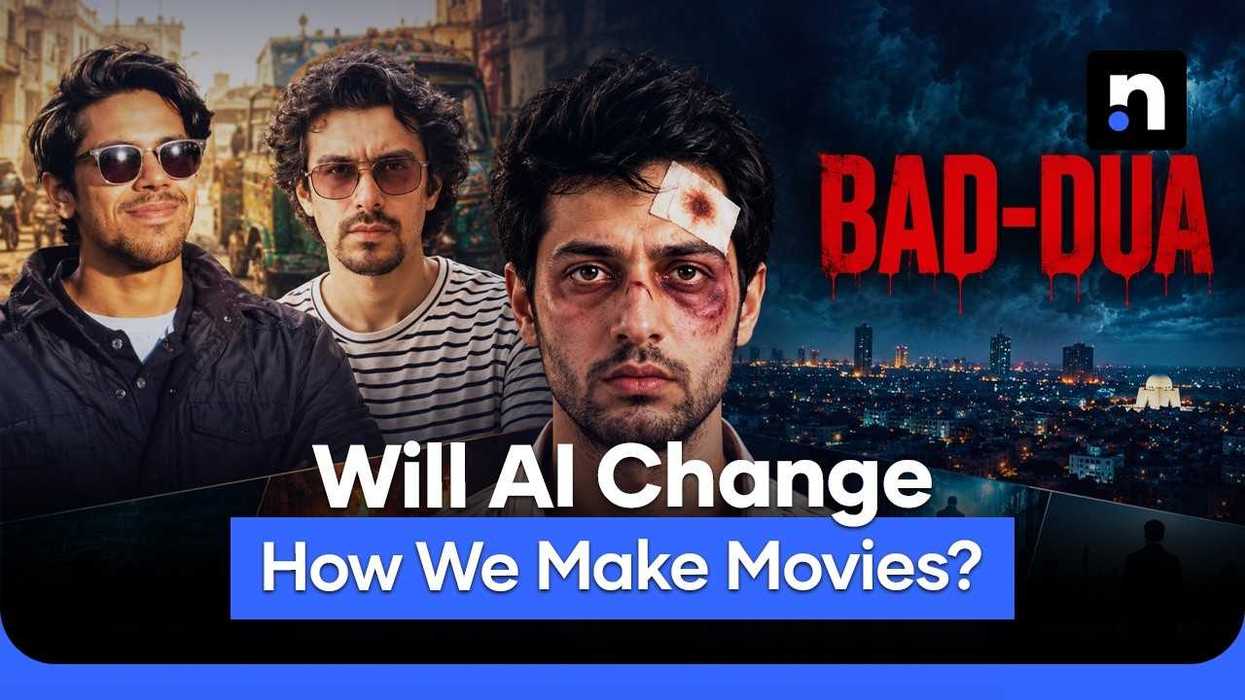
What happens when Pakistani filmmakers trade traditional sets and actors for artificial intelligence?
In this special conversation, Nukta producer Razi Wani sits down with Bilal Atif Khan, writer of BAD-DUA*, and Salman Noorani, its director and editor, to explore the making of an AI-generated film set in Karachi, where a man is cursed to experience every kind of death the city has to offer.
From generating scenes and directing AI performances to getting Urdu dialogue and emotional nuance right, the filmmakers discuss the creative possibilities and technical challenges of AI filmmaking.
Is AI filmmaking genuine creativity or just AI slop? Can it help independent filmmakers tell stories that traditional budgets cannot support? And what does it mean for actors, film crews, and the future of Pakistani cinema?
The conversation also explores their filmmaking journeys, the challenges facing Pakistan’s cinema industry, and why Karachi remains such a compelling setting for Urdu storytelling.
Is AI the future of filmmaking, or simply another tool in a filmmaker’s hands?
Watch the full conversation and share your thoughts in the comments. Like, share, and subscribe to Nukta for more discussions on Pakistani cinema, culture, and creativity.






Comments
See what people are discussing