

Bilawal says new provinces will not fix Pakistan’s governance crisis
Bilawal says rebuilding trust in state institutions and PTI’s confidence in parliament matters more than new provinces to fix Pakistan’s governance crisis

News Desk
The News Desk provides timely and factual coverage of national and international events, with an emphasis on accuracy and clarity.
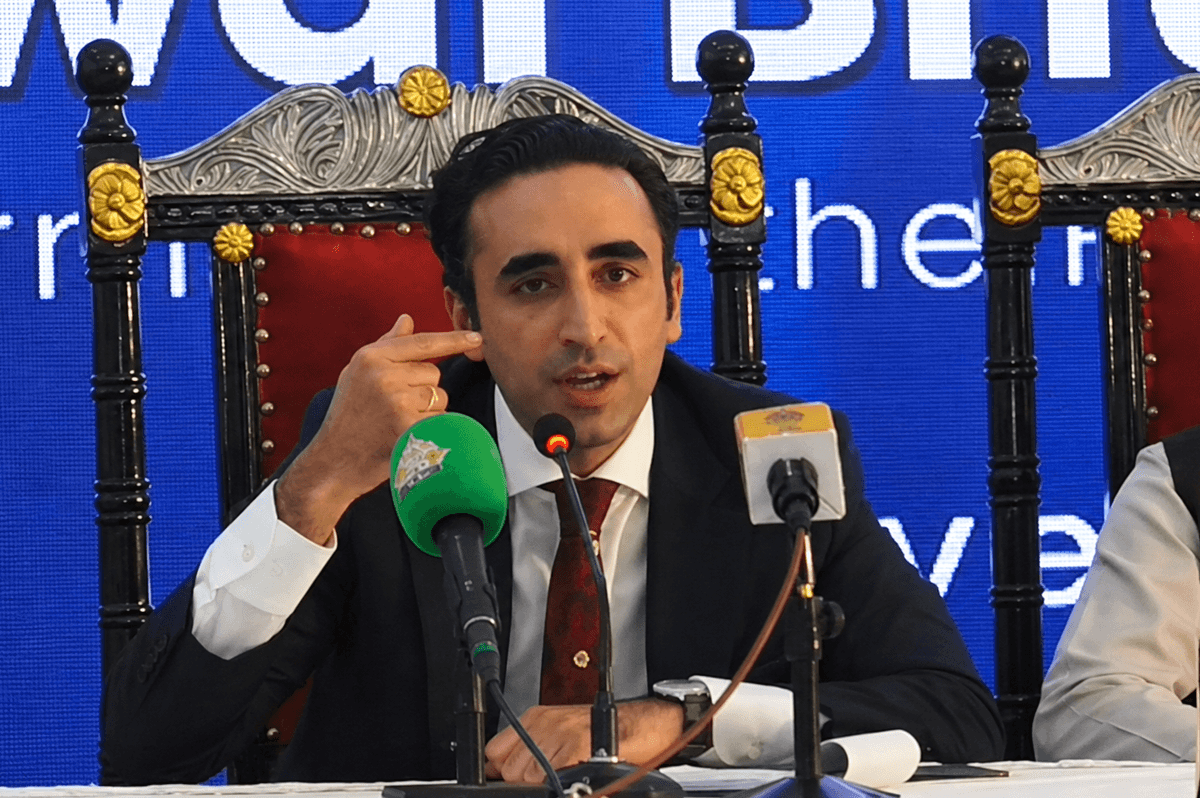
Pakistan Peoples Party (PPP) Chairman Bilawal Bhutto Zardari addresses gathering at the Karachi Press Club on Tuesday.
Screengrab
Pakistan Peoples Party (PPP) Chairman Bilawal Bhutto Zardari said on Tuesday that creating new provinces is not a solution to Pakistan’s governance crisis.
Speaking at a press conference at the Karachi Press Club, he argued that political and institutional failures, not provincial boundaries, are the root of the problem.
Will new provinces fix Pakistan’s governance crisis?
Bilawal says no. He argued that the governance system did not fail on its own but was deliberately weakened. He questioned why the existing system had broken down and why political discussions focused on restructuring the country instead of examining the causes of its dysfunction.
He said some proponents of new provinces had never contested or won elections but wanted to become chief ministers or prime ministers without securing a single vote. Acknowledging his own share of responsibility, he said he too had made mistakes and could not absolve himself of blame.
Is Pakistan going to create new provinces?
The government has not officially confirmed plans for a 28th Constitutional Amendment, although speculation about such legislation has accompanied renewed discussion of additional provinces. Interior Minister Mohsin Naqvi revived the debate by describing the existing governance structure as having collapsed and calling for new provinces or administrative units.
Naqvi has also proposed holding a referendum to establish whether the public supports the creation of new provinces, saying the people’s wishes could not be disregarded.
Addressing the Pakistan Economic Summit in Islamabad in July, he had called on political parties to reach a consensus on structural reforms. Responding to Bilawal’s proposal for a political reset, the interior minister said the two were “almost on the same page”, while advocating broader changes to the system.
What did Bilawal say about Pakistan’s economic situation?
Beyond the debate over provincial boundaries, Bilawal painted a grim picture of Pakistan’s economy, citing rising poverty, unemployment and inflation as mounting challenges for ordinary households. He warned that conditions could deteriorate further, with lower-income and vulnerable communities likely to suffer the most.
“I have not witnessed such bad economic conditions in my life,” he said, pointing to the growing difficulty families faced in meeting household expenses amid rising prices and electricity bills.
The PPP chairman criticized political leaders for losing sight of these everyday concerns. He said public debate had increasingly shifted towards divisive political questions instead of addressing the hardships confronting citizens.
How does Bilawal want to restore trust in state institutions?
Bilawal said rebuilding public confidence in state institutions was essential to any effort to overhaul the governance system. He identified parliament, the Election Commission of Pakistan, the judiciary and the media as institutions whose legitimacy and credibility needed to be restored.
The PPP leader, whose party is a key ally of the ruling Pakistan Muslim League-Nawaz (PML-N) in the federal government, said meaningful reform could only emerge through political engagement and democratic processes. “A political reset” was necessary, he said, insisting that elected representatives had to lead the process rather than leave it to non-political actors.
“If we want to reset the system, it will have to be a political reset,” Bilawal said, adding that politicians had a responsibility to address the country’s fundamental challenges as representatives of its people.
He also called for greater media freedom, saying journalists’ pens and voices carried more power than guns and other weapons. Expressing concern over restrictions on journalists and the possibility of legal action for reporting on public issues, he said a weakened media undermined its ability to hold governments accountable.
Why does Bilawal say PTI is essential to political stability?
Bilawal urged the federal government to rebuild the confidence of the Pakistan Tehreek-e-Insaf (PTI) and Jamiat Ulema-e-Islam-Fazl (JUI-F) in parliament, arguing that the country’s political system could not function effectively without their participation. He said the government should recognize PTI and its founder, former prime minister Imran Khan, as legitimate political stakeholders despite their differences with the ruling coalition.
“Whether I like it or not, this country cannot function without the PTI,” he said, urging the government to make a serious effort to secure the party’s confidence in parliament.
Bilawal said political grievances should be addressed through dialogue, particularly as Pakistan faced a challenging regional security environment. He also called on the government to take PTI’s objections to the previous general elections seriously as part of efforts to rebuild its trust in the parliamentary system.
On Imran Khan's imprisonment, Bilawal said he believed the former prime minister was a political prisoner, adding that Pakistan needed to move beyond a cycle in which former prime ministers were either branded thieves or portrayed as victims of political victimization.
He acknowledged that PTI's political choices might have contributed to its current difficulties and that the party could be facing consequences for its past actions. However, he said he wanted to see a political environment in which no one who served as prime minister was subsequently sent to jail.
Bilawal stressed that achieving this would require a broader political consensus to ensure that future prime ministers could complete their terms without facing imprisonment.
What role should parliament play in resolving political disputes?
Bilawal said parliament should serve as the primary forum for resolving political disputes, with debate, negotiation and compromise taking precedence over violence, threats and imprisonment. He described the opposition’s role as one of the most patriotic responsibilities in a parliamentary democracy, saying scrutiny of government decisions should not be portrayed as opposition to the state.
“The most patriotic job in any parliament is the job of the opposition,” he said.
The PPP chairman argued that disagreement and consensus were both necessary for democratic decision-making. He said compromises between opposing political positions could provide a way forward on national issues.
He said the government had a responsibility to take the initiative in restoring the opposition’s confidence. Opposition lawmakers should also fulfil their obligations by attending parliamentary sessions and participating in committee proceedings.



Comments
See what people are discussing