

In northern Pakistan, a new breeding center aims to rescue the Yak
Khyber Pakhtunkhwa has approved its first yak breeding center as the species declines and remains on the IUCN endangered list

Kamran Ali
Correspondent Nukta
Kamran Ali, a seasoned journalist from Khyber Pakhtunkhwa, Pakistan, has a decade of experience covering terrorism, human rights, politics, economy, climate change, culture, and sports. With an MS in Media Studies, he has worked across print, radio, TV, and digital media, producing investigative reports and co-hosting shows that highlight critical issues.
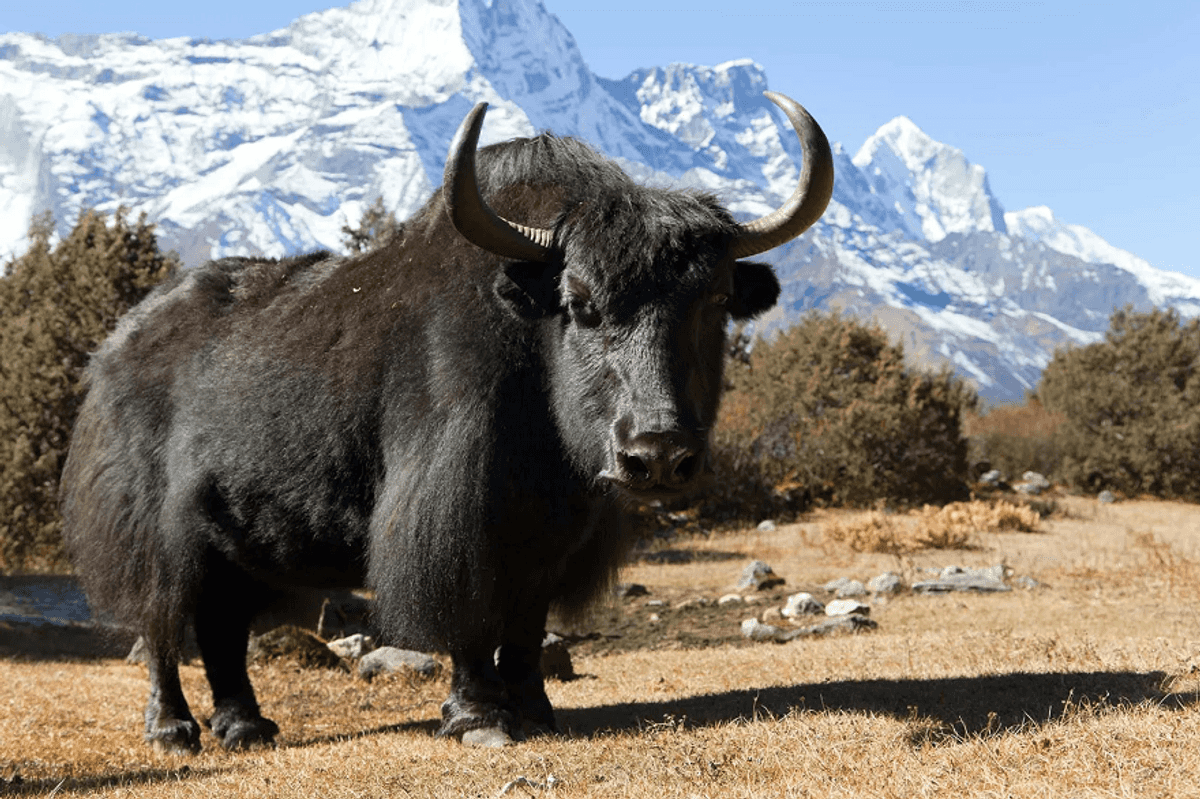
Despite their decline, yaks remain central to life and livelihoods in Upper Chitral’s high-altitude communities.
Source: Britannica
In the high-altitude frontier valleys of northern Pakistan, where snow and isolation have long shaped both livelihoods and survival, officials are turning to science and state intervention in an effort to save one of the region’s most resilient but increasingly threatened animals: the yak.
The government of Pakistan’s northwestern province of Khyber Pakhtunkhwa has approved a new conservation initiative that includes establishing the country’s first dedicated yak research and breeding center near the Pakistan–Afghanistan border, according to an official document seen by Nukta.
The project comes as yak populations continue to fall across high-mountain ecosystems, even as the species is classified as endangered on the International Union for Conservation of Nature (IUCN) Red List, underscoring growing concern over the future of an animal central to survival in some of Pakistan’s most remote communities.
A high-altitude facility in Broghil Valley
The proposed center will be established on more than 100 kanals of land in the snowbound Broghil Valley, located in the Upper Chitral district near the Afghan border. The project, estimated to cost 300 million rupees (about $1.1 million), is expected to be completed within three years.
According to the document, an initial herd of 50 yaks will be brought to the facility, where officials plan to conduct structured breeding, veterinary research and long-term conservation work aimed at stabilizing the population.
The initiative marks the first time Pakistan has attempted to centralize yak conservation at a dedicated research facility, rather than relying on dispersed pastoral systems that have sustained the animals for centuries.
A steep decline in numbers
Pakistan’s broader livestock sector remains vast — the country’s 7th Agricultural Census estimates 237.7 million livestock animals nationwide. In Khyber Pakhtunkhwa alone, the number stands at roughly 48.7 million, dominated by cattle, buffaloes, sheep and goats. But those species are poorly suited to the extreme alpine environment where yaks traditionally thrive.
In contrast, official data from the Bureau of Statistics shows that only 1,923 yaks remain in the province today — including 1,912 in Upper Chitral and just 12 in Lower Chitral — a sharp decline from an estimated 5,000 to 7,000 in the early 2000s.
The drop reflects a broader regional pattern seen across the Hindu Kush–Himalayan belt, where changing climate conditions and shifting pastoral practices have disrupted traditional yak herding.
“Hybridization, habitat loss and neglect”
Experts within Pakistan’s provincial Livestock Department attribute the decline to a combination of ecological and human factors.
Dr. Hamid Ullah Khan, a senior research officer, said uncontrolled crossbreeding with cattle, habitat degradation and the erosion of traditional breeding practices have significantly weakened pure yak populations, even though the species remains economically and ecologically important for high-altitude communities.
Local residents describe a similarly fragile situation on the ground.
In the remote Broghil Valley, Umar Rafi, a resident, said yak herds have shrunk dramatically in recent years, driven by climate change, food shortages and limited state support.
He estimated that a single yak now sells for around 300,000 rupees, while yak meat can fetch roughly 12,000 rupees per kilogram in local markets. “Earlier, every household kept around 100 yaks,” he said. “Now most families have only 20 to 30, and many animals die from starvation when premature snowfall cuts off grazing routes and blocks access to feed.”
Lifeline for mountain communities
Despite their decline, yaks remain central to life and livelihoods in Upper Chitral’s high-altitude communities.Despite their decline, yaks remain central to life and livelihoods in Upper Chitral’s high-altitude communities.
Dr. Safir Ullah, principal research officer at the provincial Livestock Department, said yak husbandry continues to form the backbone of survival in remote valleys such as Broghil, Laspur, Shandur, Rach and Melp.
At elevations above 8,000 feet, where few other domesticated animals can survive, yaks provide milk, butter, meat, hides and transport. They are also closely tied to traditional handicrafts and seasonal trade networks that connect isolated valleys to broader regional markets.
Dr. Ullah added that yak-based dairy and meat products could hold untapped export potential, particularly in Middle Eastern and Central Asian markets, where demand for high-altitude organic livestock products is growing.
Conservation hopes and economic ambitions
Officials say the new research and breeding center is designed not only to prevent further population collapse but also to improve livelihoods in some of Pakistan’s most climate-vulnerable communities.
Dr. Asal Khan, director general of livestock, said the project would focus on improving yak health, reproduction and productivity while establishing a controlled breeding herd adapted to harsh alpine conditions.
He said the initiative also aims to strengthen farmer training, develop value chains for yak products and link yak husbandry with eco-tourism in northern Pakistan.
“The goal is both conservation and livelihood improvement,” he said, according to the document. “We want to preserve the species while also making it economically viable for local communities.”
For residents like Umar Rafi, the project carries cautious optimism. If implemented effectively, he said, it could help reverse years of decline and restore a vital source of income in a region where few alternatives exist.
Still, the challenges remain formidable: a warming climate, shrinking grazing corridors and decades of gradual erosion in traditional livestock systems.
Whether the new center can stabilize a species that has endured for centuries in some of the world’s harshest terrain may ultimately depend not only on scientific intervention, but on whether the fragile balance between mountain communities and their environment can be sustained.





Comments
See what people are discussing