

Cabinet committee reviews 195% surge in Pakistan's Khyber Pakhtunkhwa terror attacks
A special cabinet committee chaired by Prime Minister Shehbaz Sharif reviewed alarming security intelligence reports showing a 195 percent increase in terrorist attacks in Khyber Pakhtunkhwa, severe police vacancies, and a massive surge in drone and IED strikes targeting security forces

News Desk
The News Desk provides timely and factual coverage of national and international events, with an emphasis on accuracy and clarity.
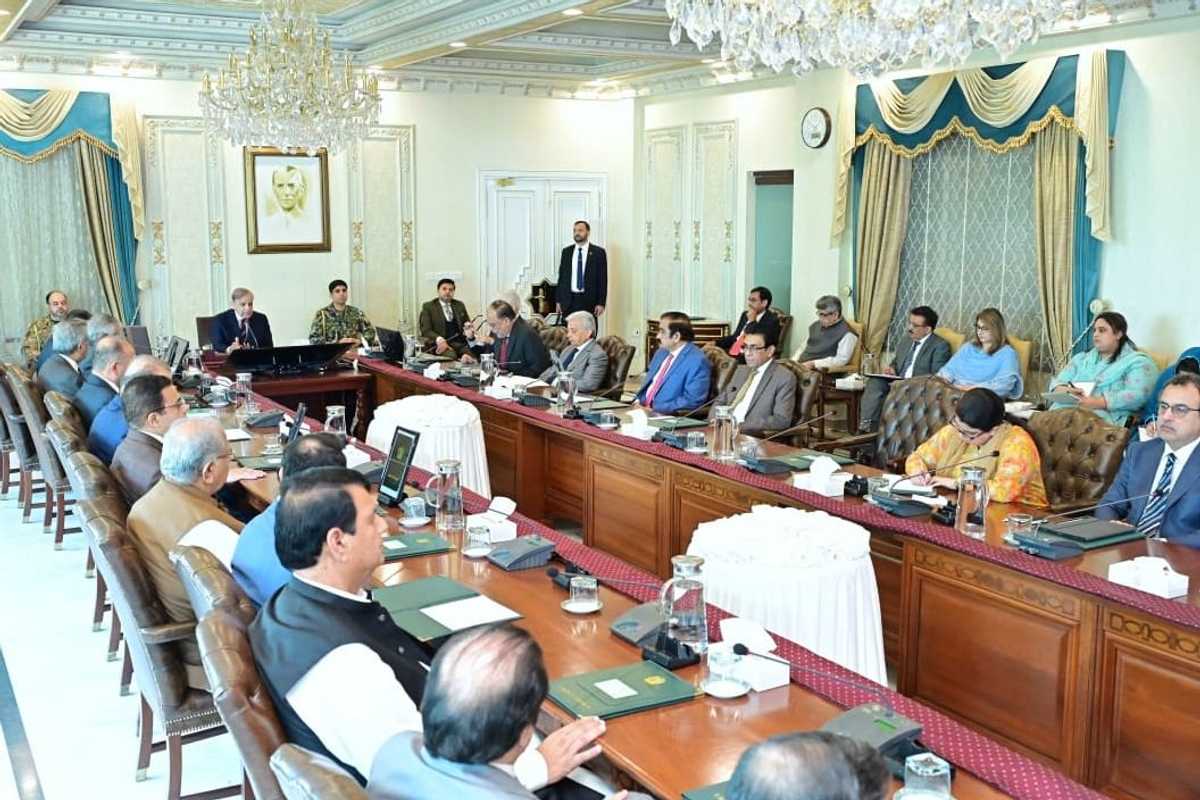
A high-level cabinet committee chaired by Pakistan's Prime Minister Shehbaz Sharif convened in Islamabad on Sunday, October 11, to review a severe security crisis in Khyber Pakhtunkhwa following intelligence reports revealing a 195 percent surge in terrorist attacks across the province between March 2024 and September 2026.
What security gaps and tactical shifts were detailed in the intelligence assessment?
The comprehensive intelligence and police assessment presented to the cabinet committee highlighted a dramatic shift in insurgent tactics, notably the rapid adoption of weaponized drone technology.
While no drone attacks targeting law enforcement were recorded in 2024, terrorist groups conducted 170 drone strikes against police and security positions in 2026. Additionally, improvised explosive device (IED) attacks remained dangerously high, with 159 incidents recorded through September 2026 following 181 attacks in 2025. Law enforcement personnel bore the brunt of the violence, accounting for 73 percent of all recorded terror targets in 2026.
The reports attributed the expansion of insurgent operational capabilities to sanctuaries in neighboring Afghanistan, active local facilitation networks, and what intelligence agencies described as passive provincial counterterrorism policies. Southern districts in Khyber Pakhtunkhwa faced acute operational vulnerabilities due to a critical shortage of armored personnel carriers, surveillance equipment, and night-vision capabilities.
How are federal authorities addressing structural deficiencies in KP's counterterrorism infrastructure?
The security review exposed severe institutional deficiencies within provincial law enforcement bodies, including more than 9,000 vacant posts in the Khyber Pakhtunkhwa Police and significant resource shortfalls across merged tribal districts.
The Counter Terrorism Department (CTD) continues to suffer from acute personnel shortages, relying heavily on regular police officers due to a lack of specialized training facilities, while the provincial Safe City surveillance project remains restricted exclusively to Peshawar.
In response to the findings, the cabinet committee expressed serious concern over governance and administrative lapses in the province. Federal authorities emphasized that addressing institutional vulnerabilities, expediting police recruitment, equipping frontline units with modern counter-drone and night-vision technology, and strengthening CTD infrastructure are urgent national priorities to stabilize the region.
The committee's findings will form the basis of an updated national counterterrorism strategy and joint civil-military operational framework for Khyber Pakhtunkhwa.




Comments
See what people are discussing