

Pakistan could become sixth-largest economy before 2050, says Shehbaz Sharif
PM Sharif says Pakistan could be the sixth-largest economy before 2050, over two decades ahead of Goldman Sachs' 2075 forecast. He is courting investors.

News Desk
The News Desk provides timely and factual coverage of national and international events, with an emphasis on accuracy and clarity.
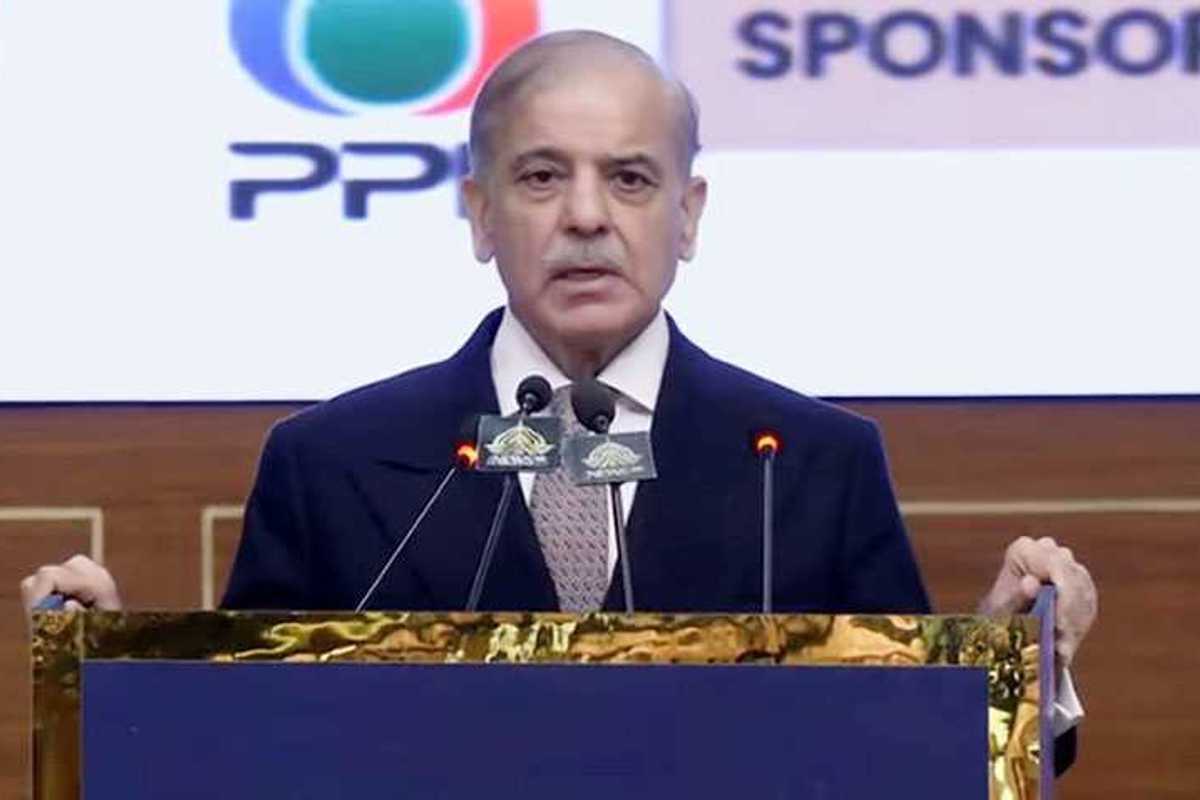
Prime Minister Shehbaz Sharif speaking at the Pakistan Minerals Investment Forum 2026 in Islamabad on Friday, November 13, 2026.
Radio Pakistan/Screengrab
Prime Minister Shehbaz Sharif said on Friday that Pakistan could become the world's sixth-largest economy before 2050. Speaking at the Pakistan Minerals Investment Forum 2026 in Islamabad, he invited international investors to develop the country's mineral resources and set up industries.
What will be the economy of Pakistan in 2050?
Goldman Sachs projected that Pakistan will become the world's sixth-largest economy by 2075. Sharif recalled that assessment while addressing the forum and said he would make a small amendment to the date, expecting Pakistan to reach that position earlier than 2050.
“I would like to make a small amendment here: instead of 2075, it will be earlier than 2050,” he said. That places his timeline more than two decades ahead of the Goldman Sachs projection.
“According to Goldman Sachs' assessment, by 2075, Pakistan will be the sixth-largest economy in the world. But I would like to make a small amendment here.Instead of 2075, it will be earlier than 2050 because, no doubt, it's a very challenging time and a challenging journey, very arduous, and at times, on the way, you want to smile but you have to sigh. Sometimes your health brings you down, but that is the most critical point when you must rest a bit but never quit. That's our philosophy, and that will make Pakistan a great country in the economy of nations.”Prime Minister Muhammad Shehbaz Sharif Addresses the Pakistan Mineral Investment Forum 2026
— Government of Pakistan (@GovtofPakistan) November 13, 2026
What did Sharif tell investors about Pakistan's mineral resources?
The prime minister urged international investors to explore Pakistan's mineral potential and set up processing and manufacturing facilities in the country. He stressed that Pakistan must move beyond exporting raw minerals and focus on value addition and industrial development.
“My message to international investors is clear: mine in Pakistan, process in Pakistan, manufacture in Pakistan and then export to the rest of the world,” he said. Sharif said the government wanted to establish refineries, smelters, cable and conductor factories, and other industries to add value to mineral resources.
“This forum comes at a very exciting and opportune time for Pakistan as our economy moves forward with renewed confidence on a path of growth and transformation. That day is not far away, when this will come to a grinding halt and these treasured minerals will be fully utilised by Pakistan's downstream industry.At Reko Diq, on the Tithian Copper Belt, we are developing one of the largest untapped copper and gold deposits in the world and its production is expected to commence in 2028. A project that remained stalled for some two decades is now on its way to actual operational execution very soon.”Prime Minister Muhammad Shehbaz Sharif Addresses the Pakistan Mineral Investment Forum 2026
— Government of Pakistan (@GovtofPakistan) November 13, 2026
Referring to the Reko Diq project, he said one of the world's largest untapped copper and gold deposits was being developed, with production expected to begin in 2028. The project had remained stalled for about two decades and was now moving toward operational execution, he said. He also appreciated Barrick's continued confidence in Pakistan.
What reforms did Sharif promise to attract mining investors?
Sharif said international investors expected a level playing field, transparent rules, quick decision-making, consistent policies and strong institutions. He said the government was simplifying procedures, eliminating red tape, reducing lengthy delays and ensuring transparency in the awarding of licenses and contracts.
The National Mineral Data Cell and digitization of geological records would help investors assess the country's underground mineral resources before committing funds, he added. Sharif assured investors that federal and provincial governments would work together to provide the necessary support.
He said protecting investors' employees, assets and supply routes was a paramount government responsibility. He invited investors to bring directly to him any files delayed by bureaucratic hurdles or complicated procedures, promising they would move at “lightning speed.”
How will mining projects benefit young Pakistanis and local communities?
Sharif said Pakistan's wealth lay not only in its mountains but also in its young population. He described Pakistani youth as educated, resilient and brave, saying they could turn natural resources into national progress and prosperity.
He urged international investors to establish skills training centers and vocational institutes, facilitate technology transfer and support local suppliers. These measures, he said, would help young Pakistanis become skilled professionals, innovators and entrepreneurs.
“We do not want to simply extract minerals in raw form and ship them abroad. We want Reko Diq and every project along the tethyan belt to establish refineries, cementers, cable and conductor factories, and the industry that will connect Pakistan with the rest of the world.My humble and very sincere advice to you would be mine in Pakistan, process in Pakistan, manufacture in Pakistan and then export to the rest of the world. That's our philosophy and that's our mission and this is the cardinal principle of a fair and equitable partnership. It creates value for Pakistan and great opportunities for all of you. It's a win-win partnership for all of us.”Prime Minister Muhammad Shehbaz Sharif Addresses the Pakistan Mineral Investment Forum 2026
— Government of Pakistan (@GovtofPakistan) November 13, 2026
The prime minister stressed that mining investments must create local jobs, support businesses and contractors, and improve access to schools, clinics and clean drinking water. He said the government would work with provincial authorities and investors so that communities living closest to mining sites became the main beneficiaries of economic activity.
Sharif also said economic development and environmental protection must go hand in hand. Pakistan would pursue responsible mining in line with the highest international standards, using advanced technology while protecting water resources, workers' health and safety, and the land, he said.
Reiterating that federal and provincial governments and all national institutions would stand firmly with investors, Sharif invited international businesses to visit Pakistan and assured them of the country's hospitality and full support. He expressed confidence that Pakistan and its international partners could transform the country's mineral wealth into mutually beneficial economic cooperation, industrial growth and shared prosperity.



Comments
See what people are discussing