

Cement consolidation deepens in Pakistan as new capacity tests pricing discipline
Demand shows early recovery, but sub-60% utilization keeps expansion risks in focus

Business Desk
The Business Desk tracks economic trends, market movements, and business developments, offering analysis of both local and global financial news.
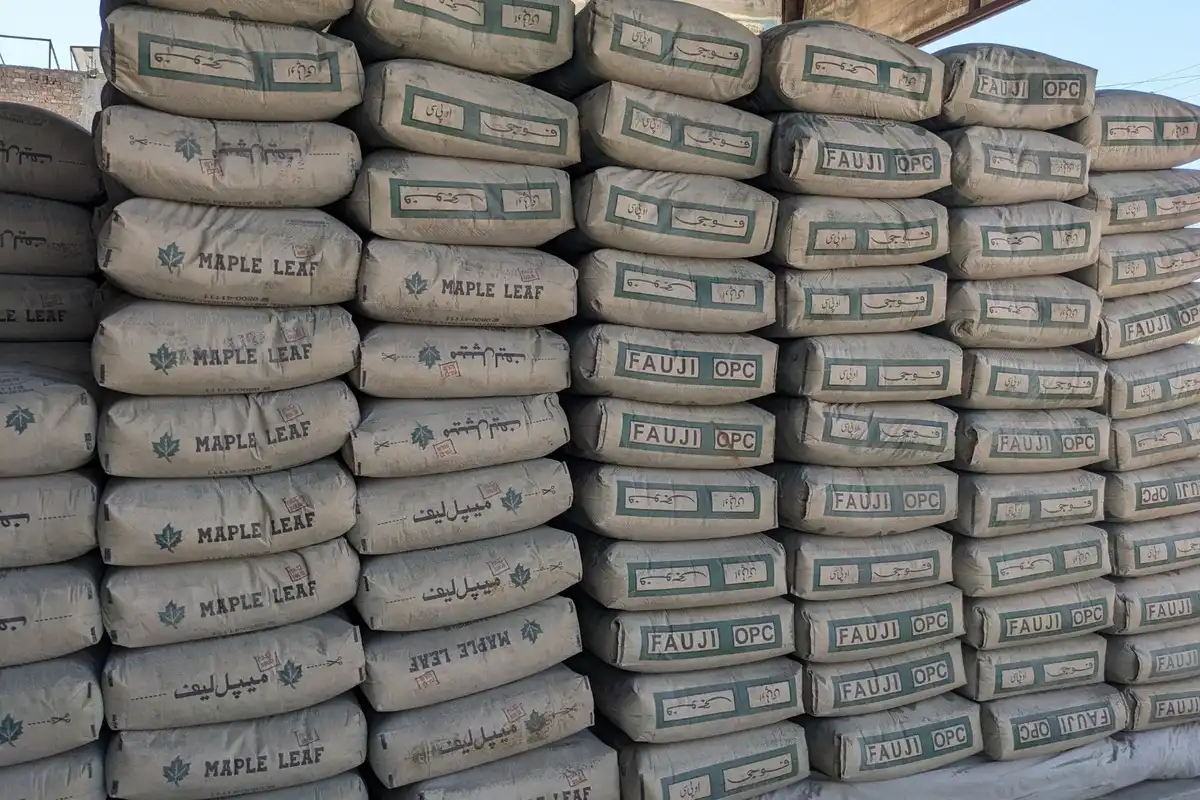
Pakistan cement sector remains in focus as consolidation accelerates through acquisitions, even as one manufacturer has announced new capacity at a time when industry utilization remains below 60%, a level widely seen as suboptimal.
Despite these concerns, early signs of a demand recovery have emerged. Local cement dispatches rose 13% during the first six months of FY26, though domestic consumption is still below FY22 levels, underscoring the scale of latent demand in the market.
The key uncertainty for the sector is the timing and strength of a sustained recovery.
In a report, Insight Securities said that the latest capacity expansion announcement, particularly in the northern region, has revived fears of a potential price war. Industry analysts, however, view this risk as limited in the near term, citing strong pricing discipline that has held for the past three years despite utilization remaining below 60%.
This marks a departure from earlier cycles, when low utilization typically triggered aggressive price competition.
Consolidation reshapes industry
Consolidation has also materially reshaped the industry.
The combined market share of the top five cement manufacturers rose from about 54% in FY17 to 65% in FY22 and is expected to increase further to around 76% following recent acquisitions and announced capacity additions.
This concentration is widely seen as strengthening industry structure and supporting price stability.
Against this backdrop, analysts continue to favor cement manufacturers with strong balance sheets, lower leverage and diversified revenue streams, which are better positioned to absorb near-term volatility.
Lessons from past expansion cycles
Pakistan’s cement industry has experienced three major expansion cycles, each preceded by strong demand expectations and supportive macroeconomic conditions.
Capacity utilization stood at 65% in FY07, 88% in FY15 and 72% in FY21 ahead of these cycles. In each case, subsequent oversupply led to price wars and margin compression.
Following the post-COVID demand recovery and the availability of subsidized financing backed by the State Bank of Pakistan, the sector embarked on another expansion phase, lifting total capacity from 70 million tons to 85 million tons.
BWCL and FCCL undertook two expansions, while MLCF, LUCK and ACPL also added capacity. CHCC and KOHC acquired land for greenfield projects but delayed execution due to weak demand, while DGKC and PIOC largely sat out that cycle.
A price war failed to materialize, largely because the expansion coincided with a global commodity supercycle that pushed coal prices sharply higher. Elevated interest rates and fiscal tightening raised construction costs and dampened demand, prompting cement manufacturers to prioritize margin protection, pass through cost increases and improve efficiency, including through captive power generation.
DGKC expansion highlights strategic shift
DG Khan Cement Co. Ltd. (DGKC) has now announced a new clinker line of 11,000 tons per day at its Dera Ghazi Khan plant.
The expansion is expected to raise the company’s capacity-based market share from about 8.1% to 11.5%, allowing it to retain its position as the fifth-largest producer.
DGKC has not expanded capacity in the northern region since 2007, a factor that led to its north-based market share falling from 12% in 2015 to around 6% in 2025. Existing lines at the Dera Ghazi Khan plant are relatively old and inefficient, reflected in gross margins of roughly 25%, compared with an industry average of about 33%.
Management said balancing, modernization and replacement was not feasible due to site-specific constraints, prompting the decision to add a new clinker line.
The project has been under consideration for four years but was delayed by high leverage and weak demand.
The expansion is expected to improve both DGKC’s market position and profitability over time.
Capacity risks seen as manageable
With industry utilization currently near 51%, analysts say the timing of the expansion appears driven more by competitive positioning than by immediate demand needs.
The announcement also comes amid ongoing acquisitions involving ACPL and PIOC, raising the possibility that other players could revive delayed expansion plans to defend market share.
CHCC and KOHC, for example, had planned greenfield projects in Dera Ismail Khan and Khushab but postponed them due to weak demand. While cement demand has grown 13% in 6MFY26 and is expected to improve further, current utilization levels suggest ample capacity to meet near-term growth.
Outlook remains constructive
While capacity expansion inherently carries the risk of renewed price competition, analysts believe a price war is unlikely in the near future. The rising dominance of the top five manufacturers — whose combined market share is expected to reach about 76%, compared with 51%, 54% and 59% during the FY05, FY17 and FY22 expansion cycles — has strengthened pricing discipline across the sector.
Any adverse impact from excess capacity would likely emerge 1.5 to 2.5 years after new lines are commissioned, according to industry estimates. As a result, analysts maintain an overweight view on the cement sector, pointing to demand that appears to have bottomed out after local sales fell from a peak of 48 million tons in FY22 to 39 million tons in FY25.
Medium- to long-term demand growth is expected to depend largely on public sector development spending, including dam projects, infrastructure under CPEC Phase II and progress in mining projects. A supportive macroeconomic environment and a revival in real estate activity could also drive private-sector consumption.
On the cost side, greater use of alternative fuels, higher reliance on locally sourced coal and an increasing share of renewables in the power mix are expected to support margins. However, companies pursuing acquisitions and expansions are likely to face higher finance costs in the short to medium term due to increased debt requirements.





Comments
See what people are discussing