

Dollar dominance fades as de-dollarization gains pace
Kamran Khan says falling dollar reliance, rising yuan and gold signal a major shift in global financial power

News Desk
The News Desk provides timely and factual coverage of national and international events, with an emphasis on accuracy and clarity.
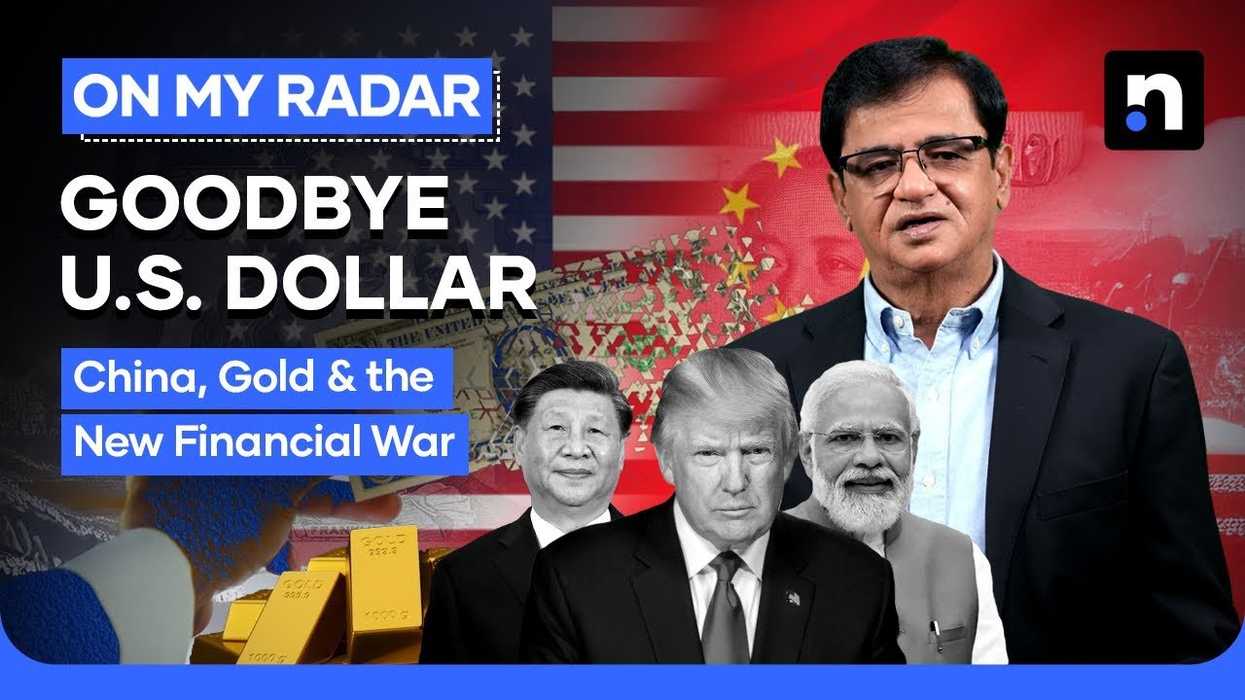
The long-standing dominance of the U.S. dollar in the global financial system is gradually weakening as countries reduce reliance on it in trade, reserves and lending, Kamran Khan said during a recent episode of “On My Radar.”
Khan said the international economy is moving through what experts describe as a decisive phase of “de-dollarization,” marked by growing use of alternative currencies and gold in global transactions.
For decades, the U.S. dollar enjoyed unmatched supremacy, acting as the world’s primary reserve currency and the backbone of international trade and finance. It was long considered unchallengeable in foreign exchange markets, Khan said.
That dominance, however, is now eroding.
While the dollar remains the world’s most influential currency, Khan said its influence is no longer as strong across regions and sectors. Citing International Monetary Fund data, he said the dollar’s share in global foreign exchange reserves had declined to 57.8% by the end of 2024.
At the same time, central banks around the world are increasing holdings of non-traditional currencies and gold, signaling a structural shift rather than a temporary adjustment.
Khan said the change is also visible in commodities and energy markets, where pricing and payments are increasingly being conducted in China’s yuan instead of the dollar. According to him, this reflects not just a shift in trade settlement practices but deeper geopolitical forces.
A key turning point, Khan said, came after the Russia-Ukraine war, when the United States and its allies froze about $300 billion in Russian foreign reserves held largely in dollars and euros.
That move sent shockwaves through the global financial system.
Countries realized that reserves held in Western currencies could be frozen or seized during political disputes, Khan said. As a result, many central banks began reducing dollar exposure, boosting gold purchases and expanding trade in local currencies.
Khan described the use of financial tools as sanctions as the “weaponization of finance,” arguing that it acted as a catalyst for de-dollarization.
He said this global trend represents a challenge to the Bretton Woods system, which after World War II established the dollar as the central pillar of global finance.
Against this backdrop, BRICS countries — Brazil, Russia, India, China and South Africa — have taken multiple initiatives to reduce dependence on the dollar. Khan said these countries are increasingly conducting bilateral and multilateral trade in their own currencies, including the yuan, ruble and Indian rupee.
The bloc has also set up alternative institutions such as the New Development Bank and the Contingent Reserve Arrangement to provide financing and financial protection without relying on the dollar.
Khan said BRICS nations are also developing digital payment systems and interbank messaging networks, such as the proposed BRICS Bridge, to reduce reliance on the U.S.-influenced SWIFT system.
In early 2025, when BRICS leaders formally moved ahead with alternative payment arrangements, Khan said the United States responded with what he described as “Trump tariffs,” reflecting Washington’s unease over the shift.
China and Russia, he noted, have been trading under currency swap agreements since 2014, with Iran joining similar arrangements in 2021. Due to U.S. sanctions, Iran now conducts trade using a mix of yuan, ruble, euro and Iraqi dinar.
Khan also pointed to Saudi Arabia and other oil-producing countries selling oil and gas to China in yuan, while France completed its first liquefied natural gas transaction in yuan in 2024.
China has further promoted the yuan globally through the Cross-Border Interbank Payment System, or CIPS, which Khan said had more than 1,500 participants across 119 countries by early 2025.
Russia, meanwhile, adopted one of the fastest de-dollarization strategies after 2022, enforcing a ruble-for-gas policy and launching its own SPFS financial messaging system as an alternative to SWIFT.
India has taken a different route, introducing Special Rupee Vostro Accounts to facilitate trade in Indian rupees, particularly with countries facing dollar shortages or sanctions.
Gold has emerged as another major pillar of this shift.
Khan said central banks bought a record 1,136 metric tons of gold in 2022, the highest level since 1967, followed by more than 1,000 tons each year in 2023 and 2024. For the first time since the 1990s, global central bank gold reserves have surpassed holdings of U.S. Treasury bonds, he said.
Overall, Khan said the data shows the global economy moving toward a multipolar financial system, weakening the long-held belief that global trade, loans and reserves can only function through the U.S. dollar.




Comments
See what people are discussing