


News Desk
The News Desk provides timely and factual coverage of national and international events, with an emphasis on accuracy and clarity.
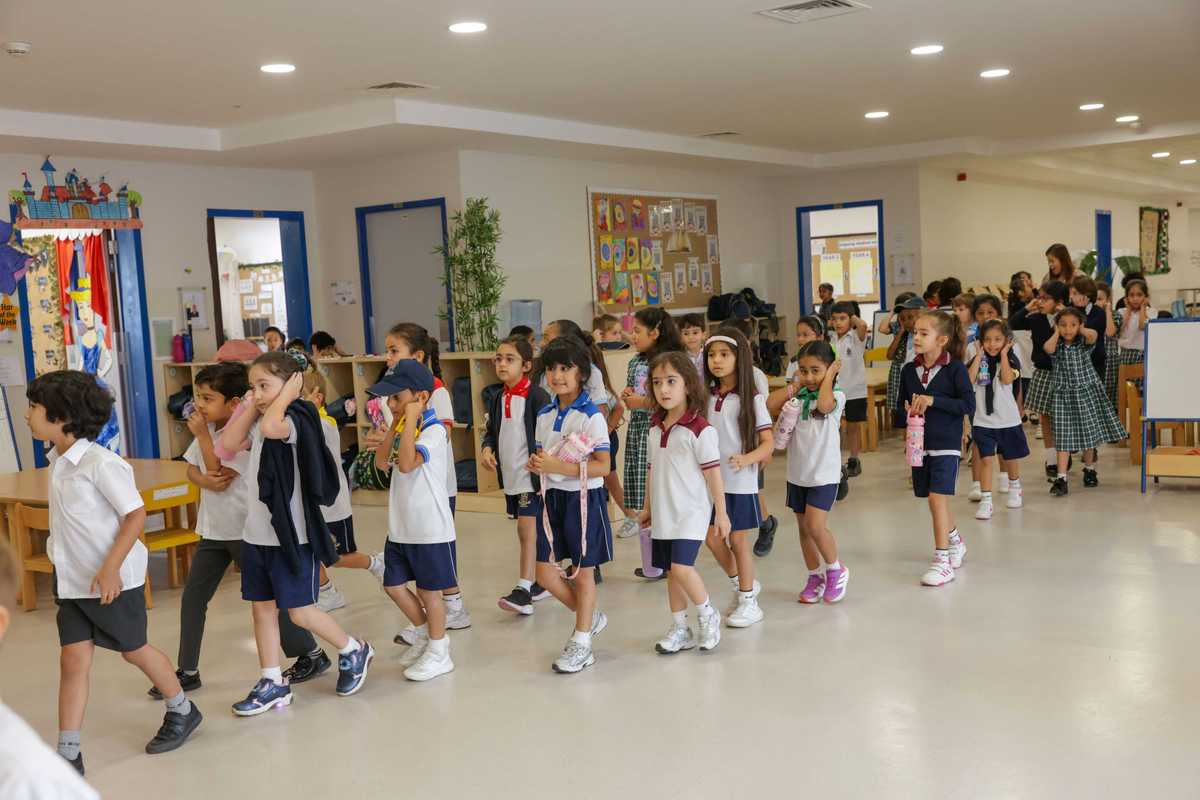
Dubai's new compliance handbook sets detailed safety requirements for classrooms, playgrounds, swimming pools and science labs across private schools.
WAM
Dubai schools must now meet detailed health and safety requirements covering classrooms, playgrounds, swimming pools, science labs, and pick-up and drop-off zones, Khaleej Times reported.
The rules come from a new compliance handbook issued by the Knowledge and Human Development Authority (KHDA).
What are Dubai's new school safety rules?
The handbook sets detailed safety standards across every part of a school campus. It covers classroom design, playground equipment, swimming pool operations, science lab chemical storage, and safe student pick-up and drop-off procedures. Schools must meet these requirements as part of KHDA's wider regulatory framework.
The handbook is one of four compliance guides KHDA introduced on Thursday under the Flexible Regulation Framework, part of the Education 33 strategy. The other guides cover early childhood centers, higher education institutions, and training institutes. For parents, the private-school handbook lays out the safety measures schools must have across campus.
What are the classroom safety requirements?
Kindergarten and Grade 1 classrooms must be on the ground floor of school buildings. Classrooms cannot be overcrowded, and student numbers must account for room size and evacuation safety. Classrooms must have natural light and proper ventilation, and air-conditioning units must work efficiently.
Furniture must suit students' ages and have no sharp edges. Kindergarten doors must include finger-protection mechanisms. Electrical sockets must be safely positioned and securely covered.
Schools must post emergency instructions in classrooms and train students and staff on evacuation procedures.
What safety rules apply to school play areas?
Play area equipment and furniture must suit children's ages and undergo regular inspection. Flooring under play equipment must be padded and shock-absorbent, indoors and outdoors. Sharp edges and hard columns need protective covering.
Outdoor play areas must have secure fencing and no uncovered drainage openings. At least 30 percent of outdoor play areas must be shaded, given Dubai's climate. Materials in direct sunlight must stay safe even in high heat.
Play areas require constant supervision, and a first-aid kit must be visible and accessible.
What are the safety requirements for school swimming pools?
School pools must follow Dubai Municipality specifications and the Dubai Building Code. They need cleaning, disinfection, and sanitization at least every six months by a Dubai Municipality-approved company, with records kept of each service.
Pool areas must stay closed when not in use or without a lifeguard present. Students cannot access pools unsupervised, and barriers must separate pools used by younger and older students.
Lifeguard numbers must match the number of students using the pool, and lifeguards need valid certification. Pools require anti-skid flooring, accessible lifebuoys, and a first-aid kit nearby. Pool rules, including "No Diving" and "No Jumping" signs, must appear in Arabic and English, and pool depths must be clearly marked.
What chemical safety rules apply to school labs?
Science labs must be appropriately sized and numerous enough for student use. A fume cupboard is required when handling volatile or hazardous materials. Reactive and incompatible chemicals must be stored separately.
Hazardous chemicals need locked cabinets in the prep room or a sealed cabinet where no separate storage exists. Storage areas require adequate ventilation, and chemicals must be kept at recommended temperatures.
Labs must have a first-aid kit, eyewash station, and emergency shower in accessible locations. Staff need training in chemical handling and emergency response, and students must have supervision during lab use. Schools must provide protective equipment, including gloves, goggles, face shields, closed footwear, and lab coats. Labs need effective ventilation and registers tracking chemical expiry dates, along with safety data sheets or equivalent labels.
What are the rules for school pick-up and drop-off?
Schools must provide adequate parking for cars and buses and designate pick-up and drop-off areas within fenced premises or safe walking distance.
Licensed supervisors must be present during pick-up and drop-off, per Dubai's school transport regulations. School buses must carry valid Roads and Transport Authority licensing and ownership.




Comments
See what people are discussing