

KP plans faceless anti-terrorism courts to protect witnesses, judges and prosecutors
Khyber Pakhtunkhwa plans faceless anti-terrorism courts as part of a Rs70 billion security push to fix police shortages and expand CTD operations.

Kamran Ali
Correspondent Nukta
Kamran Ali, a seasoned journalist from Khyber Pakhtunkhwa, Pakistan, has a decade of experience covering terrorism, human rights, politics, economy, climate change, culture, and sports. With an MS in Media Studies, he has worked across print, radio, TV, and digital media, producing investigative reports and co-hosting shows that highlight critical issues.
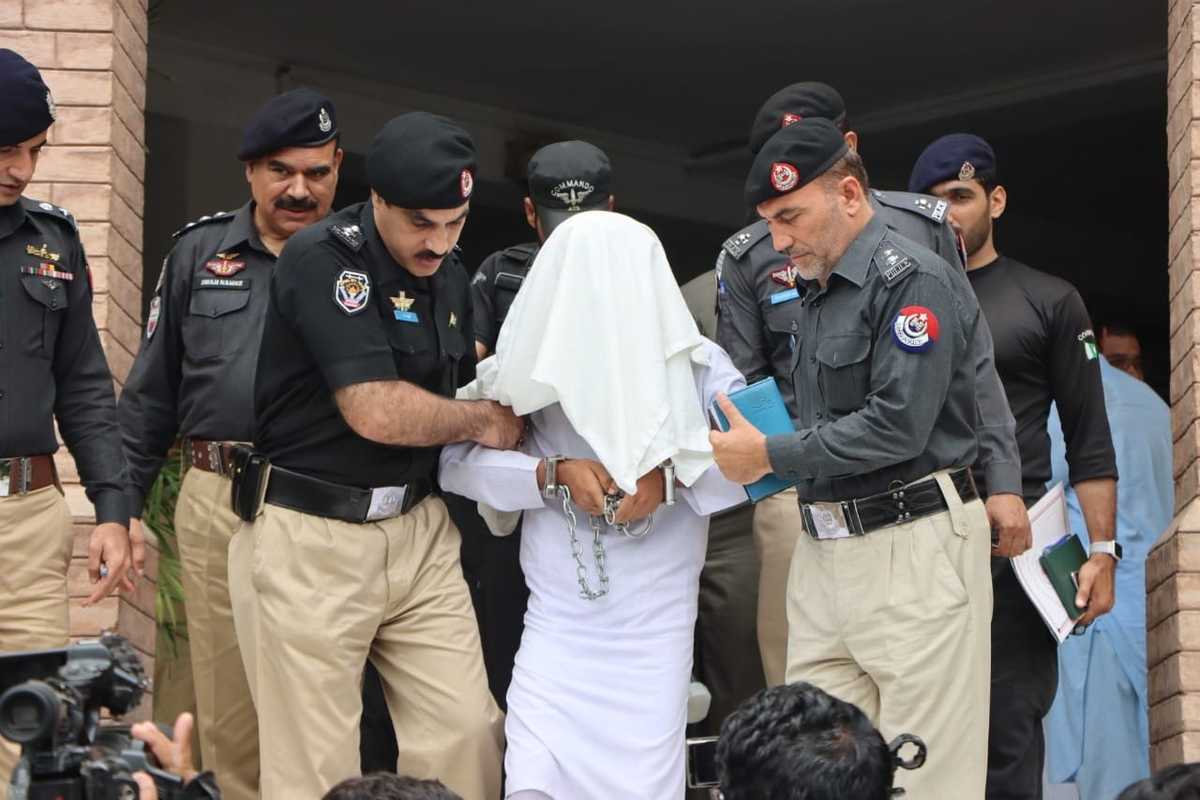
A suspect is escorted by police with his face covered after a court appearance in Peshawar, Pakistan.
KP Police/File
Pakistan's Khyber Pakhtunkhwa (KP) government plans to set up faceless anti-terrorism courts that conceal the identities of witnesses, judges and prosecutors, Home Secretary Amjid Ali Khan said at a security briefing in Peshawar on Sunday. The courts aim to protect them from reprisals and encourage testimony in terrorism cases.
What are faceless anti-terrorism courts?
Under draft amendments to existing laws, the proposed courts would keep the identities of those involved in terrorism trials concealed. Khan said fear of retaliation has discouraged witnesses from testifying, so shielding them is a key aim of the legislation, which forms part of a wider counterterrorism strategy for the province.
The plan was outlined at the Governor House in Peshawar. Governor Faisal Karim Kundi, provincial advisers, senior government officials and media representatives attended the briefing.
What security gaps did the briefing reveal?
The briefing identified major shortfalls in the province's security infrastructure, including 10,587 vacant police posts and 638 vacancies in the Counter-Terrorism Department (CTD). The operational vehicle fleet was 36% below requirements, while only 12% of the force had access to anti-drone systems.
Of the Rs6.4 billion approved for rehabilitating counterterrorism infrastructure, only Rs1 billion had been released. The briefing also detailed the human cost of the prolonged security crisis.
Between 2024 and September 2026, 1,003 military personnel, 627 police officers and 808 civilians were killed. Security forces killed 3,788 militants over the same period.
What is the Strong Khyber Pakhtunkhwa initiative?
Under the proposed Strong Khyber Pakhtunkhwa initiative, the provincial government plans to allocate Rs70 billion for security improvements. The plan includes strengthening police capabilities, expanding CTD operations to all 34 districts and establishing nerve centers in 10 districts.
It also provides for faceless anti-terrorism courts, a Safe Cities Authority and artificial intelligence-based systems to counter misinformation. Smart front desks would be set up at 406 police stations.
What did Governor Kundi say about countering terrorism?
Kundi questioned the police's ability to confront terrorists with inadequate weapons and ammunition and pledged to strengthen the force. "How can the police fight terrorists with just one Kalashnikov and a limited supply of ammunition?" he asked.
He said there was no magic solution to ending terrorism. Kundi recalled that Jamiat Ulema-e-Islam-Fazl chief Maulana Fazlur Rehman and suspended Chief Minister Sohail Afridi had previously acknowledged that people could not venture out after sunset but opposed military operations.
"Decisions will no longer be made in Kabul, Kandahar or Jalalabad. They will be made in Islamabad. Operations against terrorists will be carried out with full ownership," he said.



Comments
See what people are discussing