

Who is Abdul El-Sayed? The doctor who made history in the US Senate
Son of an Egyptian immigrant, El-Sayed defeated Republican Mike Rogers to become the first Muslim elected to the US Senate

Razi Wani
Producer - News Desk
Razi Ud Din Ahmed Wani is a multimedia journalist and digital storyteller with a strong background in fact-checking, South Asian politics, documentary filmmaking, scriptwriting, and digital content production. With an MA in Mass Communication from the University of Karachi, he has experience directing and scripting web series and socio-political satires. And has worked across various media and digital platforms, focusing on emerging trends and storytelling formats.
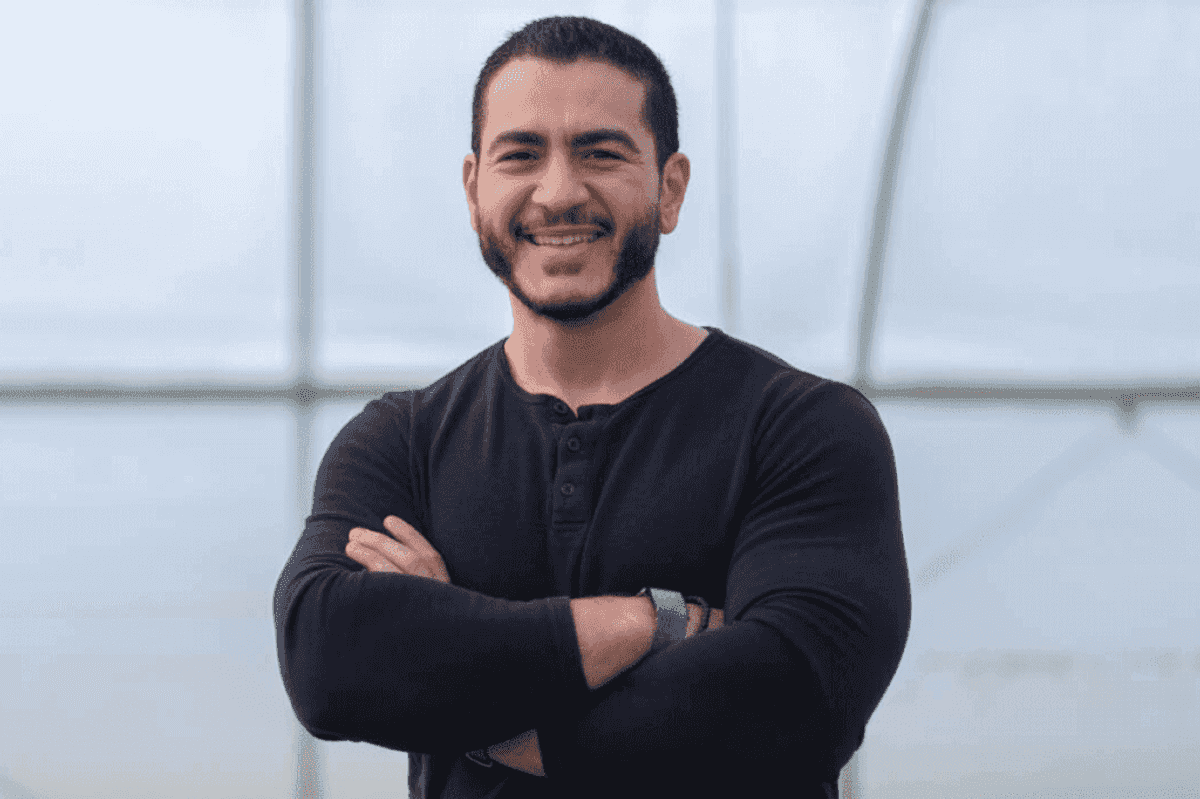
Dr. Abdul El-Sayed, the physician and progressive Democrat who made history as the first Muslim elected to the US Senate, representing Michigan.
Picture Courtesy: abdulforsenate
Abdul El-Sayed did not set out to become a politician. He trained as a doctor, earned a Rhodes Scholarship, and built a career in public health. But he came to believe that many of the problems affecting people's health were rooted not in medicine, but in the political and economic systems governing their lives.
‘Tonight we can turn that inshallah into alhamdulillah.’Democrat Abdul El-Sayed gave an impassioned victory speech as he beat Republican Mike Rogers in the Michigan Senate race on.
El-Sayed's victory on November 3 marks more than a personal political breakthrough. He has become the first Muslim elected to the US Senate, while his win gives the Democratic Party's progressive wing a significant victory in a state that has repeatedly emerged as a battleground in American politics.
Speaking to supporters in Detroit, El-Sayed thanked voters for backing a candidate who had once appeared unlikely to reach the Senate.
"You took a chance on the unlikeliest of candidates," he said.
He described the campaign as something larger than an individual electoral contest, saying supporters had built "something bigger than a bank account" and a movement rooted in government "of the people, by the people, and for the people."
"I love America, but I love America enough to ask her to be America for all her kids," he said.
For El-Sayed, 42, the victory is the culmination of a political journey shaped by his experience as the son of an Egyptian immigrant, his work in public health and his increasingly outspoken criticism of corporate power, economic inequality and US foreign policy.
From medicine to politics
Born and raised in Southeast Michigan, El-Sayed was brought up by his father, Mohamed, an Egyptian immigrant, and his stepmother, Jackie, whose family has lived in Gratiot County, Michigan, since the 1800s.
He attended public schools, where he captained his high school football, wrestling, and lacrosse teams, before graduating with the highest distinction from the University of Michigan. He also played lacrosse for the university's Wolverines team.
He subsequently earned a medical degree from Columbia University through a National Institutes of Health-funded fellowship and completed a second doctorate at the University of Oxford as a Rhodes Scholar.
Despite his academic credentials and medical training, El-Sayed's career increasingly moved towards public administration.
His campaign website describes his motivation as a realisation that the country's political system was contributing to the problems people faced in their everyday lives.
"Abdul El-Sayed wasn't supposed to be a politician," his campaign biography says. "He studied to be a doctor — but realized it was our broken politics that was making people sick."
That belief became the foundation of his work in Michigan's public health system.
El-Sayed rebuilt Detroit's Health Department following the city's bankruptcy and later restructured Wayne County's Department of Health, Human & Veterans Services, an agency serving approximately 1.8 million residents in Michigan's largest and most diverse county.
During his time in public service, he worked on initiatives to provide free eyeglasses to children, remove lead from Detroit elementary schools, challenge major industrial polluters and make the overdose-reversal medication Narcan universally accessible.
He also spearheaded a medical debt relief programme that his campaign says could cancel up to $700 million in debt for 300,000 Michiganders over two years.
His work earned him recognition as Public Official of the Year from the Michigan League of Conservation Voters and a place on Crain's Detroit Business 40 Under 40 list.
El-Sayed later became a nationally recognised voice on healthcare reform, authoring Medicare for All: A Citizen's Guide, which outlines his argument for a universal healthcare system.
In 2020, he was selected to serve on former President Joe Biden's Unity Task Force on Healthcare, helping develop policy proposals aimed at improving access and reducing prescription drug costs.
What does El-Sayed stand for?
At the centre of El-Sayed's political identity is the belief that essential services should work for ordinary people rather than generate profits for powerful corporations.
His campaign was built around three broad promises: getting money out of politics, putting money back into people's pockets, and establishing universal healthcare through Medicare for All.
He has argued that the United States spends enormous sums on healthcare while leaving millions of people exposed to medical debt, insurance restrictions, and unaffordable treatment.
In a 60 Minutes interview before the election, El-Sayed defended his healthcare proposals against suggestions that they were incompatible with capitalism.
"I'm a capitalist who understands the idea that you should have guaranteed healthcare in the country," he said.
He argued that the existing healthcare system allows insurance companies and other corporate interests to take a disproportionate share of the money Americans spend on medical care.
"Medicare for All would free us from the deep anxiety that millions of Americans face just because they get sick," he said.
His proposal includes a single-payer healthcare system, with a greater role for government in financing healthcare. He has also argued for taxing billionaire wealth to help fund public services.
Beyond healthcare, El-Sayed has made corporate influence in politics a central target.
He supports banning corporate money in elections, ending partisan gerrymandering, making voting easier and reforming the Supreme Court. His economic agenda includes taxing billionaire wealth, addressing monopolies, expanding affordable housing and improving access to education.
He has also identified artificial intelligence as an increasingly important economic and political challenge.
In his 60 Minutes interview, he said he was hearing growing concerns from students who had taken on substantial education debt only to face uncertainty about future employment.
He also raised concerns about data centres being built in rural communities, where residents fear rising utility costs and pressure on local water supplies.
Asked to identify the economic issue Congress should prioritise, he pointed to monopolies and oligopolies.
"I'm a capitalist. If you read Adam Smith, he'll tell you the biggest risk to capitalism was never government regulation. It was always monopoly and oligopoly," he said.
His argument is that economic competition cannot function properly when a small number of powerful companies dominate entire industries.
A progressive voice on US foreign policy
El-Sayed's position on American foreign policy, particularly its relationship with Israel, became one of the most contentious aspects of his Senate campaign.
He has criticised US military support for Israel and called for an arms embargo, arguing that Washington cannot credibly support a two-state solution while continuing to provide military assistance that undermines the possibility of Palestinian statehood.
In his 60 Minutes interview, he questioned the use of American taxpayers' money to finance military assistance abroad.
"I don't pay my taxes to buy another country a bomb or a tank," he said, referring not only to Israel but also to other countries receiving US military assistance.
He has argued that Palestinians and Jewish Israelis should have equal rights to peace, dignity and self-determination.
"I believe in equal rights to peace, dignity, and self-determination for Palestinians and Jewish Israelis alike," he said.
His position has attracted support from progressive voters but also made him a target for political opponents and pro-Israel groups.
The American Israel Public Affairs Committee, through its political spending operation, invested nearly $30 million in the Democratic primary campaign to defeat him, according to the Associated Press. The wider primary attracted substantial outside spending.
His remarks following an attack on a Michigan synagogue and preschool also became a major source of controversy.
While condemning the violence, El-Sayed said, "Hurt people hurt people." The comment was criticised by members of Michigan's Jewish community, with opponents arguing that it appeared to attribute responsibility for the attack to Israel's actions. He subsequently apologised to those who felt hurt by his remarks.
Republicans also repeatedly questioned his loyalty to the United States and attempted to associate him with the Muslim Brotherhood, allegations El-Sayed rejected. President Donald Trump used the term "jihadist" to describe him during the campaign.
El-Sayed argued that attacks on his faith and background were being used to distract voters from economic issues.
"They might have been pointing to my name and my faith, but we all know my name and my faith are not why you can't afford your gas," he said in his victory speech.
An insurgent campaign against the establishment
El-Sayed's Senate victory did not come through a straightforward path within the Democratic Party.
In 2018, he ran for Michigan governor, receiving the endorsement of progressive Vermont Sen. Bernie Sanders. He lost the Democratic primary to Gretchen Whitmer, who went on to become governor.
Eight years later, he returned to electoral politics with a Senate campaign that challenged both Republican opponents and sections of his own party.
After Democratic Sen. Gary Peters decided not to seek reelection, El-Sayed faced US Rep. Haley Stevens in the August 2026 Democratic primary. Stevens had support from much of the party establishment, while El-Sayed attracted backing from Sanders and other progressive figures, including US Rep. Alexandria Ocasio-Cortez.
His victory in the primary raised questions about whether a candidate with his progressive positions could win a competitive general election.
The November contest against Rogers became a test of that proposition. Rogers, a former FBI agent and seven-term Republican congressman who previously chaired the House Intelligence Committee, sought to portray El-Sayed as too far left for Michigan.
The campaign also unfolded against the backdrop of inflation, trade tensions, the war with Iran and dissatisfaction with the Trump administration.
El-Sayed, meanwhile, focused on affordability, healthcare, economic inequality and the influence of wealthy donors in American politics.
His campaign attracted criticism from some Democrats, particularly over his comments on Israel and his relationship with sections of the progressive movement. The divisions became particularly visible when Stevens endorsed Rogers shortly before Election Day.
Despite those tensions, El-Sayed prevailed. In his victory speech, he accused Republicans of running one of the ugliest campaigns in recent memory and told supporters:
"You chose hate, and Michigan chose hope."
He also addressed Vice President JD Vance, who is constitutionally responsible for presiding over the Senate and administering the oath to incoming senators.
"You’re constitutionally obligated to swear me in in January," El-Sayed said.
What his victory means
El-Sayed's election marks a historic moment for Muslim representation in the United States. While Muslim Americans have served in the House of Representatives, including former congressman Keith Ellison, El-Sayed will become the first Muslim elected to the US Senate.
His victory also gives the progressive movement a significant electoral achievement in a state that has been central to recent presidential and congressional contests.
For Democrats, it offers an argument that candidates advocating major changes to healthcare, campaign finance and economic policy can compete successfully in politically divided states.
But winning a Senate seat and delivering on those promises are two different challenges.
El-Sayed will enter a chamber where his proposals will face legislative negotiations, opposition from Republicans and potentially resistance from more moderate Democrats. Medicare for All, restrictions on corporate political spending, and wealth taxation would require substantial political support to become law.
His foreign policy positions will also continue to attract scrutiny, particularly given the divisions within the Democratic Party over Israel and the war in Gaza.
El-Sayed lives in Ann Arbor with his wife, Sarah, and their two daughters. He has also identified himself as a union member, with affiliations including the American Federation of Teachers, the Service Employees International Union, and the American Association of University Professors.
His political identity is rooted in a belief that government should be measured by whether it improves people's everyday lives.
The campaign that brought him to Washington was built on the argument that healthcare, housing, education, and economic security should not be luxuries in one of the world's wealthiest countries.
For a politician who says he never intended to enter politics, the Senate victory represents a remarkable shift from public health administration to national political influence.
Whether he can translate that vision into legislation remains to be seen. But his election has already changed the conversation about who can represent Americans in the country's most powerful legislative chamber — and how far a progressive campaign can go in challenging the political establishment.





Comments
See what people are discussing