

PM Shehbaz says governor’s rule in KP was unavoidable after talks failed
PM Shehbaz Sharif says governor’s rule in KP was unavoidable after 48 hours of failed talks, and questions how Rs800 billion in extra NFC funds was used

News Desk
The News Desk provides timely and factual coverage of national and international events, with an emphasis on accuracy and clarity.
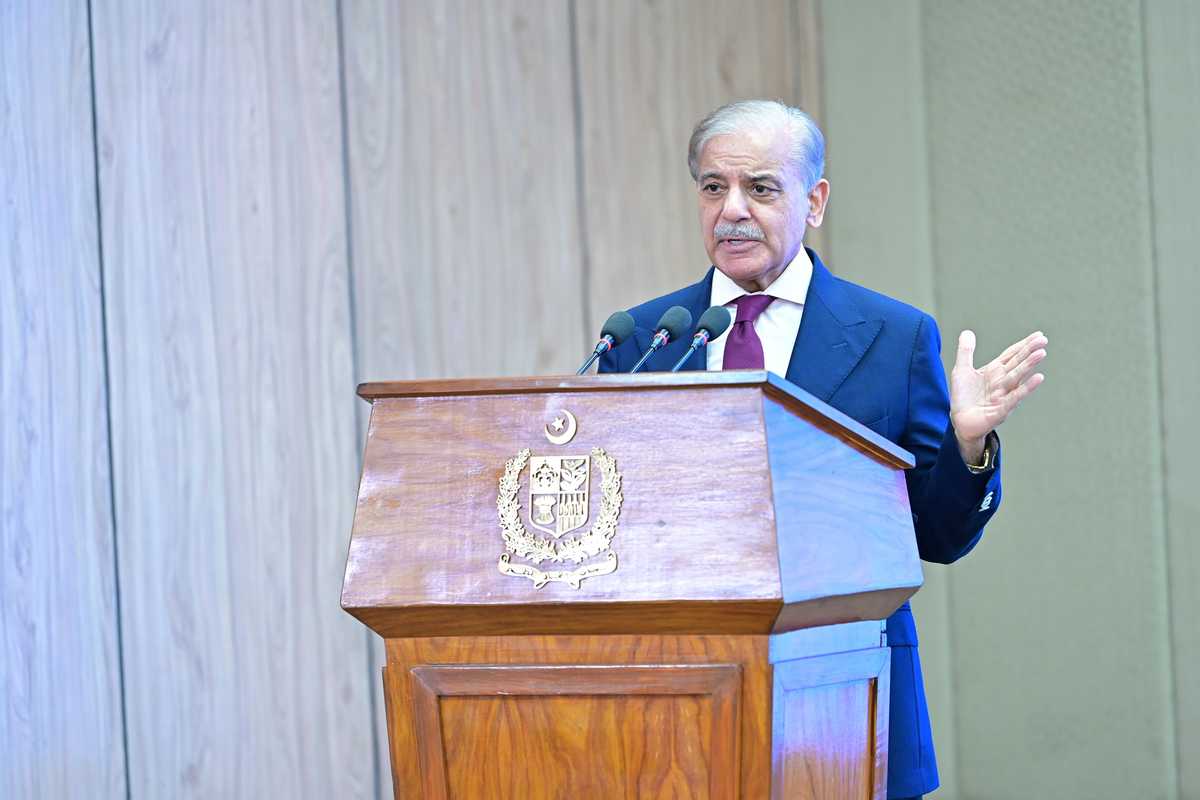
Prime Minister Shehbaz Sharif on Saturday defended governor’s rule and emergency measures in Khyber Pakhtunkhwa (KP), saying 48 hours of failed negotiations left the government no alternative.
He made the remarks at a Pakistan Muslim League-Nawaz (PML-N) parliamentary party meeting in Peshawar, saying delay risked greater losses.
Why did Shehbaz Sharif impose governor’s rule in KP?
Shehbaz said the decision was taken to protect lives, security and the country’s economic stability. Committees from the PML-N and the Pakistan Peoples Party (PPP) held talks for 48 hours, but a draft agreement was not secured, he said. Further delay, he argued, would have exposed the province to greater losses.
The government had waited for approval of the draft agreement, he said. He added that the federal government had repeatedly invited political parties to join a collective effort against terrorism, but those appeals had not received a positive response.
What did Shehbaz say about militancy in Khyber Pakhtunkhwa?
Shehbaz blamed the resurgence of militancy on the return of militants from Afghanistan. He alleged they had been brought back and resettled in the province in 2019 and 2020, after security forces had largely eliminated terrorism by 2017-18.
He said the renewed violence had caused further deaths among civilians, police and security personnel. The prime minister paid tribute to residents, police officers, armed forces personnel and political leaders who had lost their lives in the fight against militancy.
He also recalled the 2014 Army Public School attack in Peshawar, describing the killing of schoolchildren as one of the darkest episodes in the country’s history.
How did Shehbaz question the use of funds in Khyber Pakhtunkhwa?
Shehbaz questioned how the provincial government had spent the additional resources allocated to the province under the 2010 National Finance Commission (NFC) Award. He said the province had received about Rs800 billion through an additional one percentage point share.
He asked how many Safe City projects had been completed and how much the provincial Counter Terrorism Department had been strengthened with the funds. Around 5,000 police positions remained vacant, he said, arguing that the money should have gone towards recruitment, training and equipment for law enforcement agencies.
What did Shehbaz say about the PTI’s record in the province?
The prime minister criticized the Pakistan Tehreek-e-Insaf’s (PTI) 13-year record in the province, questioning how many hospitals and universities had been established during its time in government. He said political protests and confrontational politics had taken precedence over public welfare and development.
Residents continued to face problems in areas including Peshawar, Kohistan, Hazara and the southern districts, he said.
Referring to the country’s broader challenges, Shehbaz said political and military leadership had worked together over the past two and a half years to stabilize the economy. He cited the disruption caused by political protests in the past, including the postponement of a visit by Chinese President Xi Jinping in 2014, which took place the following year.
What did Shehbaz announce for Khyber Pakhtunkhwa?
Shehbaz referred to the government’s fuel subsidy program, saying around 13 million people had benefited from the initiative, for which Rs75 billion had been allocated.
He said his government would continue working for peace and development in the province. He announced plans to establish more Danish schools in Chitral, Haripur, Mansehra, Bajaur and Shangla, to expand educational opportunities for children from less privileged backgrounds.
Earlier, PML-N Khyber Pakhtunkhwa president and Federal Minister for Kashmir Affairs and Gilgit-Baltistan Amir Muqam said residents wanted peace and development. Party workers would continue efforts to improve conditions in the province, he said.




Comments
See what people are discussing