

Former Pakistani judge challenges removal over decades-old law degree dispute.
Ex-IHC judge Tariq Jahangiri seeks leave to appeal, claiming the quo warranto ruling was unconstitutional, breached due process, and exceeded court authority

Ali Hamza
Correspondent
Ali; a journalist with 3 years of experience, working in Newspaper. Worked in Field, covered Big Legal Constitutional and Political Events in Pakistan since 2022. Graduate of DePaul University, Chicago.
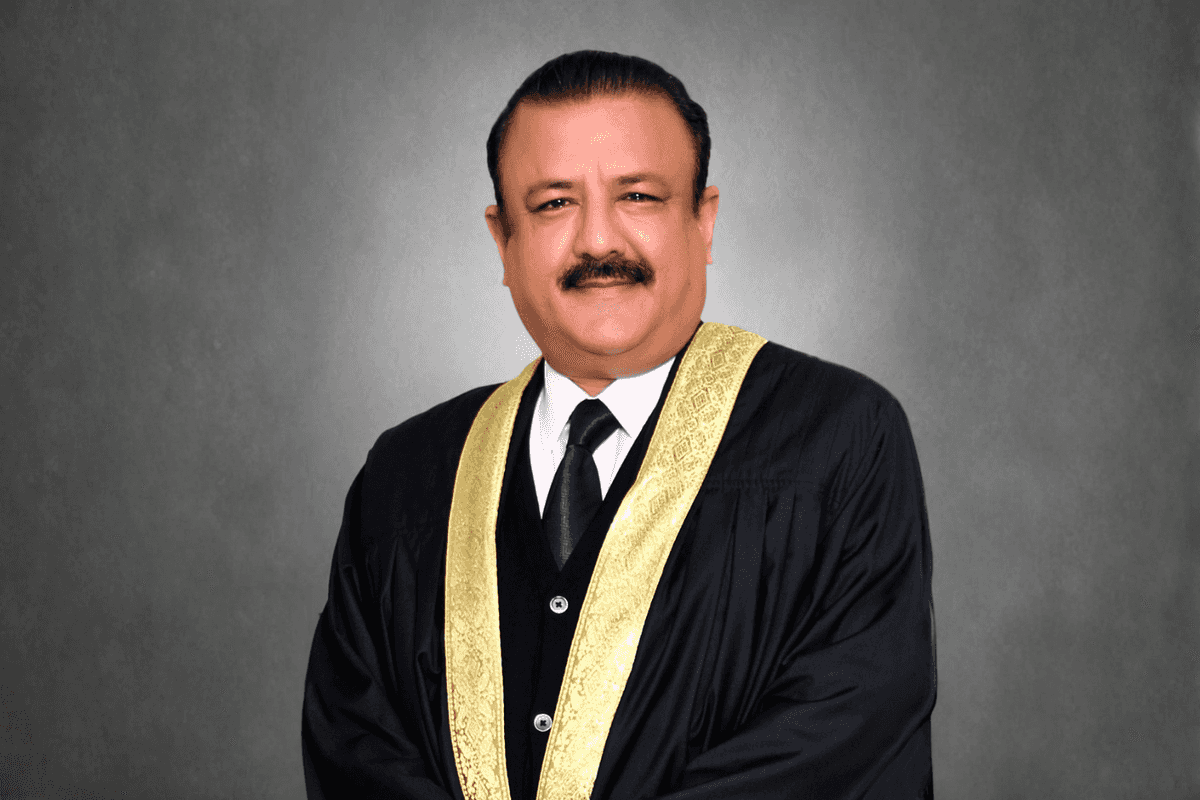
A former judge of Pakistan’s Islamabad High Court has filed an appeal with the Federal Constitutional Court, challenging a ruling that declared him ineligible to hold office over alleged irregularities in a law degree awarded more than 30 years ago.
The case stems from a Dec. 18, 2025, Islamabad High Court (IHC) order that allowed a petition questioning Justice Tariq Mehmood Jahangiri’s qualifications, directed his de-notification as a judge and dismissed his related applications without detailed reasoning.
Jahangiri is seeking leave to appeal, arguing that the decision was unconstitutional, violated due process, and exceeded the court’s authority in quo warranto proceedings.
The dispute revolves around Jahangiri’s Bachelor of Laws (LLB) degree from the University of Karachi, awarded in 1992. The degree went uncontested for more than three decades, forming the basis for his enrolment with bar councils, senior public law appointments, and his elevation to the Islamabad High Court in 2020, followed by confirmation as a permanent judge in 2021.
Questions about the degree arose in May 2024, when a private individual sought its verification from the university. Officials issued internal correspondence declaring the degree “invalid,” triggering media scrutiny and legal challenges. The university’s syndicate later moved to cancel the degree, a decision temporarily stayed by the Sindh High Court before related petitions were dismissed for non-prosecution in September 2025.
Jahangiri contends the verification and cancellation process was irregular and driven by mala fide motives. He argues that the university lacked legal authority to revoke a degree decades after it was awarded and that the matter was already sub judice in the Sindh High Court when the IHC proceeded. His petition also asserts that decisions of the Judicial Commission of Pakistan, which nominated him for judicial office, are not subject to review, and that qualifications of sitting judges fall exclusively under the Supreme Judicial Council.
A former president of both the Islamabad District Bar Association and the Islamabad High Court Bar Association, Jahangiri has also served as deputy attorney general and advocate general for the Islamabad Capital Territory. He maintains that his academic and professional credentials were repeatedly scrutinized before his elevation to the bench.
Legal observers in Pakistan say the case highlights broader concerns over judicial independence and the potential use of procedural challenges to exert pressure on judges handling politically sensitive matters.
The Federal Constitutional Court has not yet ruled on whether it will grant leave to appeal.





Comments
See what people are discussing