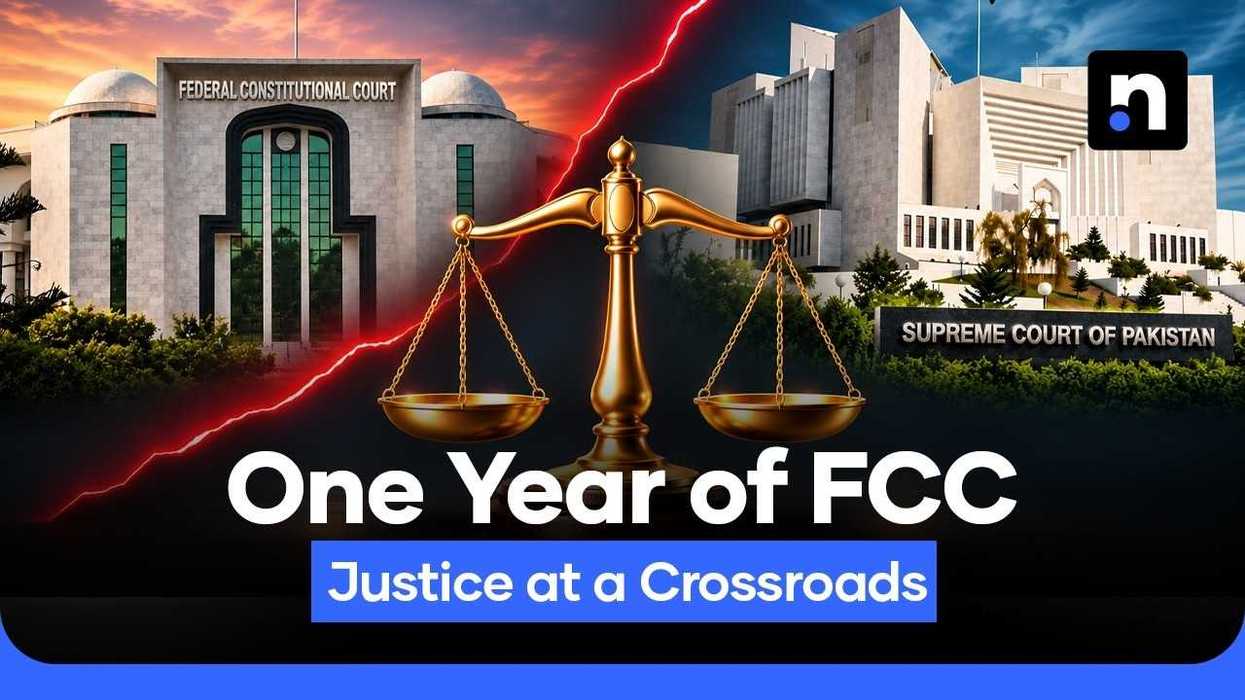
One year in, Pakistan's Federal Constitutional Court (FCC) is reshaping the country's judicial landscape by reversing major Supreme Court rulings. But what does this mean for the justice system and the finality of judicial decisions?
Created under the 27th Constitutional Amendment, the FCC has spent its first year setting aside landmark Supreme Court verdicts, including Karachi's anti-encroachment demolition orders and the ruling concerning Islamabad's Monal restaurant.
The resignations of Justices Mansoor Ali Shah and Athar Minallah, alongside disputes over case jurisdiction, have further intensified questions about the new judicial structure, the balance of judicial power, and where ultimate constitutional authority lies.
As Pakistan's judicial landscape undergoes a major shift, what does the FCC's first year reveal about the future of the country's judiciary?
Watch this full report to find out. And subscribe to Nukta Pakistan for more coverage of Pakistan's judiciary, constitutional developments, and politics.








Comments
See what people are discussing