

Finance minister meets Pakistan Cotton Ginners Association to discuss cotton sector reforms
Finance Minister Muhammad Aurangzeb met PCGA representatives to discuss cotton sector reforms, productivity, investment and sector growth.

Business Desk
The Business Desk tracks economic trends, market movements, and business developments, offering analysis of both local and global financial news.
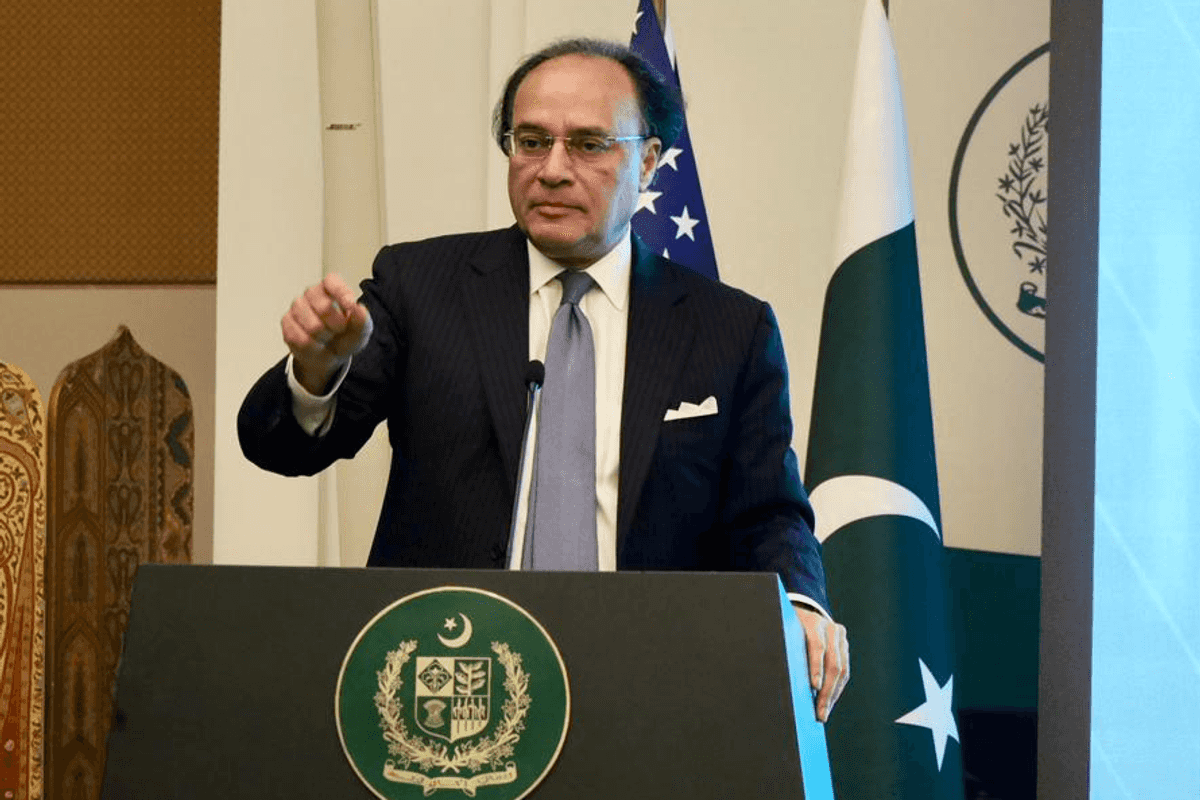
Federal Minister for Finance and Revenue Senator Muhammad Aurangzeb met a delegation of the Pakistan Cotton Ginners’ Association (PCGA) on Monday to discuss cotton sector reforms and challenges facing Pakistan’s cotton industry.
The talks focused on improving productivity, encouraging investment, strengthening sustainability and supporting the sector’s contribution to exports, rural employment and economic growth.
What did the finance minister discuss with the Pakistan Cotton Ginners Association?
Finance Minister Muhammad Aurangzeb and PCGA representatives discussed challenges across the cotton value chain and potential reforms to improve productivity, investment and sustainability.
The meeting also covered taxation, formal economic activity, competitiveness and measures aimed at supporting long-term growth in Pakistan’s cotton sector.
The delegation was led by Chairman Sham Lal Manglani and included Senior Vice Chairman Shaikh Fayaz Ahmed, former chairmen Suhail Mehmood Hurrul, Chaudhry Waheed Arshad and Mukhtar Baloch.
Participants held detailed discussions on the current state of the cotton value chain, the challenges faced by growers and ginners, and policy measures that could strengthen the sector. The exchange focused on improving productivity and creating conditions that support investment throughout the supply chain.
PCGA representatives emphasized that cotton remains a key cash crop and an essential raw material for Pakistan’s textile industry. They said the sector supports rural employment, contributes to exports and sustains several allied industries while helping reduce dependence on imported cotton.
What proposals did PCGA representatives present?
The delegation proposed measures related to taxation, documentation and the promotion of formal economic activity. Representatives said such steps could help improve the operating environment for growers and ginners while supporting broader sector development.
Aurangzeb acknowledged the importance of the cotton industry and said the government remains committed to fostering a conducive business environment for productive sectors. He added that sustainable growth in agriculture and industry continues to be a key pillar of the government's economic policy.
The finance minister stressed the importance of stakeholder consultation in policymaking. He said engagement with industry representatives helps the government better understand sector-specific challenges and identify practical solutions.
What was the government's response to the cotton sector's concerns?
Aurangzeb said the government is focused on broadening the tax base, improving transparency and ensuring a level playing field for compliant businesses. He added that these efforts are intended to support investment, economic activity and job creation.
The minister also said the recommendations presented by the PCGA would be reviewed by the relevant authorities. He reaffirmed the government's commitment to constructive engagement with stakeholders across key economic sectors.
The meeting further explored coordinated efforts to strengthen the cotton ecosystem, improve competitiveness, enhance value addition and encourage investment throughout the supply chain. Both sides emphasized the need for continued dialogue to identify practical measures that can support long-term sector growth.
Aurangzeb thanked the delegation for its input and reiterated the government's commitment to working with industry stakeholders to promote sustainable economic development, export growth and employment generation.


Comments
See what people are discussing