

Beer bust in Islamabad leads to major cybercrime and trafficking investigation
A routine Islamabad beer seizure led investigators to a major cybercrime and human trafficking probe involving hundreds of foreign nationals

Ali Hamza
Correspondent
Ali; a journalist with 3 years of experience, working in Newspaper. Worked in Field, covered Big Legal Constitutional and Political Events in Pakistan since 2022. Graduate of DePaul University, Chicago.
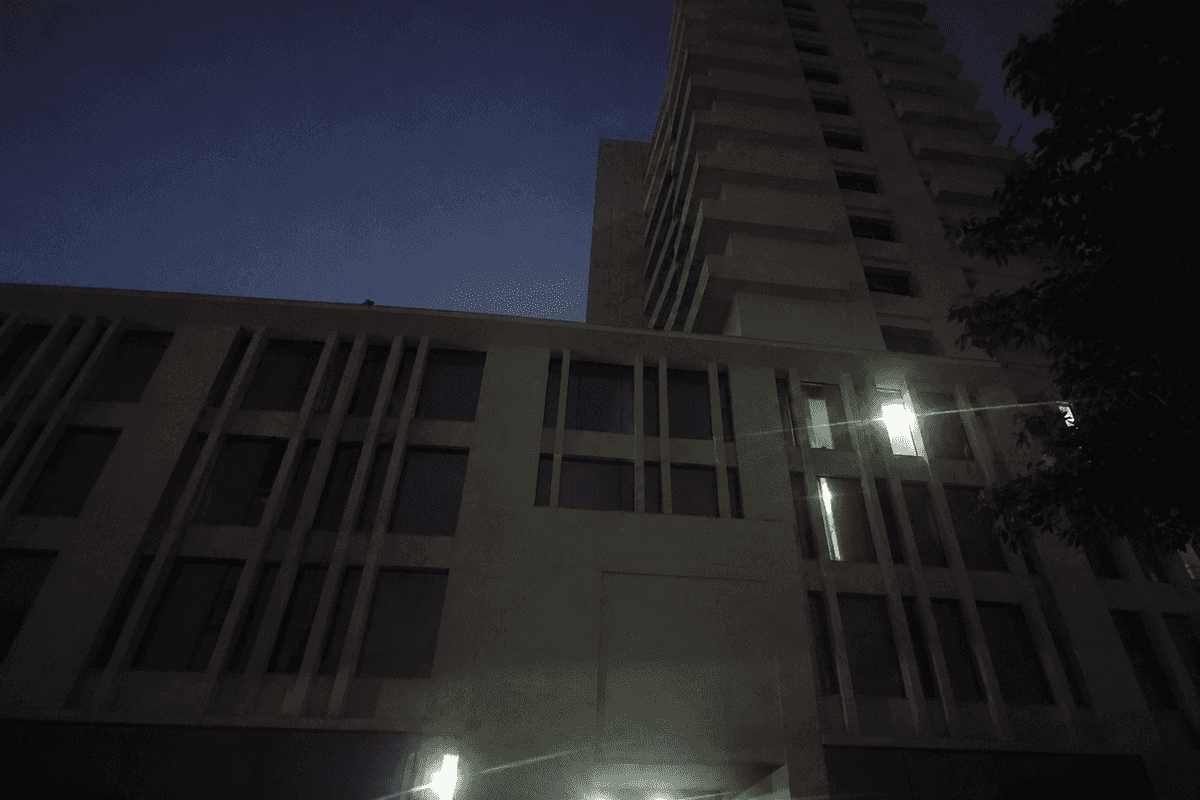
A beer seizure has led Islamabad investigators to a sprawling probe involving alleged cybercrime, trafficking and hundreds of foreign nationals.
Nukta
The police were looking for beer. Just after 2 a.m. on August 9, officers stopped a vehicle near Sparco Plaza in Gulberg Greens after receiving a tip, finding about 50 cases of Murree's Light beer inside.
The driver was arrested and the liquor seized, in what appeared to be a routine night for Islamabad's police.
What did investigators find after the Islamabad beer bust?
Two days later, investigators from Pakistan's National Cyber Crime Investigation Agency and the Federal Investigation Agency's Anti-Human Trafficking Circle returned to the same 13-storey building. They say they uncovered an operation involving online fraud, pornography and hundreds of foreign nationals working inside.
An officer familiar with the investigation called it the largest facility of its kind he had encountered in Islamabad. Earlier scam operations typically occupied a single floor, he said, but this one occupied the entire tower.
Which company is at the center of the Islamabad investigation?
At the center of the investigation is M/S Eburg Technologies Pvt Ltd, a company registered with Pakistan's corporate regulator to trade in computer software and hardware. According to an official, the company was registered in the name of a Malaysian national and had rented the building for about 18 million Pakistani rupees a month. It had operated there for roughly three months and employed nearly 400 people, mostly from China, Vietnam, Malaysia and Indonesia, the official said.
The company's declared business is not what investigators believe was happening inside. In a criminal complaint, the cybercrime agency alleges Eburg was producing and selling pornographic material online, and persuading people worldwide to engage in sexual conversations and video sex acts in exchange for money, describing it as a form of cyber romance fraud carried out for financial gain.
What evidence did investigators say they seized?
Among the items seized, according to the complaint, were uniforms belonging to senior Vietnamese law-enforcement officers, which officials believe were used as props to intimidate or extort people who watched the material. The Federal Investigation Agency separately said it identified 258 foreign nationals inside the building through Pakistan's border-management system.
According to its complaint, those nationals had entered the country on tourist, visit or business visas but were working from what investigators described as a commercial call-centre operation, potentially violating the terms of their stay. The agency charged them under Pakistan's Foreigners Act.
How many people have been charged in the Islamabad case?
Taken together, the cases name 373 people as accused: 258 in the immigration case, 114 in the cybercrime investigation and one in the original liquor case.
Authorities then declared the same building a sub-jail, placing security under the Federal Investigation Agency and sending all 373 accused into judicial custody there.
How has the defense responded to the allegations?
The allegations are being contested. In court on Wednesday, Sher Afzal Marwat, representing defendants in the cybercrime and immigration cases, rejected the accusations, saying the foreign nationals had valid travel and residency documents. He challenged investigators to produce concrete evidence supporting the pornography allegations, pressing the cybercrime agency over what evidence it had recovered and at one point asking where the cited cameras and other material were.
Asim Shahjahan, the agency's acting assistant director for legal affairs, gave the court a different account, saying investigators had initially followed a technical lead involving suspicious financial activity linked to mobile applications and online platforms. Search warrants were obtained from a magistrate before investigators entered the building, he said.
What did investigators say they discovered inside the building?
What they found was more extensive than expected, according to Shahjahan. Investigators discovered studios where live pornographic material was allegedly being filmed, and he told the court some people were caught in the act. The material was allegedly being sold through online platforms, with investigators also examining possible links to the dark web.
Some of those found inside were living in Pakistan on expired visas, he said. Investigators prepared seizure records for some of the material and were still recovering other evidence, including login credentials for platforms allegedly used to sell the content. The hearing grew tense as the defense and prosecution disputed the sequence of events and the evidence collected during the raid.
Marwat also questioned the immigration case, asking how such a large-scale illegal employment operation could have run inside a building he described as still under construction. For investigators, the case is no longer about the beer found in a parked vehicle. They are now trying to determine how a company employing hundreds of foreign nationals allegedly operated for months from a prominent commercial building, who financed and managed it, and whether others were involved.
Both agencies say the investigation is continuing and that the role of additional individuals will be established as the inquiry proceeds.




Comments
See what people are discussing