

Fog and rain force Nepal to halt flood rescues as 2,500 remain missing
Officials estimate reconstruction costs could reach $5 billion following a catastrophic glacial collapse along the Himalayan border.

News Desk
The News Desk provides timely and factual coverage of national and international events, with an emphasis on accuracy and clarity.
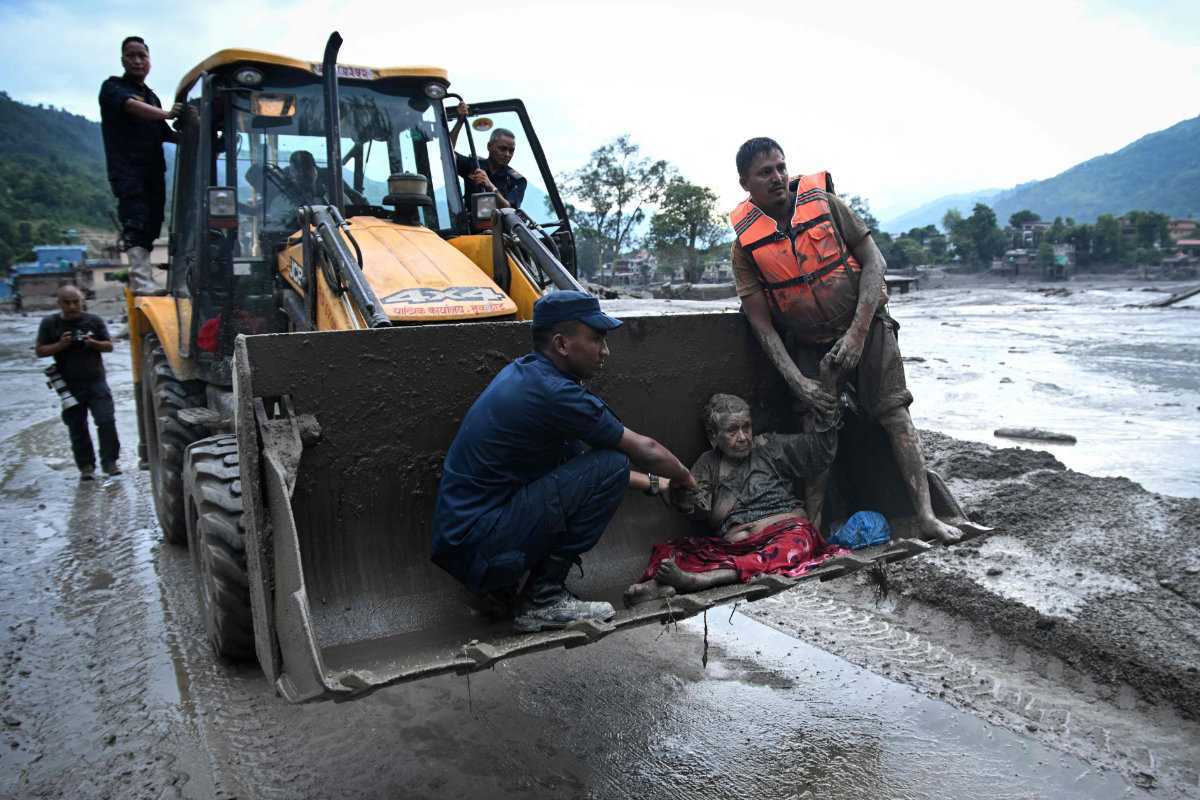
Rescuers use an excavator to transport a flood survivor, following flash floods and a landslide disaster in Devghat, in the Nepal's Nuwakot district on August 26, 2026.
AFP
Emergency search and rescue operations across northern Nepal were temporarily halted on Saturday, August 29, 2026, as persistent fog, low cloud cover, and heavy rainfall severely hindered relief efforts.
The adverse weather conditions forced the grounding of rescue helicopters and restricted ground teams attempting to reach remote mountain communities devastated by Wednesday's glacial collapse.
How severe is the damage across the Nepal-Tibet border region?
The International Federation of Red Cross and Red Crescent Societies (IFRC) categorized the disaster as "catastrophic," estimating that at least 10,000 families have been displaced as entire villages, commercial markets, and border transit facilities disappeared under layers of mud, ice, and mountain debris, CNN reported.
The surge of water and sludge destroyed residential structures, arterial roadways, and critical public infrastructure along a 170-kilometer stretch of the Trishuli and Bhote Koshi river corridors.
Hospitals in Kathmandu and regional centers are treating dozens of survivors suffering from severe physical trauma, including fractures, internal injuries, and skin damage caused by high-velocity debris flows. Overwhelmed medical personnel and local security posts continue to log missing person reports as families search for unaccounted relatives. Thousands of Nepali police officers, armed forces personnel, and disaster responders have deployed to affected zones, though washed-out bridges have left many areas accessible only by air.
What international aid and technical support is Nepal requesting?
Addressing foreign diplomats and press outlets in Kathmandu, Foreign Minister Shisir Khanal clarified that while general search forces are active, Nepal urgently requires specialized international technical assistance. The requested support includes specialized technical crews for subterranean tunnel rescues at damaged hydroelectric sites, heavy engineering equipment for clearing blocked transit corridors, temporary bailey bridges, and advanced DNA profiling resources to identify decomposed bodies recovered downstream.
According to the BBC, Finance Minister Swarnim Wagle stated during a media briefing that preliminary government assessments indicate post-disaster reconstruction will cost between $4 billion and $5 billion—representing nearly a tenth of Nepal's annual gross domestic product. Wagle noted that while the financial toll is lower than the $9 billion required following the 2015 earthquake, rebuilding shattered hydroelectric plants—which account for over 12 percent of national power capacity—and restoring regional transport networks will require sustained foreign economic support.
Regional allies have initiated emergency relief operations to support Nepal. India dispatched relief flights carrying water purification units, medical supplies, emergency food rations, and specialized tunnel rescue personnel to assist local operations. Simultaneously, Chinese emergency agencies requested expanded international rescue coordination as rescue workers push into isolated border zones, including the heavily damaged Gyirong Port crossing in Tibet.





Comments
See what people are discussing