

Pakistan's PKR 1.2 Trillion debt repayment: What it means

Moiz Ur-Rehman
A multidisciplinary economist, legal thinker, and broadcast journalist with over five years of experience at the intersection of finance, policy, and media. I have academic grounding; in law, economics, and hospitality management, to accessible, high-impact storytelling for business audiences across Pakistan and beyond.
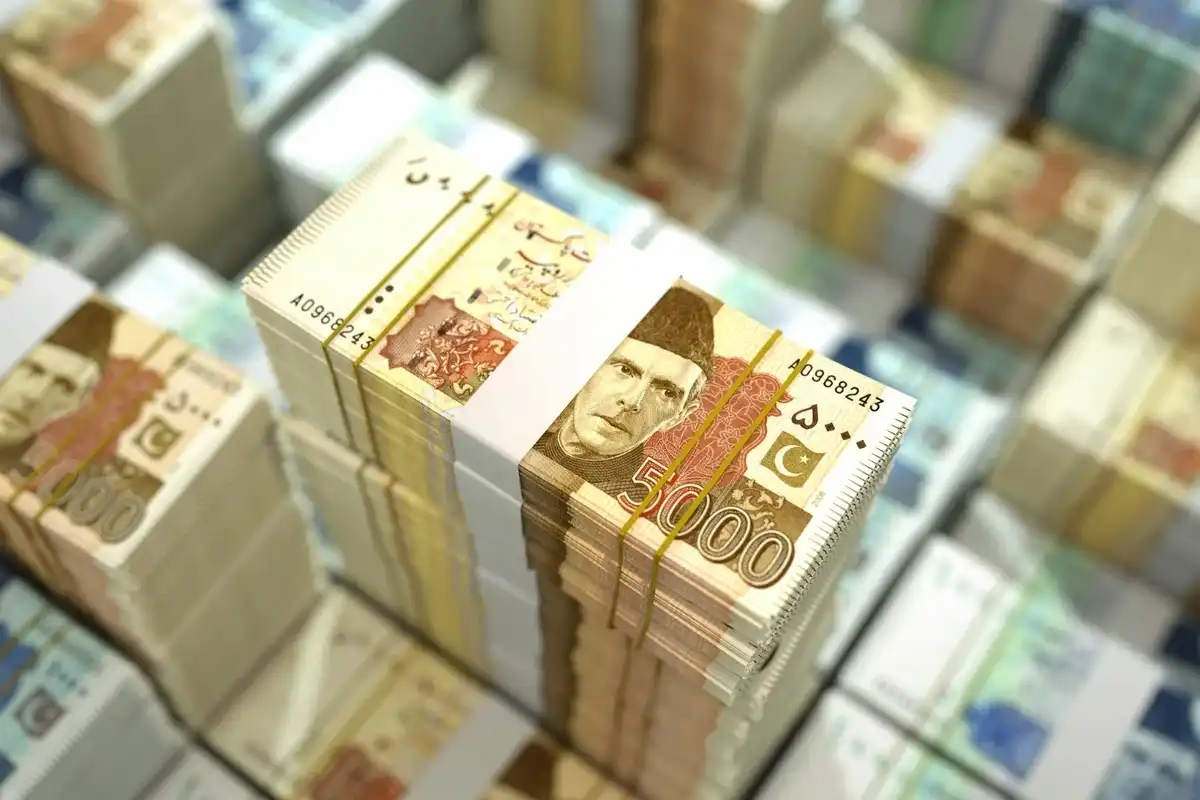
Pakistan is reducing risk and cost on its existing debt stock, even if the total amount owed hasn't meaningfully shrunk. Having said that, numbers on a balance sheet can improve for very different reasons, and how a deficit is closed matters just as much as the fact that it has been closed.
The ministry of finance has made headlines again after a brief period of silence; this time for paying back a record amount of domestic debt before it was even due. Khurram Schehzad, adviser to the finance minister, announced that the government retired PKR 1.2 trillion owed to the State Bank of Pakistan (SBP) "well ahead of its scheduled maturity." This is being described as the single largest early-repayment tranche in the country's history, beating the previous record of PKR 1.133 trillion set in August 2025, and pushing the cumulative total of domestic debt retired ahead of schedule to over PKR 5.92 trillion.
On paper, this sounds like unambiguously good news: a country notorious for its heavy debt burden is now paying money back early. But like most things in economics, the reality is more layered than the headline number suggests. To understand what is actually happening and why some economists are urging caution rather than celebration, it helps to break the story into three parts: what "early repayment" actually means, why the government is doing it, and what it does (and doesn't) say about the health of Pakistan's economy.
What Does "Early Repayment" Actually Mean?
The first thing to clarify is a common misconception; paying off PKR 1.2 trillion early does not mean Pakistan's total debt has shrunk by that amount. This isn't debt being wiped out, but it is debt being restructured.
Here's the mechanism in simple terms. Governments borrow money in different forms, at different interest rates, and for different time periods. Some of this debt is expensive and short-term, meaning the government has to keep "rolling it over" or refinancing it repeatedly, often at higher interest rates each time. This creates what economists call "rollover risk" or "refinancing risk" which is basically the danger that when old debt comes due, new borrowing to replace it might come at a worse rate, or in a worst-case scenario, might not be available at all.
What appears to be happening here is that the government is retiring older, costlier debt or obligations to the central bank that likely came from earlier periods of borrowing under tougher terms and effectively replacing that liability profile with something more manageable. PKR 1.2 trillion in old debt goes away, but a broadly similar amount is either issued afresh on better terms, or the underlying fiscal space that allowed early repayment came from elsewhere in the budget. Either way, the net debt stock of the country does not necessarily fall in step with this repayment.
So why is this being done? Because even if the total amount owed stays roughly the same, the terms of that debt can improve significantly. Shorter tenures, higher interest rates, and looming maturities all create pressure and uncertainty for a government's finances. By swapping these obligations for arrangements with more breathing room, the government reduces its "debt-servicing" costs which are the interest and repayment burden that shows up in the budget every year. Basically, it is the risk of being caught off guard which is being reduced if or when large chunks of debt fall due at once.
This is a legitimate and a fairly standard tool of what's called "sovereign liability management"; essentially, treasury housekeeping. Companies and households do aversion of this too; refinancing a high-interest loan into a lower-interest one doesn't make your total debt disappear, but it does make it cheaper and less risky to carry.
The Numbers Behind the Claim
According to the adviser's statement, the pace of early retirements has been accelerating. PKR 1.8 trillion was retired ahead of schedule in FY25, this jumped to PKR 2.9 trillion in FY26, a 62% increase and now PKR 1.2 trillion has already been retired in the new fiscal year, FY27. The consistent growth in this activity suggests the government has genuinely found more fiscal room to maneuver than it had in previous years, which itself is worth noting. A government that is scrambling for cash from month to month cannot afford to make early repayments; doing so requires having surplus liquidity, at least temporarily, to spare.
The adviser frames this as part of a deliberate strategic shift, moving from just managing debt as it comes due, toward more actively strengthening the government's overall balance sheet. That framing is broadly accurate: reducing the risk of debt pileups and lowering future interest costs are genuine, measurable benefits, even if they don't show up as a lower headline debt figure.
But Where Did the "Fiscal Space" Come From?
This is where the story gets more complicated and where a more critical set of questions needs to be asked. The government has, by most accounts, achieved a genuinely large fiscal turnaround which should be acknowledged. Pakistan reportedly posted its lowest fiscal deficit in 22 years in 2025-26, with a cumulative fiscal adjustment of around 6% of GDP since 2022, the largest correction in the country's 36-year history of IMF programs. This is the "improved fiscal space" that has, in part, allowed for exercises like early debt repayment.
However, there is a flip side of the argument, or a critique of how this consolidation was achieved, and it deserves to be part of this conversation. I came across Sakib Sherani sb’s view, who’s a well-regarded economist. His central argument is that Pakistan has managed fiscal consolidation, meaning the numbers on the budget balance sheet look better but this has happened without meaningful fiscal reform or as some people say through window dressing, meaning the structural problems that created the imbalance in the first place haven't really been fixed.
In simpler terms, cutting a deficit can happen in very different ways, and not all of them are equal. One path involves broadening the tax base, bringing undertaxed and politically influential sectors into the net, reforming loss-making state-owned enterprises, and trimming wasteful discretionary government spending. This path is difficult precisely because it requires taking on powerful interests. Sherani's argument is that this is not the path Pakistan's government has actually taken.
Instead, he contends that the consolidation has leaned heavily on indirect taxes which are viciously embedded in the price of everyday goods and services, which weigh disproportionately on lower-income households since everyone pays the same rate regardless of income. He also points to the petroleum levy, which is widely considered regressive because fuel costs consume a much larger share of a poorhouse hold's budget than a wealthy one's, about which I wrote in great detail back in June earlier this year. Combined with rising administered prices (things like utility tariffs that are directly set by the state) and general inflation, and cuts to social spending, Sherani argues that the burden of this fiscal turnaround has fallen heavily on the middle class and the poor, while wealthier and more politically connected segments of society have largely been shielded.
Two Sides of the Same Coin
Both of these stories can be true at the same time, and that's really the point. The debt repayment announcement is a legitimate technical achievement in the narrow sense: it reduces near-term rollover risk and can lower the government's future interest payments, freeing up money that would otherwise go toward servicing debt. That is a real and useful outcome for a country that has spent years anxious about looming repayment deadlines.
At the same time, the underlying fiscal improvement that has enabled this, the "improved fiscal space" the adviser refers to has a cost, and that cost has not been evenly distributed. If the consolidation has indeed relied more on squeezing consumption through indirect taxes than on structural reforms like taxing undertaxed sectors or cutting inefficient spending, then the "success" being celebrated has been financed disproportionately by ordinary citizens rather than those with the greatest ability to pay.
The Takeaway
For the average person trying to make sense of headlines like this, the most useful lesson is to separate two different questions that often get bundled together; is the government managing its existing debt more skillfully? And is the country's underlying fiscal health improving in a fair and sustainable way?
On the first question, the evidence so far points to genuine and incremental progress. Pakistan is reducing risk and cost on its existing debt stock, even if the total amount owed hasn't meaningfully shrunk. On the second question, the picture is far more contested. Numbers on a balance sheet can improve for very different reasons, and how a deficit is closed matters just as much as the fact that it has been closed.
A fuller, more honest accounting of Pakistan's fiscal turnaround would weigh both the technical wins in debt management against the real-world burden borne by households navigating high prices, squeezed incomes, and reduced public spending on the services they rely on.




Comments
See what people are discussing