

Petroleum Development Levy: a tax on poor which won’t plug fiscal deficit
Pakistan’s interest-to-revenue ratio is among the highest in the world, signaling a debt crisis already in motion. Papering over it with a regressive fuel tax does not address the deficit

Moiz Ur-Rehman
A multidisciplinary economist, legal thinker, and broadcast journalist with over five years of experience at the intersection of finance, policy, and media. I have academic grounding; in law, economics, and hospitality management, to accessible, high-impact storytelling for business audiences across Pakistan and beyond.
When a government faces a yawning fiscal deficit, the path of least resistance is rarely the right one.
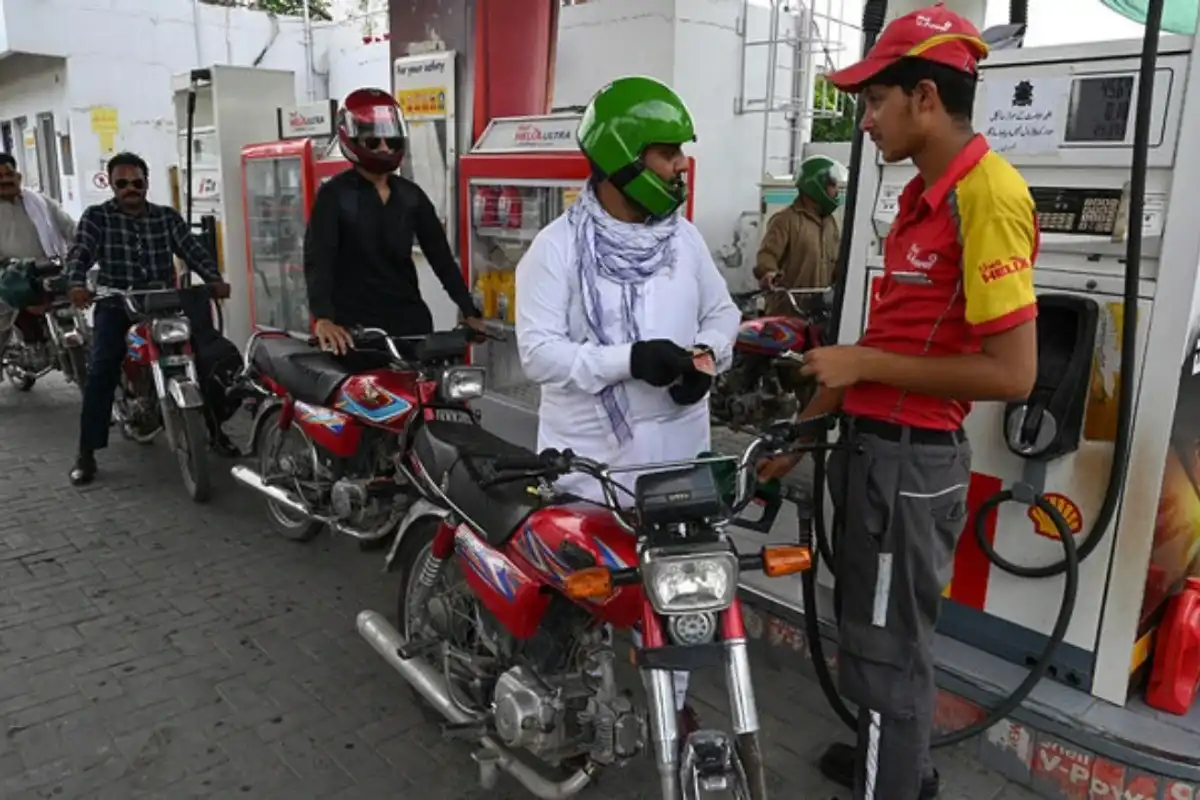
For Pakistan, that path has increasingly been the Petroleum Development Levy (PDL), a per-liter charge on petrol and diesel that raises billions without requiring the political courage of genuine tax reform. It is easy to collect, impossible to avoid, and devastatingly regressive.
As Pakistan continues to deepen its dependence on it, the levy is revealing itself not as a solution to fiscal imbalance, but as a symptom of the deeper structural disease.
PDL: a brief history
The PDL was originally conceived as a fiscal stabilizer, a flexible instrument that governments could raise when global oil prices fell and lower when they rose, thereby smoothing revenue streams without shocking consumers.
For much of its early history, it operated within modest bounds, serving more as a pricing cushion than a revenue engine. That character changed dramatically in the post-2018 era of fiscal stress.
By FY2022-23, PDL collections stood at around PKR 580 billion. A year later, in FY2023-24, that figure jumped to over PKR 1,019 billion.
In FY2024-25, collections reached PKR 1,220 billion, and the government has set an even more ambitious target of PKR 1,468 billion for FY2025-26, which will not only be met with ease but, as per an estimate, surpassed by around PKR 20 billion. Now imagine how arbitrary it is to not only meet the target but also surpass it by PKR 20 billion in this high-inflation environment.
Just in the war-hit months of March-May FY26, the PDL collection was PKR 320 billion. In the calendar years 2024 and 2025 combined, the federal government extracted PKR 2.59 trillion from fuel consumers through the levy alone. The target for the upcoming fiscal year is reported to be more than PKR 1,700 billion, which shows that the old regressive methods of fiscal consolidation shall continue.
The rate trajectory tells the same story.
The PDL stood at PKR 60 per liter as recently as mid-2024. It was raised to PKR 70 per liter, then PKR 78, then PKR 80. By April 2026, it had surged to PKR 117 per liter on petrol, a 39% increase in the levy component alone in the space of 70 days.
Over that same period, the retail price of petrol rose 55.8%, from PKR 266 to PKR 414 per liter (now at PKR 377 per liter); not just because global crude had spiked, but due to the need for the collection of PDL to address the fiscal side.
In fact, when global crude fell 10% in a week, Islamabad responded by raising the petroleum levy by 13.
PDL: a bad tax
The government’s enthusiasm for PDL is understandable in a narrow, technocratic sense.
It is non-tax revenue, which means it does not enter the Federal Divisible Pool and therefore not shared with provinces under the National Finance Commission (NFC) formula.
Every rupee collected through PDL stays with the federal government. This makes it supremely attractive as a fiscal instrument.
The PDL is a regressive tax in the most textbook sense.
Whether a factory owner in Gulberg or a daily-wage laborer in Lyari puts fuel in his rickshaw or pays a transport fare shaped by diesel prices, the per-liter levy hits both equally.
In absolute terms, the rich pay more, but as a proportion of income, the burden falls hardest on those who can least afford it.
Fuel is not a luxury in Pakistan. It is embedded in the cost of every commodity, every agricultural input, every factory output, every kilometer of freight.
When fuel prices rise, inflation spreads through the entire economy, and it is the lower- and middle-income households that absorb the sharpest blow.
Pakistan’s CPI rose to 10.9% year-on-year in April 2026 and 11.7% in May, returning to double digits for the first time since July 2024 — with fuel-related categories alone accounting for over half of that month’s inflation.
The regional picture
Pakistan’s approach sits uncomfortably alongside regional peers.
India deregulated petrol prices in 2010 and diesel prices in 2014, shifting to a market-linked pricing mechanism.
While Indian consumers do pay substantial excise duties, the pricing structure is transparent and market-responsive, and India’s sustained growth trajectory has remained robust.
Bangladesh links its fuel prices to import costs and adjusts them periodically. Sri Lanka, after its catastrophic debt crisis, adopted IMF- backed price adjustments on a monthly formula basis.
None of these countries has constructed a mechanism quite like Pakistan’s PDL; one that systematically rises regardless of market conditions.
Oil producers in the Gulf keep fuel prices genuinely low because they subsidize from hydrocarbon revenues.
Pakistan has no such windfall. It merely shifts the burden of its fiscal failures onto consumers who have no alternative.
The case for market deregulation
The more sustainable path is deregulation — aligning petrol prices with international benchmarks through a formula-based, fortnightly or monthly mechanism, and removing the PDL as a discretionary revenue tap.
This is not a radical idea. It is what most middle-income economies have done.
The price signal from a market-linked fuel cost would encourage greater efficiency in transport, logistics, and manufacturing. It would reduce the scope for government manipulation of petrol prices for political advantage.
Crucially, it would force the federal government to find revenue through genuine tax broadening rather than a levy that costs it no political capital because its regressive effects are largely invisible.
Pakistan’s tax-to-GDP ratio remains among South Asia’s lowest. The informal economy — retail, real estate, agriculture’s higher income brackets — remains largely outside the direct tax net.
These are the structural reforms that matter.
Broadening the income tax base, imposing wealth taxes on unproductive assets, tightening sales tax compliance in the services sector: these are the instruments of a serious fiscal state.
The PDL is none of those things.
It is the government choosing to tax the petrol of a daily-wage worker in Karachi because taxing the undeclared income of an individual from the untaxed sectors requires political will it does not have.
The PDL has become Pakistan’s fiscal comfort blanket.
It is easy to raise, constitutionally insulated from provincial sharing, and politically low-profile enough that its inflationary consequences are rarely connected to its authors.
But its costs are not invisible to those who bear them.
PDL might be a necessary measure at this point, but theoretically, it’s a bad measure and can be correlated to pouring water into a damaged tank, where, on one hand, we are trying to increase the volume in terms of tax collection, but on the other hand, we’re losing volume in the shape of increased inflation and growth.
Fiscal side problems are one of the major pain points with regards to our structural issues however papering over it with a regressive fuel tax does not address the deficit, but it simply redistributes its burden downward.
A government serious about fiscal sustainability would deregulate petrol prices, remove the discretionary PDL, expand the direct tax net, and stop asking its poorest citizens to fund the fiscal failures of its most privileged.



Comments
See what people are discussing