

Heritage alone won’t bring Pakistan’s next generation of footballers home
The question is no longer whether these players can represent Pakistan. It is what Pakistan is doing to make them choose it

Ahad Haider
Ahad Haider is an aspiring football analyst with a keen interest in talent identification & development, scouting and analysis.
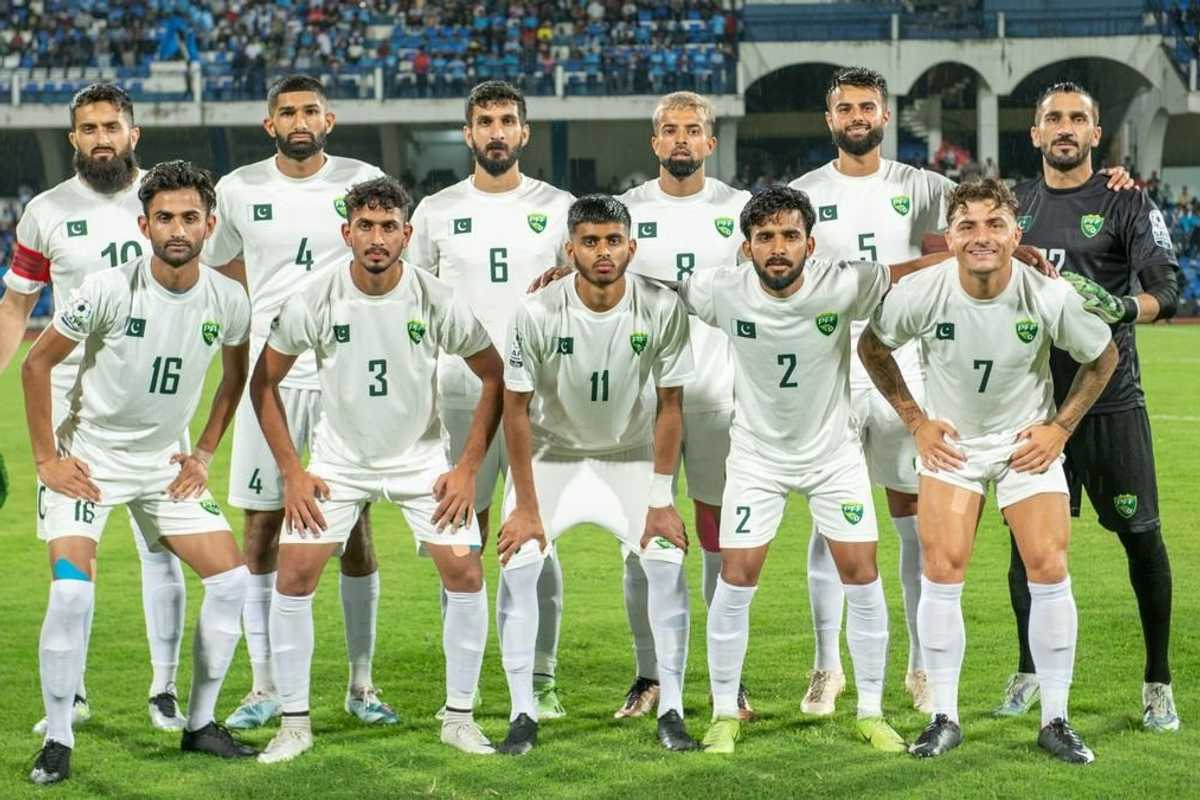
Pakistan’s next generation of footballers is already out there. Some are developing at the world’s biggest clubs, carrying Pakistani heritage and having the ability to represent Pakistan. But heritage alone will not bring them into the national team.
Other federations are actively identifying these players, building relationships with them and their families, and giving them reasons to choose their national team. Pakistan cannot wait until these players become senior prospects and then expect them to choose the country.
The question is no longer whether these players can represent Pakistan. It is what Pakistan is doing to make them choose it.
Heritage does not automatically create sporting allegiance
This is perhaps the biggest misunderstanding in mixed heritage recruitment. A Pakistani parent can create eligibility. It does not automatically create allegiance. A player can be proud of their Pakistani heritage while still feeling deeply connected to the country where they were born and raised.
Mixed heritage can also mean three or more international options. Bilal Shah at Chelsea has Pakistan, Morocco, France and England as potential options. Sonny Perkins has England, Ireland and Pakistan, while Jariyah Shah has England, Vietnam, Australia, and Pakistan and Harris Afzal has links to Scotland, England and Pakistan.
Football adds another layer. The country where a player grows up may also give them their football education. They go to school there, play grassroots football there, enter an academy there, watch its national team and grow up around its football culture. When Pakistan approaches them, it is asking them to choose between different parts of their identity.
The first generation and the new generation are not the same
Players such as Zesh Rehman, Adnan Ahmed and Yousuf Butt were important pioneers because they showed that players developing in stronger overseas football systems could choose Pakistan. Their Pakistani connection was generally direct and visible.
The current generation is more complicated. A player with one Pakistani parent and one parent from another country can grow up with two identities from the beginning. A footballer who has spent their entire development inside another country’s system may feel deeply connected to that country while remaining proud of their Pakistani family.
Pakistan therefore cannot approach every overseas player as one group. There needs to be a distinction between diaspora recruitment and mixed heritage recruitment. The latter requires a much more personal approach.
The football identity is formed long before the national team calls
By seventeen or eighteen, a mixed heritage player’s football identity may already be deeply established. They have spent years in an academy, have coaches and teammates who know them, understand the football culture around them and may already have represented another country.
Pakistan is not entering an empty space. It is entering a relationship that may have been built over fifteen or twenty years. Waiting until a player becomes a senior prospect is a mistake. Recruitment needs to start much earlier, not necessarily to secure a commitment, but to establish familiarity.
The federation that builds a relationship with the player and family first may have a significant advantage as an effort to build trust.
What does Pakistan actually have to offer?
This is where the discussion becomes uncomfortable. Imagine a mixed heritage player at Manchester United, Chelsea, Crystal Palace or Bournemouth. Their environment already offers elite coaching, sports science, medical support, performance analysis and a clear club pathway.
Then there is Pakistan. The FIFA ranking is significantly lower. The national team has experienced instability. The domestic professional structure remains underdeveloped. The federation has had administrative problems. There is no comparable domestic league pathway for a young player who wants to continue developing in Pakistan.
The player and their family will notice these things. This is not about insulting Pakistan. It is about understanding the decision from the player’s perspective. If Pakistan wants a player to make a decision that could affect their international career, it has to offer something compelling in return.
The family matters more than people realise
Recruiting a seventeen year old is not simply recruiting a seventeen year old. You are recruiting a family. Parents will ask who the coach is, where their child will stay, what the medical provision is, and who communicates with them and what Pakistan’s plan is.
For the player, there is another question: why choose Pakistan over the country where they grew up? For someone with three or more options, Pakistan needs an answer. It cannot simply be “because your father is Pakistani.” That is not a recruitment strategy.
The strongest competing federation may be the one that understands the player better
Indonesia provides an important comparison. It has understood that diaspora and mixed heritage recruitment is not only about finding eligible footballers. It is about developing relationships.
Mathew Baker is a strong example. Born in Australia to an Australian father and Indonesian mother, he grew up in Australia and had already been involved with the Australian system. Yet Indonesia developed a relationship with him. He represented Indonesia at youth level and eventually chose Indonesia. He felt wanted, accepted and part of the Indonesian football community.
That is the lesson Pakistan needs to take seriously.
Vietnam has taken a different approach
Vietnam offers another comparison. Rather than relying only on heritage recruitment, it has increasingly used naturalisation as one route to strengthen its national team, including Brazilian born players such as Nguyễn Xuân Son. Pakistan should not copy this model. The point is that Vietnam has treated recruitment as something requiring an active strategy rather than waiting for eligible players to appear.
For Pakistan, that strategy should begin much earlier with players who are already eligible. If there is a young Pakistani mixed heritage player at a Category One academy in England, Pakistan should already know about them whether If they move clubs, are released, receive another country’s youth call up or improve dramatically.
The federation shouldn’t discover players when they become senior prospects through social media, a personal connection or an agent. By then, another federation may already have spent years building the relationship.
Pakistan has another problem. It needs to convince players who already have options
The mixed heritage player is often not waiting for an international opportunity. They already have one. That is what makes this pool so valuable and so difficult.
Consider Jariyah Shah at Manchester United, Harris Afzal at Southampton, Jaden Mears at Stoke City, Raihaan Anderson at Crystal Palace, Bilal Shah at Chelsea and Ameer Ali at Bournemouth. These are young footballers developing inside some of the most competitive academy environments in the world. Pakistan is competing for their attention while they are already surrounded by people trying to develop their careers.
In some cases Pakistan is not even the player’s second choice. It may be their third or fourth. It is not enough to be eligible. Pakistan has to compete for the player.
The biggest mistake would be to appear only when Pakistan needs them
Do not call a player only because there is an international window. Do not disappear after the camp. Do not contact a family when documents are suddenly required. That destroys trust.
The player needs a consistent relationship with Pakistan even when they are not being selected. Someone should be able to say: “We watched your game on Saturday. We have seen your development this season. We understand the position you are playing. We would like you to attend our next camp.”
That tells the player they are not being treated as a passport. They are being treated as a footballer. This is where a dedicated person becomes essential
Pakistan may not need a huge department. It needs ownership. Somebody should manage the relationship between the player, family, club, agent, national team coach and technical department.
The technical department should assess whether the player is good enough. The scout should assess them. The coach should decide whether they fit. But someone needs to make sure the relationship does not collapse between those decisions.
That person becomes the bridge between Pakistan being a country the player is eligible for and Pakistan being a country they genuinely want to represent.
The player needs to see a future
What happens if the player is not good enough for the national team today? A mature football ecosystem can still offer a pathway. The player continues developing, the federation monitors them and the national team staff remains in contact.
Pakistan currently has a weaker answer. The lack of a stable professional domestic league makes it difficult to provide a complete alternative pathway. If Pakistan says “we want you,” the player can reasonably ask “what happens if I am not selected?”
Recruitment should also come with honesty. Pakistan should not promise every eligible player a place in the team. It should be honest about their level and what they need to do to earn international football. Players also need to be realistic about their own level.
For a player performing well but unlikely to enter a major European national team pathway at their current level, Pakistan can provide a genuine international platform. That is not a consolation prize. It can be an opportunity to play international football, develop through the national team environment and accelerate a career. Pakistan should offer a pathway, not promises.
The impact one player can have
Amin Nabizada provides an example of what Pakistan could be missing. Born in England, he came through Watford’s system and represented England at youth level before choosing Afghanistan. Afghanistan gets a player, the player gets an international identity, the club gets a story, the federation gets visibility and fans get someone they can connect with.
Perhaps the clearest regional example is Hamza Choudhury and what his decision to represent Bangladesh has done for Bangladeshi football. His home debut in June 2025 drew around 16,000 supporters, with fans applauding his touches and tackles before he scored. His arrival was subsequently described as a catalyst for renewed interest, with increased attention around the national team, shirts and sponsor activity.
The lesson is that recruiting a high profile overseas player is not only about improving the starting eleven. One player can change how a national team is perceived, bring new audiences into the sport, create commercial opportunities, inspire other overseas players and give supporters someone with whom they can identify.
Layla Banaras shows that Pakistan can create a similar effect. Her Pakistan debut generated enormous online attention, with her content surpassing one million views. A mixed heritage player can become much more than a footballer. They can become a story, a role model and a bridge between overseas Pakistani communities and the national team.
Pakistan needs to sell belonging, not just selection
This might be the single biggest lesson. Pakistan needs to stop thinking only about how to get mixed heritage players into camp. It needs to think about how to make them feel part of Pakistan football.
That can begin when they are fourteen. Bring them into youth camps. Introduce them to other overseas players. Let them meet players from Pakistan. Bring families into the conversation. Show them the country, the fans and what wearing the shirt means.
The objective is not to pressure them. It is to give them an experience that another federation cannot easily replicate.
Pakistan’s football ecosystem is both the problem and the opportunity
Pakistan needs mixed heritage players because they can bring quality, experience and exposure into the national team. But the football ecosystem needs to improve if Pakistan wants to attract and retain them.
The domestic game needs structure. Youth football needs regular competition. Coaches need development. The professional league needs a sustainable future. The national teams need continuity. The technical department needs authority and resources. The administration needs to become more predictable.
These things will take time. But recruitment cannot wait for the ecosystem to become perfect. The players are developing now. Their international decisions are being made now. Other federations are recruiting them now.
The Technical Director now has a major responsibility
The appointment of Adeel Rizki as Technical Director provides Pakistan with an opportunity to put structure behind an area discussed for years. With the Technical Director now in place since June 2026, the conversation has to move beyond appointments, plans and intentions.
The technical department needs to become the centre of a national talent intelligence system. It should know where serious Pakistani eligible prospects are playing, how they are developing, which players are eligible, which players are being approached by other federations and which players need to be actively recruited.
If a player at a major European academy can go through an entire development cycle without a clear relationship with Pakistan, then the system is failing the player before the player has even had the chance to fail the system.
Recruitment cannot remain an afterthought. It has to sit at the heart of the technical strategy, with clear ownership, regular communication and accountability.
The next generation is already here
Pakistan does not have to search for evidence that mixed heritage recruitment can work. Indonesia has shown it. Vietnam has shown that federations can take an active approach to strengthening their player pool. Afghanistan has shown the value of overseas recruitment. Pakistan’s women’s team has shown what overseas players can bring.
But the next generation will be harder to recruit than the first. They have more choices, stronger football identities outside Pakistan, better career opportunities, informed families, agents, clubs protecting their development and other federations actively looking for them.
Pakistan cannot rely on emotion alone or heritage alone. It cannot rely on a late phone call or a text. It cannot assume that because a player has Pakistani heritage, the decision has already been made.
The better question is: “What has Pakistan done to make it the country this player wants to play for?”
For a first generation player, heritage may have been enough. For the modern mixed heritage footballer, it probably will not be. Pakistan has to offer a relationship, a pathway, a professional environment, a clear plan, a sense of belonging and a reason to believe that choosing Pakistan will not mean choosing against their career.
The real challenge is not convincing a player that they are Pakistani. It is convincing them that Pakistan can be part of who they are as a footballer. That is the recruitment problem Pakistan needs to solve.




Comments
See what people are discussing