

GCC worker remittance outflows hit record USD 161 billion in 2025
Transfers rise 13.6% from 2024, with the bloc’s total exceeding outflows recorded by several major economies individually

Business Desk
The Business Desk tracks economic trends, market movements, and business developments, offering analysis of both local and global financial news.
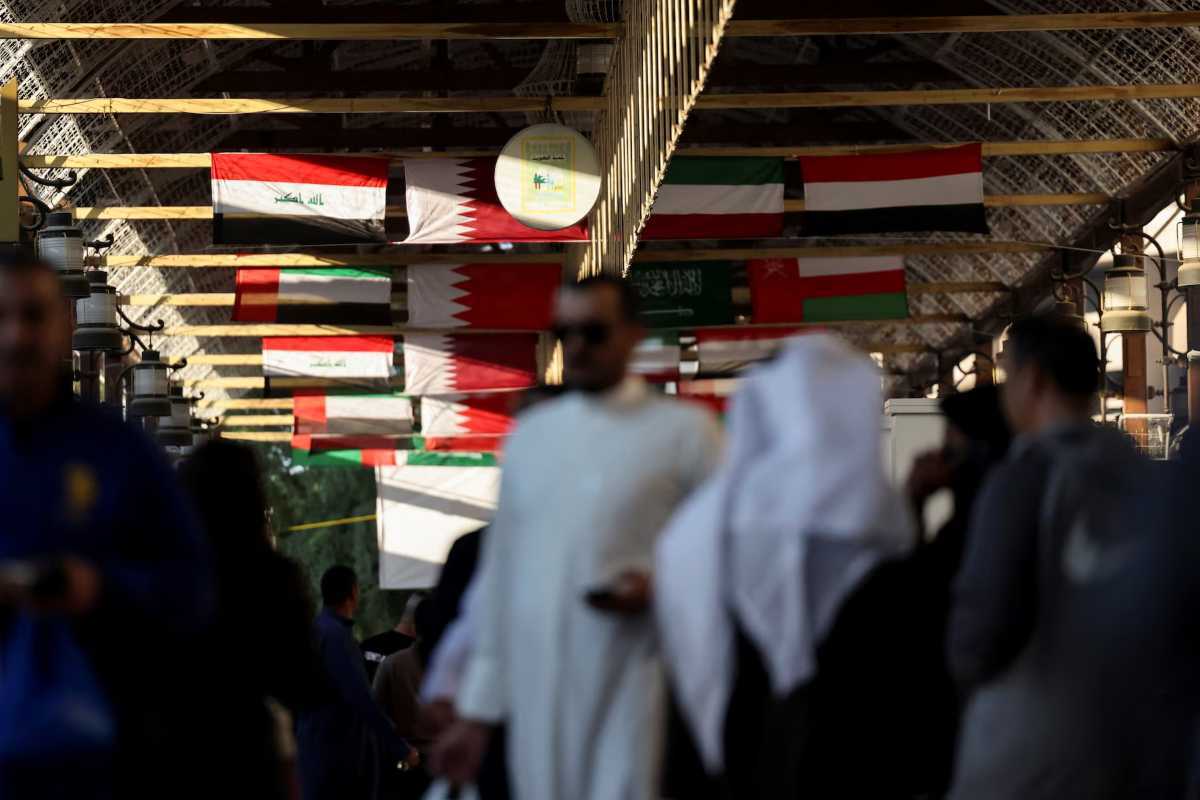
GCC countries national flags are seen hanging in Mubarakiya Market in Kuwait City, Kuwait, December 23, 2024.
Reuters
Gulf Cooperation Council (GCC) countries sent about USD 161 billion in workers’ remittances abroad in 2025, the highest annual total recorded by the bloc and the largest globally, according to a GCC-Stat report cited by UAE state news agency WAM.
Outflows rose 13.6% from 2024, an increase of about USD 19 billion, and grew for a second consecutive year after declining in 2023.
GCC-Stat linked the increase to the continued attraction of expatriate workers alongside expanding activity in infrastructure, services, industry and other non-oil sectors.
The GCC’s population reached 63.3 million in 2025. At constant prices, non-oil activities accounted for 70.6% of the bloc’s GDP and expanded 5.1% during the year.
How do GCC remittance outflows compare globally?
At USD 161 billion, the GCC’s combined outward workers’ remittances exceeded the amounts recorded by several major economies individually in 2025. The United States recorded about USD 107 billion, Switzerland USD 43 billion, Germany USD 27 billion and France USD 21 billion, according to GCC-Stat figures cited by WAM.
The GCC figure represents the combined total of its six member states, while the other figures are for individual economies.
Workers’ remittances were equivalent to about 6.6% of the GCC’s combined GDP in 2025, up from 6% in 2024, 5.7% in 2023 and 5.6% in 2022.
GCC-Stat said the ratio shows the scale of remittance flows relative to the size of the region’s economies and does not, by itself, indicate an improvement or deterioration in economic performance.
The International Monetary Fund (IMF) said larger non-hydrocarbon sectors in Bahrain, Saudi Arabia and the UAE helped soften the impact of recent regional disruptions, even as reduced trade and weaker business confidence constrained non-hydrocarbon activity.
GCC-Stat said remittance flows support household incomes and consumption in recipient countries and contribute to economic and social stability.
The size of the transfers also reflects the Gulf bloc’s role in global financial flows and its links with economies that supply much of its expatriate workforce.




Comments
See what people are discussing