

US strikes Iran as war cost hits $37.5 billion, Pentagon says
Iran war cost has reached $37.5 billion as US strikes expand and Gulf states face new attacks, Pentagon chief Pete Hegseth tells Congress

News Desk
The News Desk provides timely and factual coverage of national and international events, with an emphasis on accuracy and clarity.
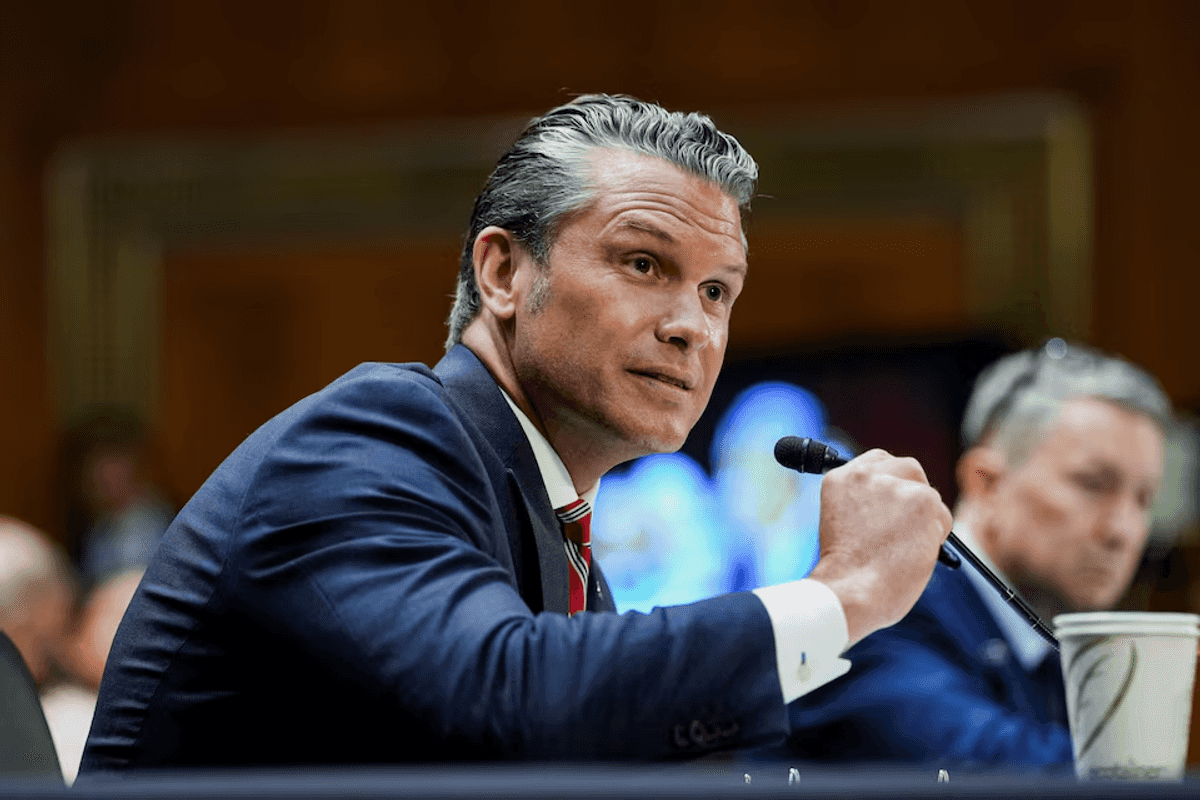
U.S. Secretary of Defense Pete Hegseth testifies during a Senate Appropriations Committee hearing on U.S. President Donald Trump's supplemental funding request for the Department of Defense, in Washington, D.C., U.S., July 21, 2026.
Reuters
Fresh US strikes triggered air defenses in Tehran on Wednesday after President Donald Trump said he was "not finished" with Iran, as the Pentagon put the Iran war cost at $37.5 billion.
Defense Secretary Pete Hegseth gave the figure to lawmakers this week while defending a request for tens of billions more in military funding. The conflict has now expanded to the Strait of Hormuz, a key route for global oil shipments.
How much has the Iran war cost the US so far
The Iran war has cost the United States $37.5 billion so far, Hegseth told the Senate, up nearly $8 billion from the previous estimate given in May. He cited the figure while pushing for a $1.5 trillion defense budget that includes $70 billion earmarked for the Iran war. Lawmakers questioned whether the true cost could run higher.
What did the latest US strikes target
The US military said its newest attacks hit military logistics infrastructure inside Iran. Iranian state media reported strikes in several areas, including Bushehr, home to a nuclear power plant. State TV said air defense activity was heard in western, eastern and northeastern Tehran shortly after the strikes.
Tuesday's strikes marked an eleventh consecutive night of US attacks on Iran. The Pentagon said the goal was to further degrade Iran's ability to threaten commercial shipping through the Strait of Hormuz. Trump said the next target could be Pickaxe Mountain, a suspected underground enrichment site near Natanz.
Why is Trump facing pressure to end the war
The war is approaching its five-month mark as November legislative elections draw closer, and Trump has faced growing political pressure over the conflict. Even parts of his own base have criticized the war's cost and duration. Trump has rejected calls to withdraw, saying Iran would need 20 to 25 years to rebuild if the US left now.
How has Iran responded to the strikes
Iran's Khatam Al-Anbiya military command warned that a strike on Pickaxe Mountain would count as an expansion of the war. State broadcaster IRIB reported the command threatened attacks on American interests, allies and supporters in the region. Tehran has also widened its campaign against US-allied Gulf states.
What is happening with the Houthi threat to Saudi ports
Iran's Houthi allies threatened Monday to blockade Saudi Arabia's ports, prompting Trump to say the US would "take care of it" if the threat materializes. Saudi Arabia condemned the threat and called the Houthis a terrorist militia. It remains unclear exactly how a blockade would be enforced.
Maritime intelligence firm Vanguard Tech reported that a Singapore-flagged tanker and a Liberia-flagged tanker both reversed course in the Red Sea after loading crude at the Saudi port of Yanbu. A Houthi blockade could limit Saudi Arabia's ability to route oil exports around the Strait of Hormuz, with wider effects on the global economy.
What else is happening in the region
Kuwait's army said its air defenses engaged Iranian drone attacks on Wednesday, part of Tehran's broader reprisal campaign. Bahrain said it intercepted Iranian attacks on Tuesday, while Kuwait and Jordan also reported intercepting drones and missiles. Iran's army said it targeted US assets in both Kuwait and Bahrain, including air defense systems and radar installations.
The Revolutionary Guards said two tankers attempting to transit the Strait of Hormuz were hit by explosions that left them stranded. The UK Maritime Trade Operations agency separately reported an unknown projectile struck a tanker off the coast of Oman. Despite the fighting, Iran's foreign ministry said diplomatic contacts with Washington through mediators are ongoing.
Pakistan's Prime Minister Shehbaz Sharif, acting as a mediator, called for restraint during a meeting with Iran's Interior Minister Eskandar Momeni. His office said Sharif urged all sides to avoid actions that could further destabilize the region.




Comments
See what people are discussing